
Recliner Posture Assessment Tool
Assess your recliner setup for spinal health based on guidelines from back specialists. This tool helps you determine if your current posture is causing unnecessary strain on your lower back.
Many people love recliners. They’re cozy, they’re easy to sink into, and they feel like a reward after a long day. But if you’ve ever felt a sharp twinge in your lower back after lounging for too long, you might be wondering: are recliners bad for your lower back? The answer isn’t simple. It depends on how you use them, what kind you have, and whether your body is getting the support it actually needs.
Why Recliners Can Cause Lower Back Pain
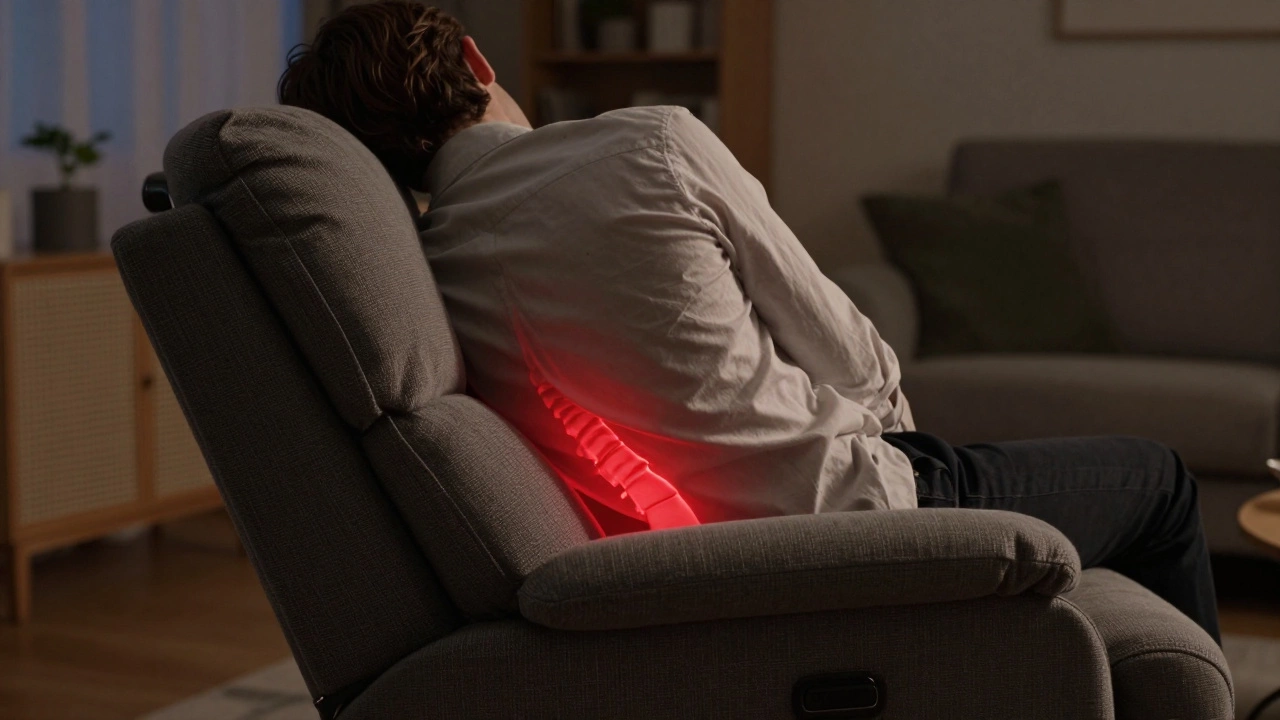
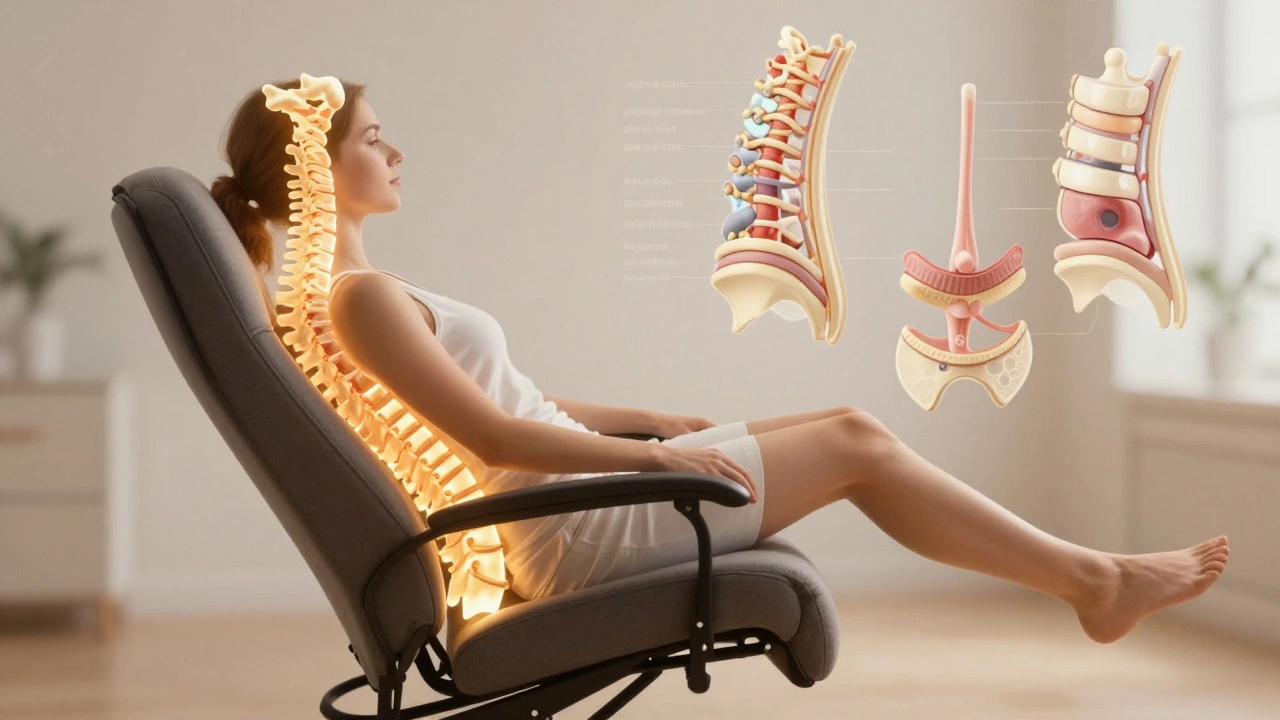
Recliners aren’t inherently evil. But most mass-produced ones are designed for comfort, not spinal health. When you sit back in a recliner with your legs elevated, your pelvis tilts backward. That flattens the natural curve of your lower spine - the lumbar curve. That curve isn’t just for show. It’s there to absorb shock, distribute weight, and keep pressure off your discs and nerves.
Without that curve, your spine is forced into a C-shape. This puts extra strain on the ligaments and muscles in your lower back. Over time, that can lead to stiffness, soreness, or even disc issues. A 2023 study from the Australian Spinal Research Centre found that people who sat in standard recliners for more than 90 minutes at a time showed a 40% increase in lumbar disc pressure compared to those using upright chairs with proper lumbar support.
And it’s not just about sitting too long. If your recliner doesn’t have adjustable lumbar support, you’re basically letting your spine hang in midair. Your lower back muscles have to work overtime just to keep you from slumping. That’s exhausting. And when those muscles fatigue, pain follows.
When Recliners Actually Help
Here’s the twist: recliners can also be great for your back - if they’re designed right and used properly. Think about this: if you have a herniated disc or spinal stenosis, lying back slightly takes pressure off your spine. That’s why physical therapists often recommend reclining for short periods after acute flare-ups.
The key is support. A recliner with a built-in, contoured lumbar cushion that matches the curve of your lower spine can actually reduce pain. A 2024 survey of 1,200 Australians with chronic lower back pain found that 68% of those who switched to an ergonomic recliner with adjustable lumbar and footrest support reported noticeable improvement within three weeks.
Also, elevating your legs helps. When your feet are higher than your hips, gravity pulls fluid away from your lower back. That reduces swelling and eases pressure on the nerves. That’s why recliners can be a smart choice for people with mild sciatica or swelling from standing all day.
What to Look for in a Recliner That’s Good for Your Back
Not all recliners are created equal. Here’s what to check before you buy:
- Lumbar support that adjusts - It should fit snugly into the small of your back. No gaps. If you can slide your hand between your back and the chair, it’s too shallow.
- Seat depth - Your knees should be about 1-2 inches from the edge of the seat. Too deep, and your thighs press into the seat, cutting off circulation and tilting your pelvis.
- Footrest alignment - The footrest should lift your legs so your knees are slightly lower than your hips. If your knees are higher, your lower back gets pulled into a rounded position.
- Recline angle - The ideal angle is between 110 and 135 degrees. Anything flatter than 110 puts too much pressure on your discs. Anything beyond 135 makes your spine collapse.
- Firmness - Soft cushions might feel nice at first, but they let your body sink too far. Look for medium-firm foam with memory foam layers on top.
Brands like La-Z-Boy’s Relax the Right Way line and Herman Miller’s Recline Pro are designed with spinal biomechanics in mind. They’re not cheap, but they’re built to last and support your back properly.
How to Use a Recliner Without Hurting Your Back
Even the best recliner can hurt you if you misuse it. Here’s how to use one safely:
- Limit your time - Don’t sit in it for more than 45 minutes at a time. Get up, stretch, walk around. Your body isn’t made to stay in one position for hours.
- Use a small pillow - If your chair doesn’t have good lumbar support, roll up a towel or use a thin cushion behind your lower back. It’s a quick fix that makes a big difference.
- Don’t slouch - Keep your shoulders relaxed, but your spine stacked. Your ears should be over your shoulders, and your shoulders over your hips.
- Don’t sleep in it - Sleeping in a recliner for long periods can twist your spine out of alignment. If you doze off occasionally, that’s fine. But if you’re using it as a bed, you’re asking for trouble.
- Stretch after - After you get up, do a few gentle back extensions. Lie on your stomach, prop yourself up on your elbows for 30 seconds. It helps reset your spine.
Alternatives to Recliners for Back Support
If you’re tired of the trade-offs, there are better options:
- Ergonomic office chairs - With adjustable lumbar, armrests, and tilt, these are ideal for long sitting sessions. Brands like Steelcase and Humanscale are top-rated.
- Zero-gravity chairs - Originally designed for NASA, these elevate your legs above your heart and evenly distribute your weight. They’re great for recovery and relaxation. Wall-mounted recliners - These let you recline fully without losing spinal alignment. They’re rare but worth checking out if you have space.
- Standing desks with sit-stand stools - If you’re sitting too much, try switching positions more often. Your back will thank you.
What the Experts Say
Dr. Lena Tran, a physiotherapist in Melbourne who specializes in workplace ergonomics, says: "People think recliners are the solution to back pain because they feel relaxing. But relaxation without support is just passive collapse. The goal isn’t to lie down - it’s to lie back in a way that keeps your spine neutral. That’s the difference between comfort and care."
She recommends testing any recliner before buying. Sit in it for 15 minutes. If your lower back starts to ache before then, walk away. Your body knows what it needs.
Final Verdict
So, are recliners bad for your lower back? Not if you choose wisely. A poorly designed recliner? Yes, it can wreck your spine over time. But a well-designed one, used correctly, can be one of the best tools you have for managing back discomfort.
The real issue isn’t the chair. It’s how we treat our bodies. We sit too long. We don’t move enough. We think comfort means sinking in. But true comfort comes from support - not surrender.
Can a recliner cause sciatica?
Yes, if the chair lacks proper lumbar support and forces your spine into a rounded position, it can compress the sciatic nerve. This is especially true if you sit for long periods without moving. The nerve runs from your lower back down your leg, and poor posture can pinch it. Switching to a recliner with adjustable lumbar support and taking frequent breaks can help prevent this.
Is it better to sit in a recliner or on the couch for back pain?
It depends on the support. Most couches offer zero lumbar support and encourage slouching. A recliner with proper adjustment can be better - if it has a contoured back and supports your natural spine curve. But if both are soft and flat, neither is good. For back pain, a chair with firm support and adjustable features is always better than a generic sofa or recliner.
How long should I sit in a recliner each day?
Limit it to 45 minutes at a time, with breaks in between. Your spine needs movement to stay healthy. Sitting still for over an hour increases disc pressure and muscle fatigue. If you need to relax longer, get up, stretch, walk around, then come back. Your lower back will feel better.
Do memory foam recliners help with back pain?
Memory foam can help - but only if it’s layered correctly. Too much memory foam lets you sink too deep, which flattens your spine. Look for a recliner with a firm base foam underneath a thin memory foam layer. This gives you contouring without collapse. Brands like RelaxtheBest and Ashley’s ErgoLine do this well.
Are zero-gravity chairs better than recliners for back pain?
For many people, yes. Zero-gravity chairs position your body so your legs are elevated above your heart, reducing pressure on your spine by up to 80%. They’re designed to mimic weightlessness, which takes stress off your discs and muscles. If you have chronic pain, they’re often more effective than standard recliners. But they’re bulkier and more expensive.