
Posture & Core Engagement Checker
Check off the elements of your current sitting position to see your Active Alignment Score.
Alignment Checklist
You spend eight hours a day in a chair, and your midsection is paying the price. It isn't just about the calories you eat; it's about how your body shuts down when you sit. When you slouch, your abdominal muscles go limp, your hip flexors tighten, and your metabolism slows to a crawl. This creates the perfect environment for visceral fat to accumulate around your organs. While no chair can magically melt fat, the way you sit determines whether your core is working or dormant.
Key Takeaways for a Leaner Core
- Active sitting keeps the metabolism higher than passive lounging.
- Maintaining a 90-degree angle in hips and knees prevents muscle shortening.
- Core engagement during the workday prevents the "slump" that pushes fat toward the belly.
- Dynamic movement every 30 minutes is more effective than any single "perfect" position.
The Myth of the Magic Position
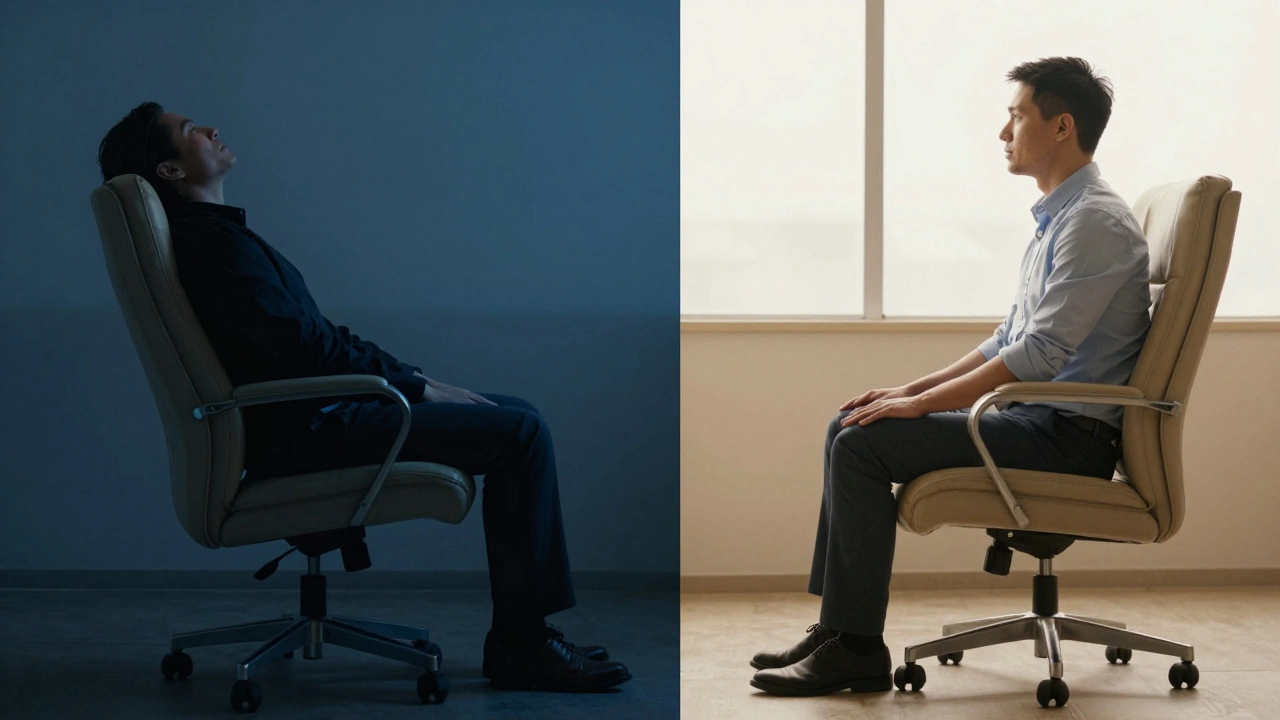
Let's be honest: you can't sit your way to a six-pack. However, you can stop sitting in a way that promotes belly fat. When you lean back in a soft chair, your spine curves into a C-shape. This inhibits your diaphragm and puts your abdominal wall in a relaxed, stretched position. In this state, your core engagement is zero. Your muscles aren't firing, and your blood flow to the midsection drops.
The goal isn't to find a position that "burns" fat like a treadmill does, but to find a position that prevents metabolic hibernation. By shifting from a passive to an active sitting posture, you keep your muscles toned and your insulin sensitivity higher, which helps prevent the storage of excess calories as abdominal fat.
The "Active Alignment" Technique
If you want to reduce the appearance of a belly and actually support your internal organs, you need to master active alignment. This isn't about sitting stiffly like a soldier; it's about creating a stable base that allows your core to stay "on."
Start with your feet flat on the floor. If your feet dangle, your lower back arches, and your stomach pushes forward. Use a footrest if your ergonomic office chair doesn't reach the ground. Your knees should be at a 90-degree angle, slightly lower than or level with your hips. This open hip angle prevents the compression of the lower abdomen.
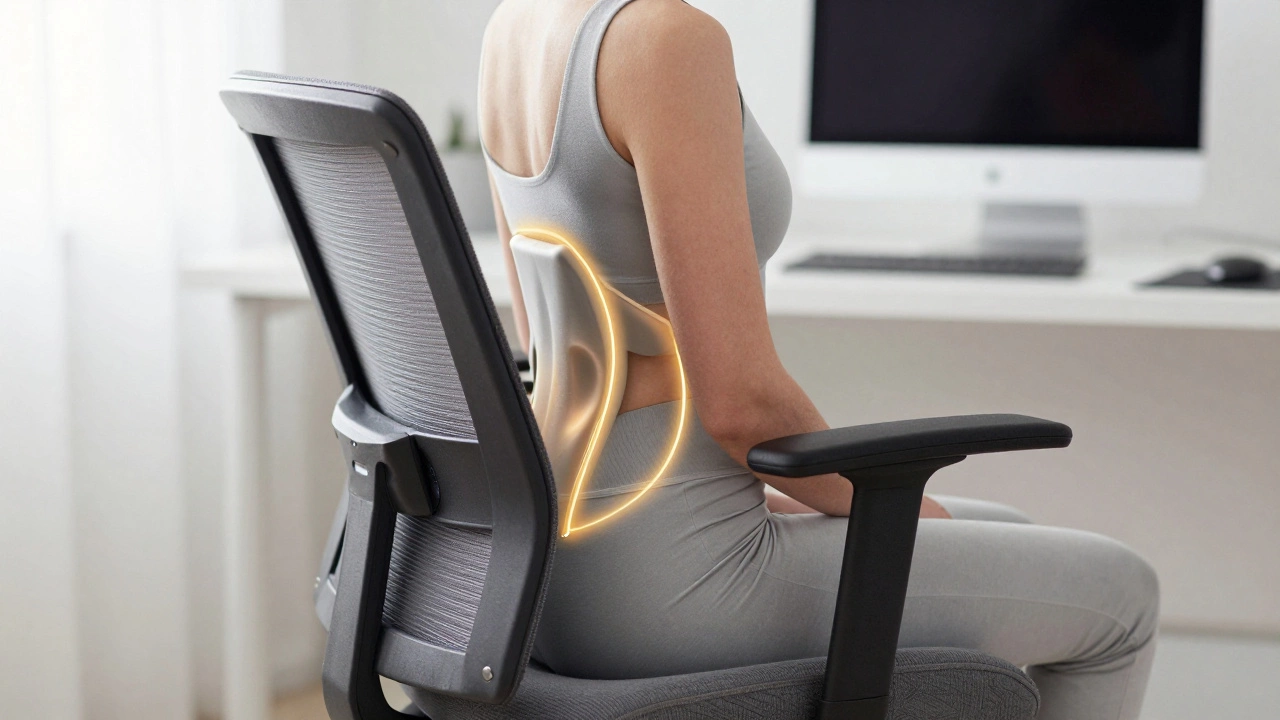
The secret sauce is the "pelvic tilt." Instead of sinking into the backrest, imagine a string pulling the top of your head toward the ceiling. Gently tilt your pelvis forward so your lower back maintains its natural curve. This action naturally pulls your belly button toward your spine, engaging the transversus abdominis-the deepest layer of your abdominal muscles that acts like a natural corset.
How Your Chair Impacts Your Waistline
Not all seats are created equal. A plush, oversized executive chair is a trap; it encourages you to disappear into the padding, which kills your posture. To fight belly fat, you need a chair that supports the lumbar region without doing all the work for you.
Look for chairs with adjustable lumbar support. If the support is too high, it pushes your chest forward and lets your stomach hang. If it's too low, you'll slouch. The support should fit perfectly in the curve of your lower back, forcing you to sit upright. Consider a saddle chair or a balance ball if your job allows it. These tools force "active sitting," meaning your core must constantly make micro-adjustments to keep you balanced, which burns more calories than sitting in a traditional swivel chair.
| Chair Type | Core Engagement | Postural Support | Metabolic Impact |
|---|---|---|---|
| Executive Plush | Low | Passive | Lowest (promotes slouching) |
| Ergonomic Task Chair | Medium | High | Moderate (supports alignment) |
| Saddle Chair | High | Active | Higher (constant micro-movements) |
| Stability Ball | Very High | Self-Correcting | Highest (requires balance) |
The Danger of the "Tech Neck" Slump
When you lean forward to look at a monitor, your shoulders roll inward and your head juts out. This is known as forward head posture. While it seems like a neck issue, it's actually a core issue. When your upper body collapses, your center of gravity shifts, and your lower back compensates by arching excessively (anterior pelvic tilt). This makes your stomach protrude, even if you don't have much actual fat there.
To fix this, bring your screen to eye level. When your gaze is level, your spine is more likely to stay neutral. A neutral spine allows the diaphragm to function properly. Better breathing means more oxygen to your muscles and a more efficient metabolism. If you're gasping for air because your chest is compressed, your body enters a stress state, increasing cortisol-the hormone directly linked to the storage of belly fat.
The 30-Minute Movement Rule
The "best" position is actually the next position. No matter how perfect your form is, sitting still for hours is a metabolic disaster. Your lipoprotein lipase-an enzyme that helps your body burn fat-drops significantly when you remain sedentary.
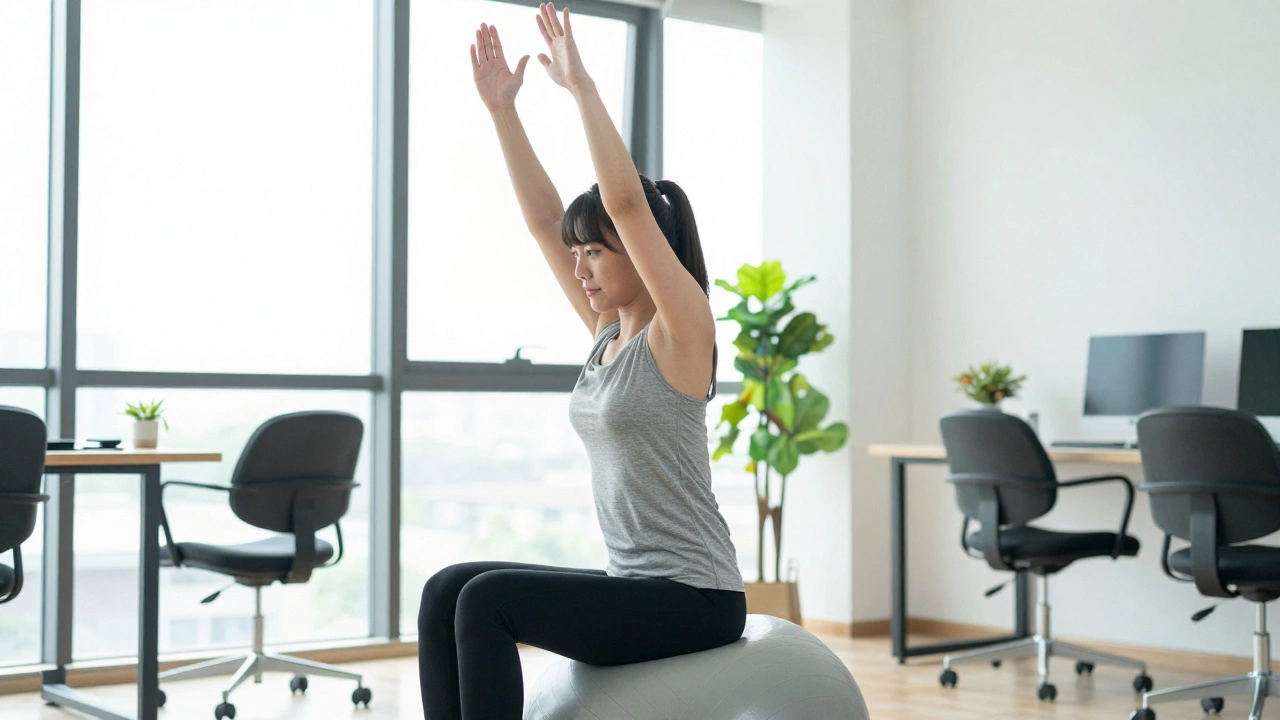
Implement a "movement snack" every 30 minutes. You don't need a full workout; just 60 seconds of activity. Try these:
- Seated Leg Extensions: Straighten one leg at a time under your desk to engage your quads and core.
- The Standing Stretch: Stand up and reach for the sky, then touch your toes. This resets the hip flexors that tighten during sitting.
- Glute Squeezes: Squeeze your glutes for 5 seconds and release. This wakes up the posterior chain, which supports your lower back.

Integrating Posture into Your Daily Workflow
Changing your habits is harder than buying a new chair. To make this stick, use environmental cues. Put a sticky note on your monitor that says "Core Check." Every time you see it, check three things: Are my feet flat? Is my spine neutral? Is my stomach slightly tucked?
If you find yourself sliding down in your chair by 3 PM, it's a sign of mental and physical fatigue. Instead of fighting it with more caffeine, try a "power reset." Stand up, take three deep breaths into your belly (not your chest), and sit back down with a focused intent on your posture. This small shift prevents the end-of-day slump that leads to poor digestion and bloating.
Can sitting correctly actually burn belly fat?
Sitting correctly doesn't burn calories in the way that running or swimming does. However, it prevents the muscle atrophy and metabolic slowdown associated with slouching. By engaging your core and maintaining a neutral spine, you keep your muscles active and improve your insulin sensitivity, which makes it easier for your body to burn fat through diet and exercise.
What is the worst position for abdominal health?
The "C-curve" or slouching deep into a soft sofa or chair is the worst. This position compresses the internal organs, restricts the diaphragm, and allows the abdominal muscles to completely relax. Over time, this leads to poor posture and can make the belly appear larger due to the protrusion of the organs.
Should I use a standing desk to lose belly fat?
Standing desks are a great tool because they increase your overall daily energy expenditure. However, standing still is just as bad as sitting still. The best approach is a "sit-stand" rotation where you switch positions every hour. This keeps your circulation flowing and prevents any one muscle group from becoming overly tight.
How does posture affect cortisol and belly fat?
Poor posture often leads to shallow breathing. When you don't breathe deeply, your body may perceive this as a stress signal, triggering the release of cortisol. High levels of cortisol are closely linked to the accumulation of visceral fat, specifically in the abdominal region.
Do I need a special cushion to help with my posture?
A lumbar support cushion can be helpful if your current chair lacks one. It helps maintain the natural inward curve of your lower back, which in turn helps you keep your core engaged. However, a cushion is a supplement, not a replacement for active sitting and regular movement.
Next Steps for Your Workspace
If you're just starting this journey, don't try to fix everything at once. Start by adjusting your monitor height today. Once your head is aligned, focus on your feet and pelvic tilt. If you're an athlete or someone who works out, you'll notice that the "active sitting" technique mirrors the core bracing you do during a plank. Apply that same tension-at about 20% intensity-throughout your workday.
For those struggling with chronic lower back pain, be careful not to over-arch your back. The goal is a neutral spine, not a pushed-out chest. If you feel strain, lean back slightly and reset. The best result comes from a combination of a supportive chair, mindful posture, and the willingness to stand up and move every single hour.