
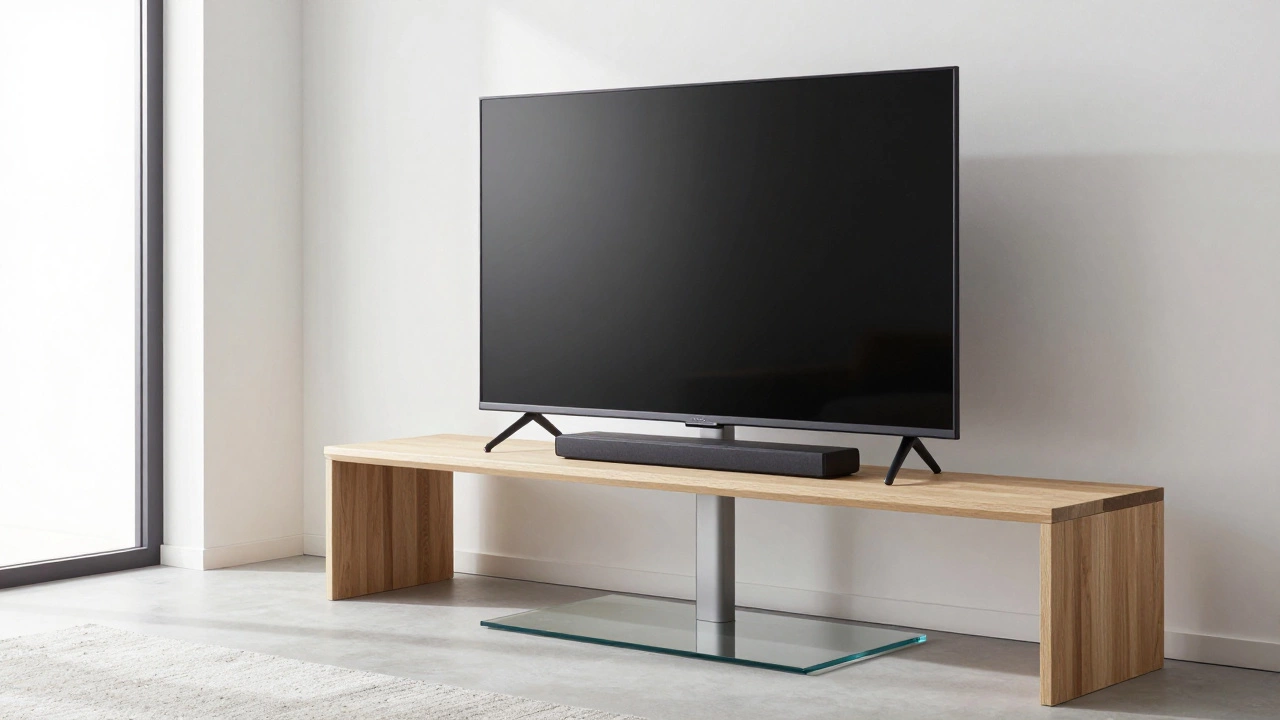
Ever tried to set up a new television only to realize the legs that came in the box are hideous, too wide for your furniture, or just plain unstable? You aren't alone. Most factory legs are designed for the lowest common denominator, meaning they rarely fit the actual vibe of a living room. Whether you're dealing with a narrow console or you just hate the look of those plastic 'V' shaped feet, you have plenty of options to get your screen off the floor without using the stock hardware.
When we talk about TV leg alternatives, we are looking for ways to support a Television-which is an electronic device used for receiving broadcast signals and displaying video content-without relying on the manufacturer's original stands. Most modern screens use the VESA standard, which is the secret key to unlocking almost every alternative on this list.
The Quick Fix: Universal Tabletop Stands
If you have a sturdy piece of furniture but the original legs are too wide (a common problem with 65-inch screens on 50-inch consoles), a universal pedestal stand is your best bet. Instead of two legs at the far edges, these provide a single, heavy-duty center column.
- Pedestal Bases: These usually feature a tempered glass or heavy steel base that keeps the TV centered.
- Adjustable Height: Many universal stands allow you to raise the screen by 2 to 5 inches, which is a lifesaver if you have a soundbar that blocks the bottom of the screen.
- Swivel Functions: Unlike fixed legs, these often let you rotate the screen to avoid glare from a nearby window.
These are perfect for people who rent and can't drill holes into the walls but still want a clean, centered look. Just make sure the stand is rated for your TV's weight; a cheap stand supporting an 80kg OLED is a recipe for a very expensive accident.
Going Vertical: Wall Mounting
The most popular way to ditch the legs entirely is by moving the TV to the wall. This doesn't just look sleeker; it actually saves a massive amount of floor space. To do this, you'll need a Wall Mount, which is a hardware bracket system that secures a television to a vertical surface using VESA-compliant screws.
Depending on your needs, you can choose from different styles:
- Fixed Mounts: These hold the TV flush against the wall like a piece of art. They are the cheapest and most stable but offer zero adjustability.
- Tilting Mounts: Great for TVs mounted higher up (like in a bedroom) to reduce neck strain and stop reflections.
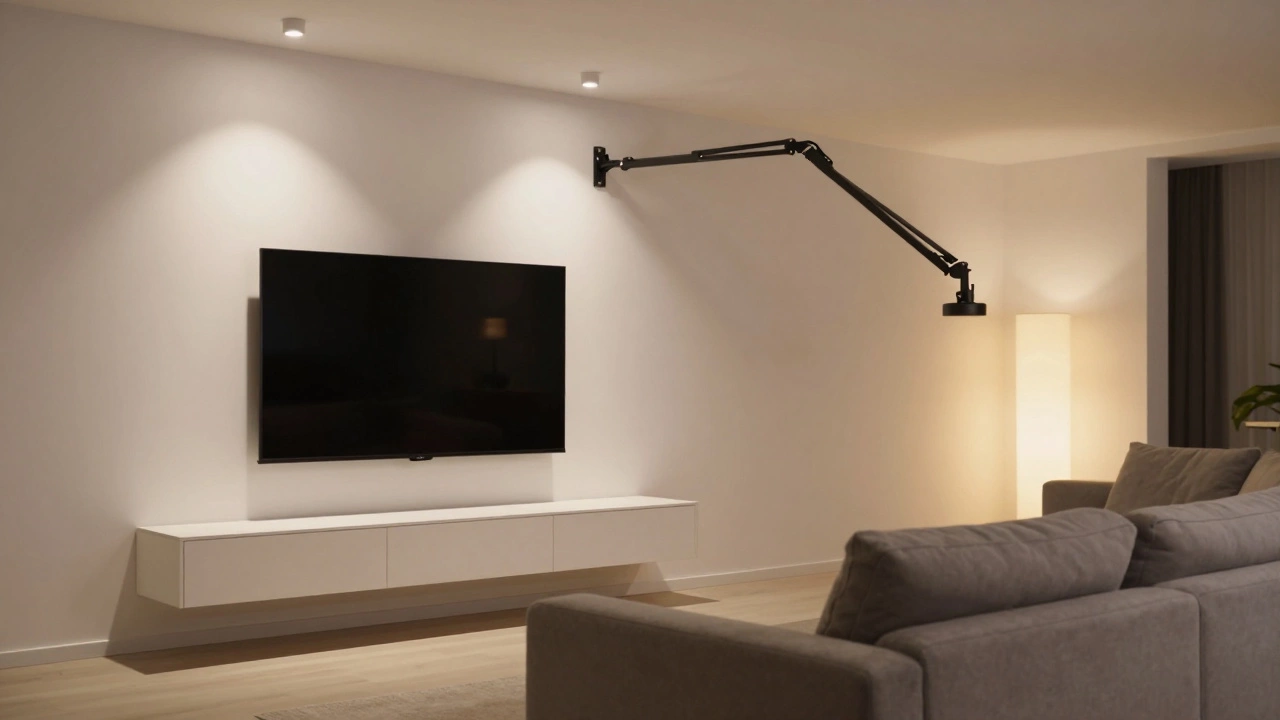
- Full-Motion / Articulating Arms: These allow you to pull the TV away from the wall and angle it toward the kitchen or a seating area.
Pro tip: Before you drill, use a piece of painter's tape to mark the boundaries of the TV on the wall. It's much easier to move tape than it is to patch drywall holes because you mounted the screen three inches too high.
| Method | Installation Effort | Stability | Flexibility | Best For |
|---|---|---|---|---|
| Stock Legs | Low | Medium | None | Quick setup |
| Universal Stand | Medium | High | Medium | Small furniture |
| Fixed Wall Mount | High | Very High | Low | Clean aesthetics |
| Full-Motion Arm | High | Medium | Very High | Multi-room viewing |
The Middle Ground: Floating Shelves and Consoles
If you want the look of a wall mount but still want a place to put your remote and gaming console, look into floating Floating Shelves, which are wall-mounted horizontal surfaces that lack visible support legs. By mounting a deep, reinforced shelf, you can effectively create a custom "stand" that hovers off the floor.
For a more substantial look, a floating TV console provides a dedicated area for electronics. Because there are no legs on the floor, your room feels larger, and vacuuming becomes a lot easier. Just be mindful of cable management. Nothing ruins the "floating" illusion faster than a thick bundle of black wires hanging down to the power outlet.
Creative and Low-Cost DIY Alternatives
Not everyone wants to spend a hundred dollars on a mount or a new stand. If you're feeling handy, there are ways to build your own support system using common materials.
Wooden Blocks or Cubes: Using a Plywood base with reinforced supports can create a custom-sized plinth. If you paint the wood a matte black, it blends into the TV frame and disappears from view. This is ideal for creating a very low-profile look.
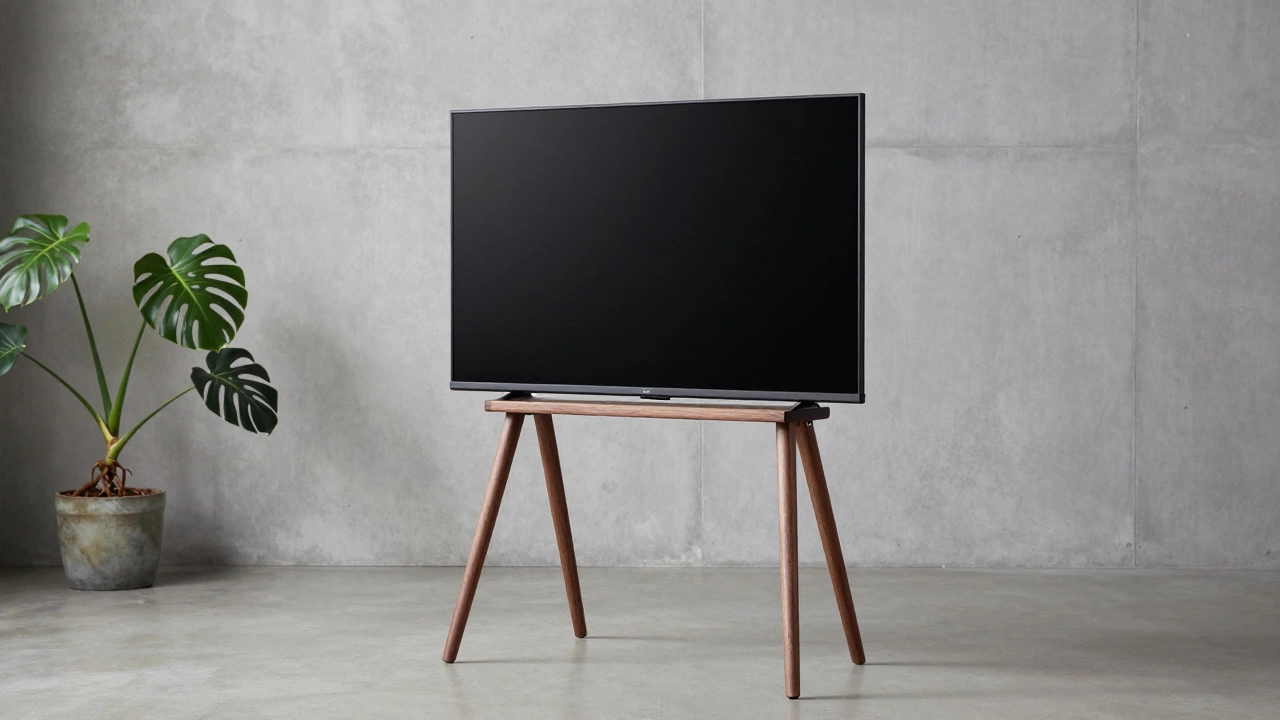
The "Easel" Stand: Some people use tripod-style legs, which look more like an artist's easel than a piece of tech gear. You can buy these as kits, but some DIYers build them from hardwood. It turns the TV into a piece of furniture rather than just an appliance.
Custom Cabinetry: If you're renovating, building a recessed wall niche allows the TV to sit flush inside the wall. This completely eliminates the need for legs or mounts, as the TV is essentially "framed" by the architecture of the room.
Avoid These Common Pitfalls
When ditching the factory legs, it's easy to make mistakes that lead to a cracked screen. First, never use "off-the-shelf" screws from a hardware store unless you've double-checked the thread pitch. TVs use specific M-series screws (like M4 or M6). If you force a standard screw into a VESA hole, you can strip the internal threading or, worse, push the screw too deep and puncture the internal circuitry of the panel.
Second, be wary of "no-stud" wall anchors. While some plastic anchors claim to hold 50lbs, a TV creates dynamic leverage (especially on an arm mount) that can rip a chunk of drywall right out of the wall. Always aim for the Wall Stud-the vertical framing member of a wall-to ensure the screen stays put.
Lastly, consider the ventilation. If you decide to build a custom box or a tight-fitting niche to replace the legs, make sure there is at least 2 inches of space around the vents. Modern 4K TVs generate a surprising amount of heat; if that heat can't escape, the lifespan of your LED backlight will drop significantly.
Can I use any universal stand for any TV?
Not quite. You must check two things: the weight limit and the VESA pattern. The VESA pattern is the distance between the four mounting holes on the back of your TV (e.g., 200x200mm or 400x400mm). If the stand doesn't support your specific pattern or weight, it will be unstable or impossible to attach.
Is it safe to remove the original legs entirely?
Yes, as long as you replace them with a secure alternative. The legs are simply there to keep the TV upright. As long as your new mount or stand is securely fastened to the VESA holes and rated for the TV's weight, it is perfectly safe.
What is the cheapest alternative to TV legs?
A basic fixed wall mount is usually the cheapest professional option. If you want a DIY route, building a simple wooden plinth or using a sturdy, wide bookshelf can work, provided the surface is level and deep enough to prevent the TV from tipping forward.
Will using a third-party stand void my warranty?
Generally, no. Using the VESA mounting holes is an industry standard and is intended for the use of third-party mounts. However, if you drill holes into the chassis or use incorrect screws that damage the internal hardware, the manufacturer may deny a warranty claim for those specific damages.
How do I hide the wires when using a floating stand?
The best way is to use a cable raceway or "cord cover" that sticks to the wall and can be painted the same color as your paint. Alternatively, if you have a drywall wall, you can install an in-wall cable management kit that allows wires to run behind the wall and pop out exactly where the TV is mounted.
Next Steps for Your Setup
If you're ready to make the switch, start by measuring the distance between the mounting holes on the back of your TV. Once you have that number, decide if you want the screen to remain on a piece of furniture or move to the wall. If you're going for a minimal look, a combination of a wall mount and a floating console is the current gold standard for modern interior design.
For those who aren't comfortable drilling, a high-quality universal pedestal stand is the fastest way to upgrade the look of your living room without risking your security deposit. Just remember to keep the original legs in a safe box-you'll want them if you ever move or decide to sell the TV.