
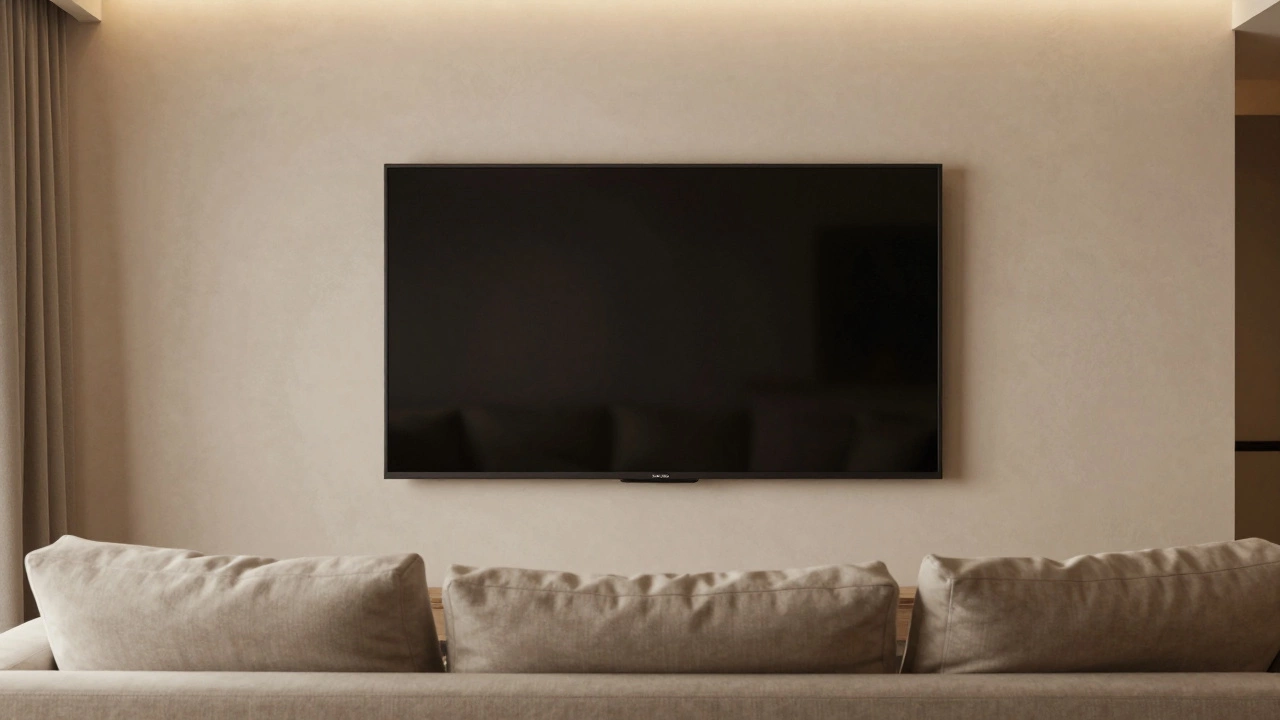
65-Inch TV Height Calculator
Input Your Measurements
65-Inch TV Specifications
- Screen Width: ~57.0 inches
- Screen Height: ~32.2 inches
- Vertical Center Point: 16.1 inches from bottom of screen
Results Analysis
To align with your eyes, the center of the TV screen should be at:
This means the very bottom edge of the TV screen should sit at:
Current Stand Compatibility Check
You’ve just bought that stunning 65-inch TV is a large-screen television display measuring 65 inches diagonally, typically used for home entertainment and immersive viewing experiences.. It’s sleek, it’s bright, and it dominates the room. But wait-before you mount it or place it on a stand, ask yourself: where exactly should it go? If you’ve ever felt your neck cramping after an hour of watching Netflix, you know the answer isn’t just “eye level.” Getting the height wrong turns a premium upgrade into a physical nuisance.
The short answer? The center of the screen should align with your seated eye level. For most people, that means the middle of your 65-inch TV sits between 42 and 48 inches from the floor when you’re sitting on your sofa. This isn’t a guess; it’s basic ergonomics designed to keep your spine neutral and your eyes relaxed. Let’s break down how to calculate this for your specific living room setup.
Understanding the Ergonomics of Screen Placement
Why does height matter so much? Your head naturally rests in a position where your neck muscles are at ease. When you look slightly downward (about 10 to 15 degrees), those muscles stay relaxed. Look straight ahead or upward, and you start engaging muscles that weren’t meant to hold weight for hours. Over time, that leads to tension headaches, stiff shoulders, and yes, chronic neck pain.
The Society of Motion Picture and Television Engineers (SMPTE) recommends a viewing angle of no more than 30 degrees from the center of the screen. For a large screen like a 65-incher, getting closer to the center vertically helps maintain that optimal angle across the entire picture. If the TV is too high, you’ll tilt your head back. Too low, and you’ll crane your neck forward. Both positions strain your cervical spine.
Think about your favorite chair. Sit in it now. Where are your eyes looking? Probably just past the coffee table, maybe at a bookshelf or a window. That horizontal line is your target. The goal is to make the TV disappear into your natural field of vision, not force your body to adjust to it.
Calculating the Ideal Height for Your Space
Every living room is different, and so is every person. Here’s how to find your perfect number:
- Measure your seated eye level. Sit in your primary viewing spot (the sofa or recliner). Ask someone to measure from the floor to the center of your pupils while you sit comfortably upright. Write that number down. For the average adult male, this is around 42-45 inches. For females, it’s often 39-42 inches. If multiple people watch TV, aim for the average.
- Find the center of your TV. A 65-inch TV measures approximately 57 inches wide and 32.5 inches tall (excluding the bezel and stand). Divide the height by two to find the vertical center point. That’s roughly 16.25 inches from the top or bottom of the screen itself.
- Add up the heights. If you’re using a TV stand, add the height of the stand to the distance from the top of the stand to the center of the TV. Remember, many TVs have feet that lift the screen higher. You want the total height from the floor to the center of the screen to match your seated eye level measurement.
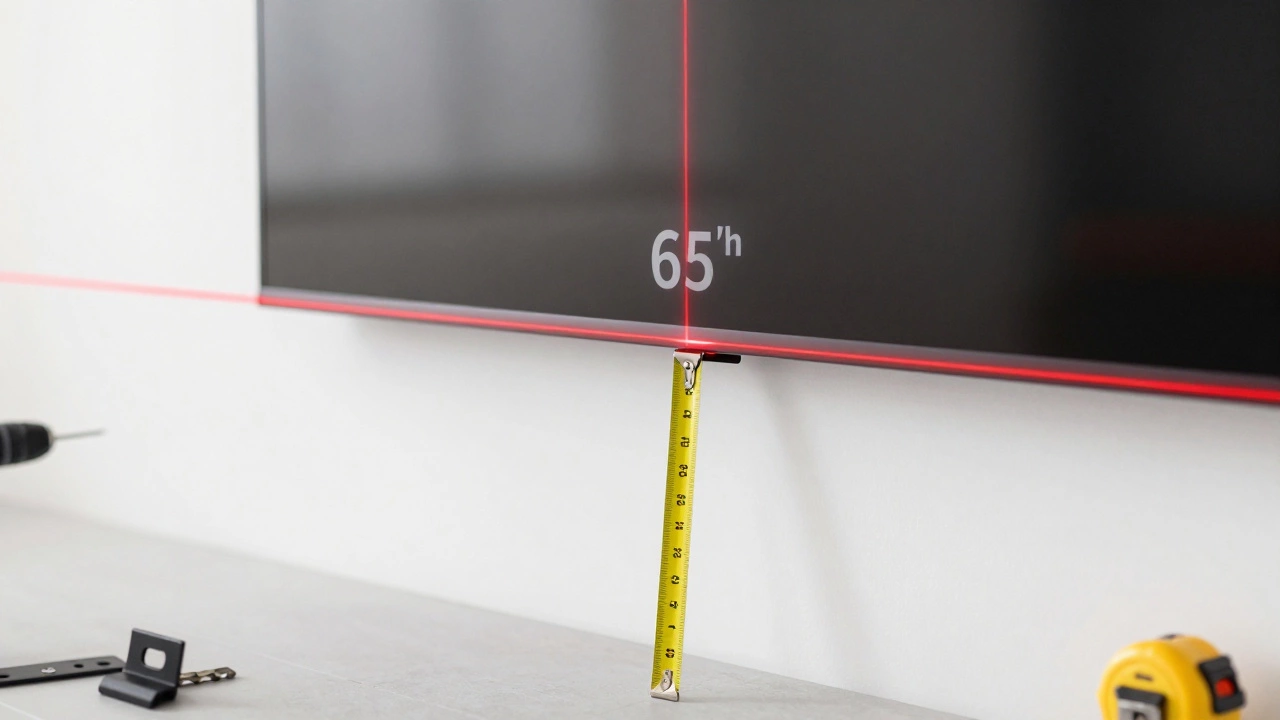
If you’re wall-mounting, use a laser level to mark that exact height on the wall before drilling. It’s worth the extra five minutes of precision.
| Viewer Height (Standing) | Approximate Seated Eye Level | Recommended Center of TV Height |
|---|---|---|
| Under 5'4" | 38 - 40 inches | 38 - 40 inches |
| 5'4" - 5'8" | 40 - 42 inches | 40 - 42 inches |
| 5'8" - 6'0" | 42 - 44 inches | 42 - 44 inches |
| Over 6'0" | 44 - 46 inches | 44 - 46 inches |
Wall-Mounted vs. Stand-Placed TVs
How you install your TV changes the game slightly. Wall mounts offer flexibility but require careful planning. Full-motion mounts allow you to tilt and swivel the screen, which can help if your seating area isn’t perfectly centered. However, even with a tilting mount, the resting position should still follow the eye-level rule.
TV stands provide stability and often hide cables and media devices. The challenge here is that stands vary wildly in height. Some are only 12 inches tall, while others reach 24 inches or more. If your chosen stand is too low, you might need to add risers or blocks under the TV feet. If it’s too high, consider a lower-profile stand or mounting the TV directly to the wall above a shorter console.
In bedrooms, the rules shift because you’re lying down. In that case, the center of the screen should be aligned with your eye level when reclined, which is usually lower-around 30 to 36 inches from the floor. Don’t apply living room logic to bedroom setups.
Common Mistakes to Avoid
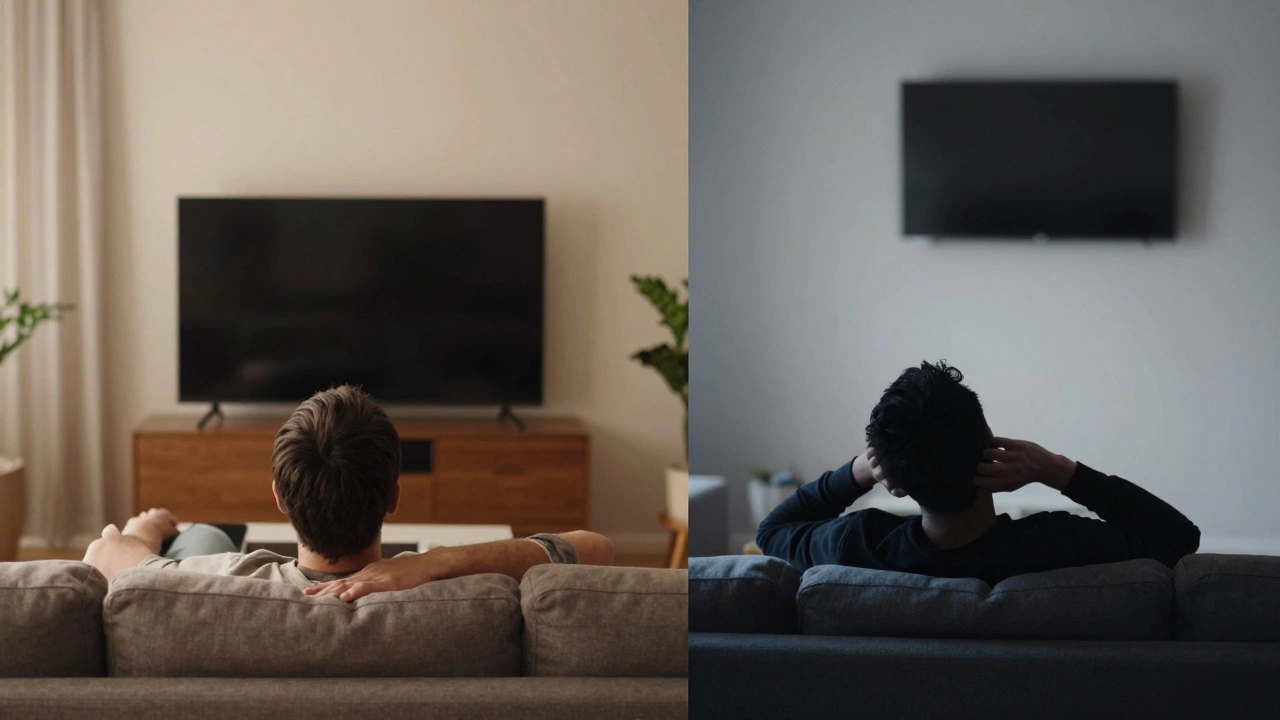
One huge error people make is placing the TV based on standing eye level. Sure, it looks great when you’re walking through the room, but you don’t watch TV standing up. Another mistake is ignoring the thickness of the TV stand or the height of the TV’s own feet. A 65-inch TV on a small stand might still end up too high if the manufacturer’s feet add another 4 inches of elevation.
Also, don’t forget about glare. Placing the TV too high might seem like a way to avoid reflections from windows, but it creates new problems. Instead, adjust blinds or use anti-glare coatings. Keep the height ergonomic first, then manage light separately.
Special Considerations for Large Screens
A 65-inch TV is big. It demands attention. Because of its size, even small deviations in height become noticeable. If the TV is mounted 2 inches too high, the top of the screen will feel oppressive, forcing you to look down sharply. If it’s 2 inches too low, the bottom feels cut off, and you’ll lean forward unconsciously.
For gaming, especially with VR or motion controls, having the screen slightly lower can sometimes help with immersion, but never compromise on neck comfort. For sports fans who stand during games, a compromise height might work, but prioritize the majority of your viewing time-usually seated relaxation.
Finally, test before you commit. Use painter’s tape to outline the TV on the wall or place a cardboard cutout on your stand. Sit there for 20 minutes. Watch a show. Does your neck feel fine? If yes, you’ve nailed it. If no, adjust and try again. Your future self will thank you.
What is the ideal height for a 65-inch TV on a wall?
The center of the screen should be at your seated eye level, typically 42 to 48 inches from the floor. Measure from the floor to your eyes while sitting on your main couch, then mark that height on the wall as the center point for the TV.
How high should a TV stand be for a 65-inch TV?
Aim for a stand that places the center of the TV at 42-48 inches from the floor. Since a 65-inch TV is about 32.5 inches tall, the center is roughly 16 inches from the base. So, a stand height of 26-32 inches usually works well, depending on the TV's feet height.
Should a TV be at eye level when standing or sitting?
Always prioritize sitting eye level. Most TV viewing happens while seated on a sofa or chair. Aligning with standing eye level causes neck strain because you'll constantly look up while watching.
Is it better to mount a 65-inch TV or put it on a stand?
Both options work if positioned correctly. Wall mounts save space and reduce cable clutter, while stands offer easier access to ports and ventilation. Choose based on your room layout and aesthetic preference, but ensure the final height matches your seated eye level.
What is the best viewing distance for a 65-inch TV?
For a 65-inch 4K TV, the recommended viewing distance is between 8.5 and 13 feet. This range allows you to appreciate the detail without noticing individual pixels, while maintaining a comfortable field of view.