
Closet Door Strategy Finder
Answer a few questions about your room and habits to find the best door configuration for your clothes.
Loading...
Your Recommendation:
Quick Guide: Open vs. Closed
- Keep them closed if: You have a lot of dust, pets that shed, or a room that feels like a sauna.
- Keep them open if: Your room is dry, you're prone to forgetting where things are, or you're dealing with a slight musty smell.
- The Middle Ground: Leave them cracked a few inches during the day to let the air move.
The Airflow Argument: Fighting the Musty Smell
Let's talk about the biggest enemy of any wardrobe: stagnant air. When you shut a heavy door on a collection of fabrics, you're essentially creating a sealed pod. If your clothes aren't 100% dry from the laundry or if your room is naturally damp, that moisture gets trapped. This leads to that distinct "old closet" smell, which is actually the scent of mildew attempting to move in.
By keeping doors open, you encourage Air Circulation is the movement of air through a space to prevent the buildup of moisture and odors. When air flows freely, it carries away the volatile organic compounds (VOCs) that off-gas from synthetic fabrics and treated woods. If you live in a humid climate, like Florida or Southeast Asia, you might think closing the doors keeps the humidity out, but it actually traps it inside with your clothes. A better move is to use a dehumidifier in the room and leave the doors slightly ajar.
Dust, Pet Hair, and the "Closed Door" Shield
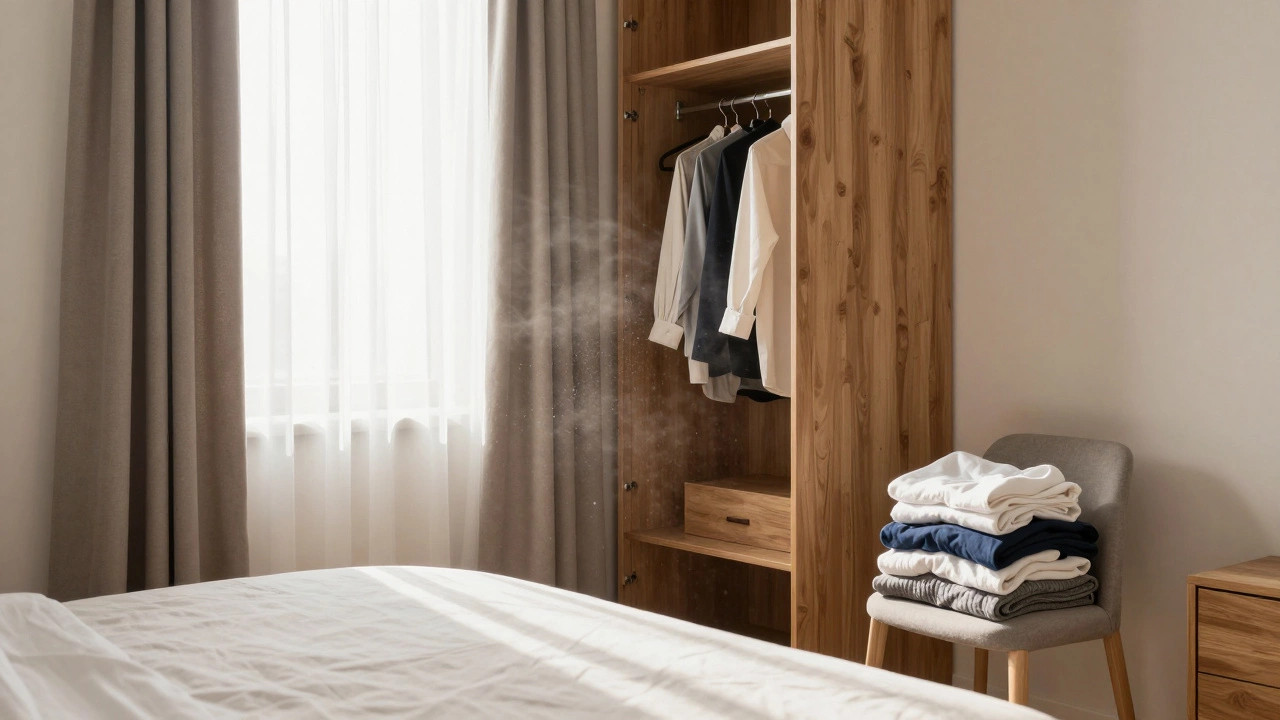
On the flip side, open doors are an open invitation for every particle of dust in your house to land on your favorite black blazer. Dust isn't just annoying; it's made of skin cells, fabric fibers, and outdoor pollutants. Over time, these particles settle into the weave of your clothes, making them look faded and feel gritty.
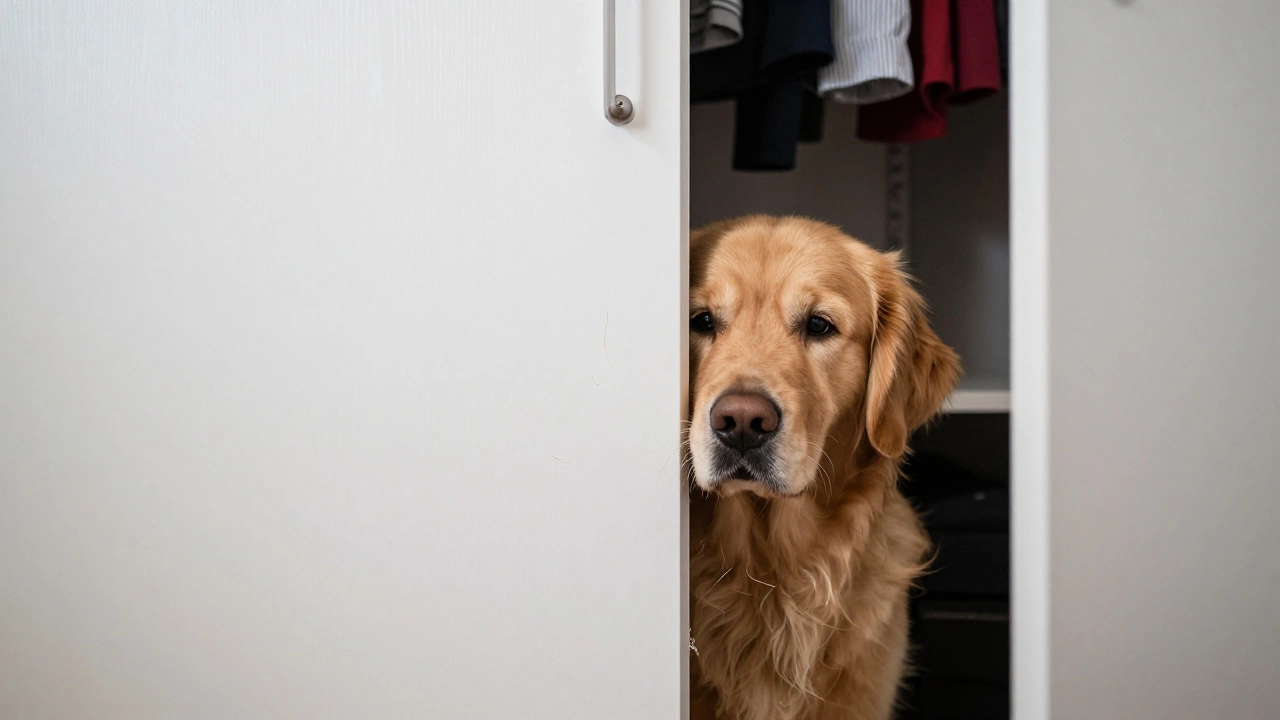
If you have a Golden Retriever or a long-haired cat, open closet doors are a nightmare. Pet dander and hair are lightweight and travel via air currents. A closed door acts as a physical barrier, keeping your Wardrobe a freestanding cabinet or built-in space used for storing clothes clean for much longer. If you're choosing between the two based on cleaning effort, closed doors win every single time. You'll spend significantly less time using a lint roller before you head out the door.
| Factor | Doors Open | Doors Closed |
|---|---|---|
| Air Quality | Fresh, prevents mustiness | Stagnant, risk of odors |
| Cleanliness | Collects dust and hair | Protects fabrics |
| Visual Order | Exposes clutter | Hides the mess |
| Accessibility | Faster to grab and go | Extra step to open |
| Pest Control | Easier for moths to enter | Provides a basic barrier |
Psychology and the "Out of Sight, Out of Mind" Trap
There is a psychological element to this. When your clothes are visible, you're more likely to rotate your wardrobe. You see that green sweater you haven't worn in two years and remember it exists. This naturally leads to a more diverse style and helps you realize what you actually need to donate.
However, for many of us, the "open" look only works if we have an actual Capsule Wardrobe, which is a curated collection of a few essential items of clothing that don't go out of style. If your closet is packed to the brim, leaving the doors open creates visual noise. This can actually increase stress levels in your bedroom, which should be a sanctuary for sleep. If you can't look at your closet without feeling overwhelmed by the amount of laundry you haven't folded, shut the doors. The mental relief of a clean-looking room often outweighs the benefit of slightly better airflow.
Dealing with Pests: Moths and Silverfish
If you've ever found a tiny hole in a cashmere sweater, you've met the Clothes Moth. These pests love dark, undisturbed, and humid environments. You might think closing the door keeps them out, but if they're already inside, a closed door provides the perfect, undisturbed sanctuary for them to breed.
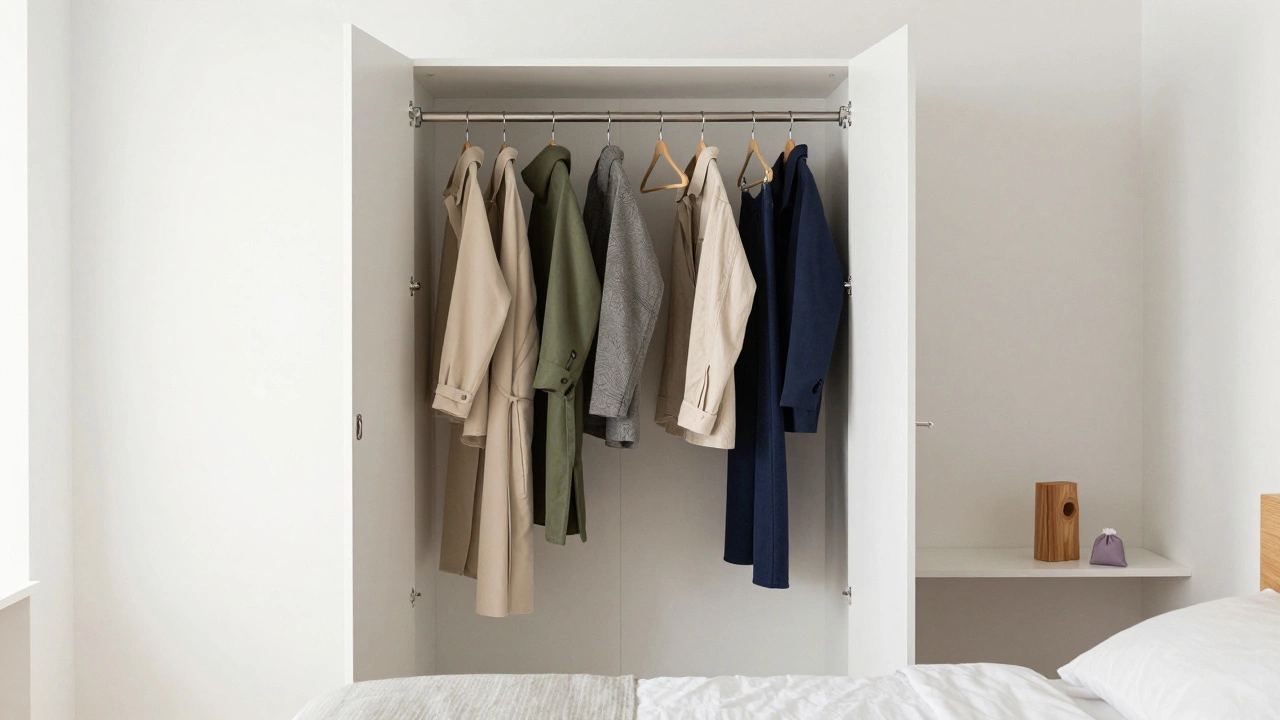
Regularly opening your doors and shaking out your clothes exposes these pests to light and movement, which they hate. However, if your room is an open-concept space with a lot of foot traffic, you're essentially inviting them in. The pro tip here is to keep doors closed but use cedar blocks or lavender sachets. These natural repellents work better in a closed environment because the scent stays concentrated, creating a chemical barrier that moths find repulsive.
Practical Solutions for Every Scenario
You don't have to pick one side of the fence. There are several ways to get the best of both worlds. If you have sliding doors, try leaving one side open by a few inches. This creates a chimney effect where air can enter and exit without leaving the entire wardrobe exposed to the room's dust.
If you're dealing with a truly damp room, consider installing a small Ventilation System or simply using a hanging dehumidifier bag. These bags use calcium chloride crystals to pull moisture directly from the air inside the closet, meaning you can keep the doors shut to hide the mess while still protecting your fabrics from mold.
For those with an open-concept closet (no doors at all), the only solution is a rigorous cleaning schedule. You'll need to vacuum your shelves and wipe down your rails at least once a week. Without the protection of a door, your clothes essentially become a giant air filter for your room, trapping everything that floats by.
Does leaving closet doors open actually prevent mold?
Yes, in most cases. Mold thrives in stagnant, humid air. By leaving the doors open, you allow the air to circulate and mix with the rest of the room's environment. If you have a dehumidifier or AC running in the bedroom, opening the closet doors lets that dry air reach your clothes, which significantly lowers the risk of mold growth on leather or wool items.
Will my clothes fade if I leave the closet doors open?
Only if your closet is exposed to direct sunlight. UV rays are the primary cause of fabric fading (photo-degradation). If your wardrobe is in a dark corner or has no windows nearby, leaving the doors open won't cause fading. However, if the sun hits your clothes for several hours a day, keep those doors shut tight to preserve the colors.
Is it better to keep the door open or closed for moth prevention?
It's a bit of a paradox. Closed doors keep new moths from flying in, but they protect existing moths from being disturbed. The best approach is to keep doors closed but use aromatic deterrents like cedar wood or lavender. Additionally, periodically opening the doors to shake out your clothes and let light in will disrupt any pests that may have snuck in.
Do open closets make a room look bigger?
Generally, no. Open closets often create "visual clutter," which can make a room feel smaller and more hectic. Closed doors create a clean line and a flat surface, which tricks the eye into seeing a more organized and spacious area. If you want the open look without the chaos, invest in matching hangers and a strict color-coding system.
How often should I air out a closed closet?
If you keep your doors closed 24/7, try to leave them wide open for at least an hour a day-ideally when you have the windows open or the AC running. This flushes out the stale air and prevents that "closet smell" from embedding itself into your fabrics.
Final Tips for Better Wardrobe Care
Regardless of whether you prefer the doors open or closed, the state of your clothes depends more on the habits you build. Start by avoiding the urge to hang clothes immediately after wearing them; let a shirt "breathe" for an hour on a chair before putting it back in the closet. This prevents moisture from being trapped against other garments.
If you're struggling with a lack of space, remember that overstuffing a closet-even one with the doors open-kills airflow. When clothes are packed too tightly, air cannot move between them, creating pockets of humidity that lead to wrinkles and odors. Aim for a "two-finger gap" between your hangers. If you can't fit two fingers between your clothes, it's time to prune your collection.