
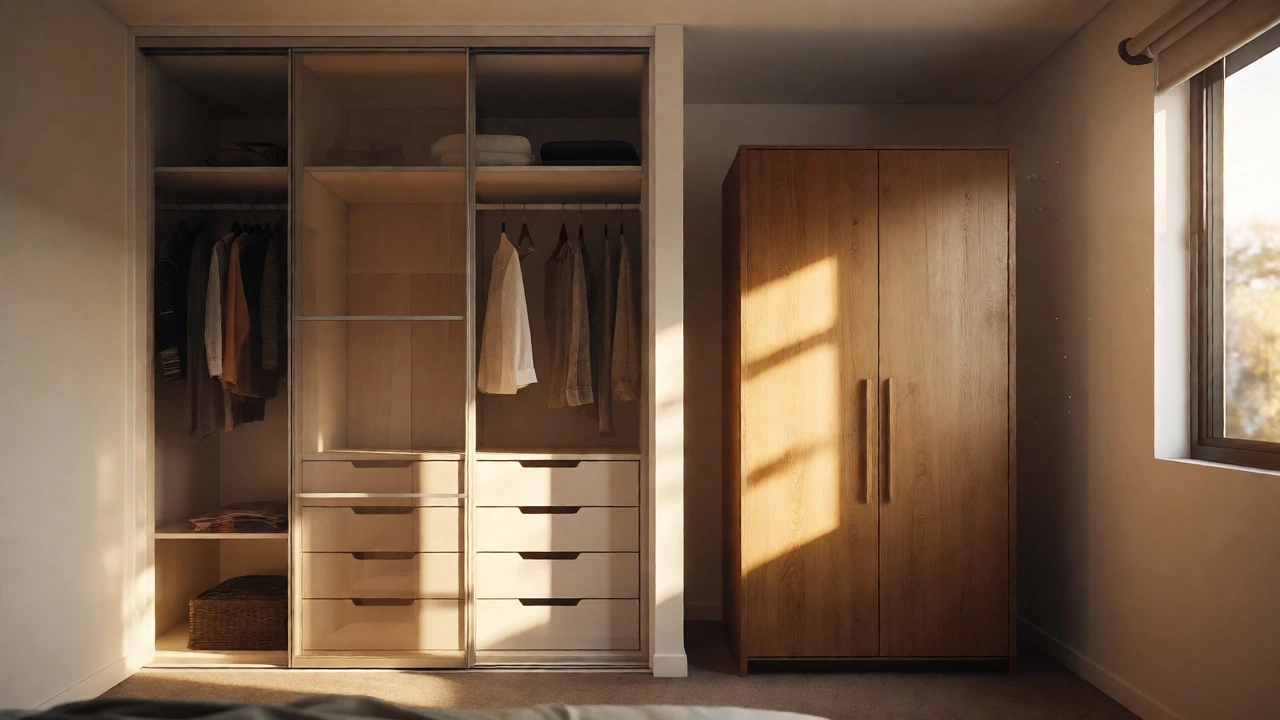
Closet vs. Wardrobe Decision Tool
Answer these questions to determine whether a built-in closet (architectural feature) or a freestanding wardrobe (movable furniture) is the right choice for your space.
You walk into a bedroom in Melbourne and see two options for storing your clothes. One is a recessed space with sliding doors. The other is a tall wooden box standing against the wall. People often use the words closet and worndrobe interchangeably, but they are not the same thing. Knowing the difference saves you money on renovations and helps you pick the right furniture for your rental or owned home.
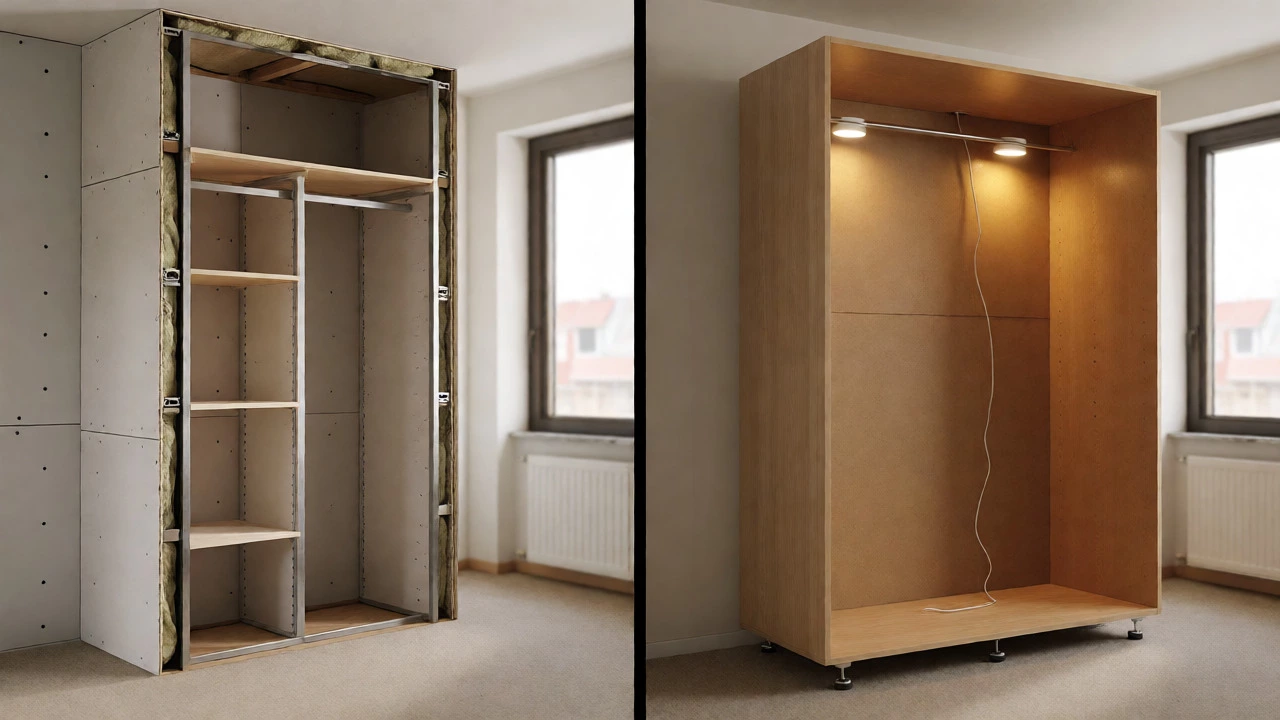
The core distinction lies in construction and permanence. A closet is typically a built-in architectural feature, while a wardrobe is a piece of movable furniture. This simple fact changes how you install them, how much they cost, and whether you can take them with you when you move.
What Exactly Is a Closet?
A closet is a small room or recessed area within a building used for storing clothes and personal items. It is part of the house structure itself. You cannot unscrew it and take it to your next apartment. In Australia, we often call these "built-in robes" or BIRs.
Closets come in several shapes:
- Reach-in closets: These are shallow, usually 60cm deep, and have no walking space inside. You stand outside to access shelves and hanging rails.
- Walk-in closets: Large enough for a person to enter. They often include islands, seating, and multiple hanging zones.
- Linen closets: Narrow spaces designed specifically for towels and bedding, not clothes.
Because closets are built into the walls, they maximize vertical space perfectly. They go from floor to ceiling without gaps where dust collects. However, this permanence means you are stuck with their layout unless you hire a carpenter to tear out the shelving.
Defining the Wardrobe
A wardrobe is a freestanding piece of furniture designed for storing clothes. Unlike a closet, a wardrobe is a standalone object. You buy it at a store like IKEA or Harvey Norman, assemble it, and place it in the room. If you get bored of the style or move houses, you can disassemble it and take it with you.
Wardrobes vary widely in material and design:
- IKEA PAX systems: Modular units that look custom but are technically furniture.
- Antique armoires: Heavy, solid wood pieces often found in heritage homes.
- Sliding door wardrobes: Space-saving designs that mimic the look of built-ins but sit on top of the carpet or floorboards.
One major advantage of a wardrobe is flexibility. You can paint it, swap the handles, or even move it to the hallway if the bedroom gets too crowded. Closets offer none of this freedom without significant renovation work.
Key Structural and Functional Differences
Why does the distinction matter? Because it affects your budget and your lifestyle. Let’s break down the practical differences between these two storage solutions.
| Feature | Closet (Built-in) | Wardrobe (Freestanding) |
|---|---|---|
| Installation | Permanent; requires carpentry | Movable; DIY assembly |
| Cost | High upfront ($1,500-$5,000+) | Variable ($300-$2,000) |
| Customization | Fits exact wall dimensions | Standard sizes; may leave gaps |
| Portability | None (stays with property) | High (take it anywhere) |
| Depth | Usually standard 60cm+ | Varies; often shallower (45-50cm) |
Notice the depth issue. Many freestanding wardrobes are only 45cm deep. Your winter coats might poke out slightly, preventing doors from closing fully. Built-in closets almost always adhere to the 60cm Australian standard for comfortable hanging. If you have bulky items, check the internal dimensions of any wardrobe before buying.
When to Choose a Closet Over a Wardrobe
If you own your home, a built-in closet usually adds more value to the property. Real estate agents love highlighting "ample built-in storage." It signals that the home was designed thoughtfully. Renters, however, rarely get to choose. You live with what the landlord provides.
Consider a closet if:
- You have irregularly shaped walls or alcoves that standard furniture won’t fit.
- You want a seamless, minimalist look with no visible side panels.
- You plan to stay in the house for ten years or more.
In Melbourne’s older suburbs, many Victorian terraces lack proper bedrooms with closets. Converting a small study into a walk-in robe is a popular renovation project here. It transforms dead space into functional luxury.
When a Freestanding Wardrobe Makes Sense
Renters and frequent movers should lean toward wardrobes. Why pay thousands for built-ins if you’re leaving in two years? A high-quality modular wardrobe system gives you organization now and portability later.
Choose a wardrobe if:
- You rent your home and cannot drill into walls extensively.
- Your bedroom has awkward corners that prevent a single large unit.
- You enjoy changing your interior decor frequently.
Modern modular systems like the IKEA PAX allow you to configure interiors exactly how you want. You can add shoe racks, pull-out trays, and lighting just as easily as in a built-in closet. The main trade-off is the visual gap at the top. Unless you build a false ceiling or filler panel, there will be a dusty space above the wardrobe.
Hybrid Solutions and Modern Trends
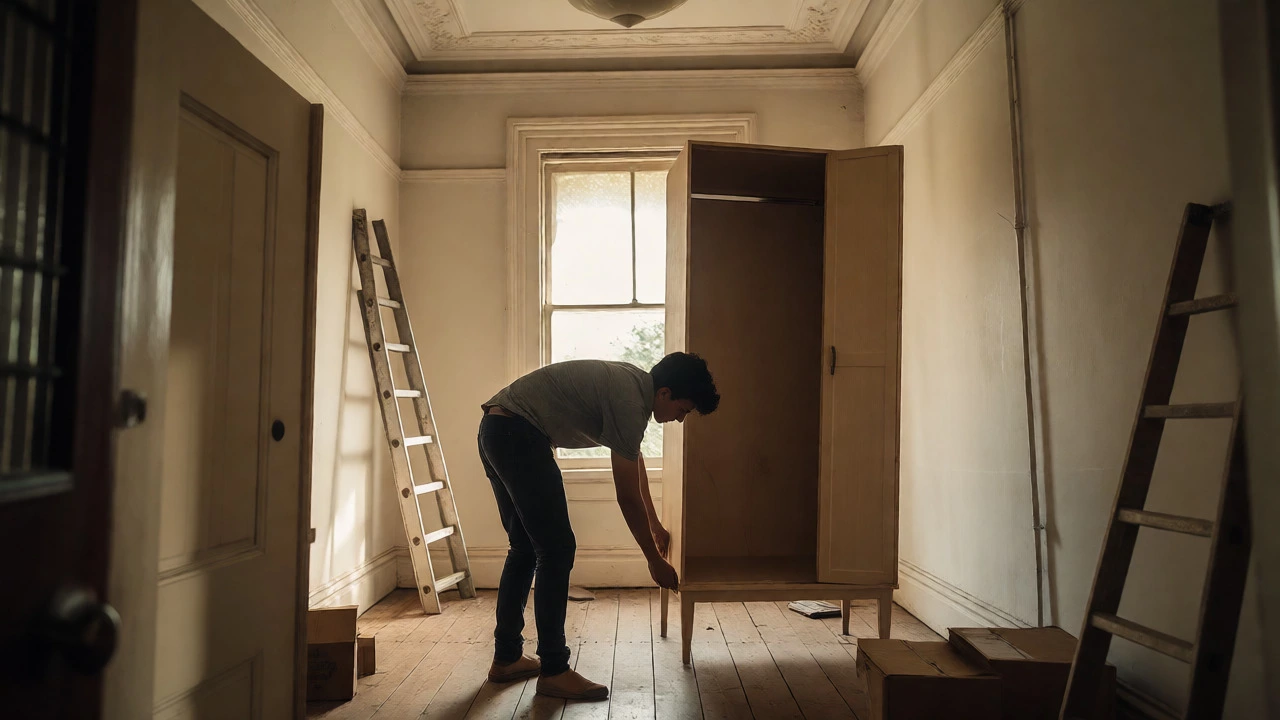
The line between closet and wardrobe is blurring. Many homeowners now install "pseudo-built-ins." They buy a modular wardrobe frame and secure it to the wall studs. Then they add a decorative front panel that matches the skirting boards. This creates the illusion of a built-in closet at a fraction of the cost.
Another trend is the open wardrobe. Popularized by brands like String Furniture, these consist of a rail and shelves without doors. They function like a walk-in closet but remain freestanding. They require good tidiness habits because everything is visible. But they make small rooms feel larger by removing the bulk of closed cabinets.
Lighting plays a huge role in both setups. Built-in closets often have hardwired LED strips triggered by motion sensors. Wardrobes rely on battery-operated puck lights or plug-in LEDs. If you choose a wardrobe, factor in the cost of adding proper lighting. Dark corners lead to forgotten clothes.
Maintenance and Longevity
Built-in closets generally last longer because they are made of durable materials like melamine board or timber veneer attached directly to plasterboard. They don’t wobble or shift over time.
Freestanding wardrobes depend heavily on quality. Cheap particleboard wardrobes can sag under the weight of heavy denim or coats after five years. Look for adjustable shelves and reinforced backs if you buy a freestanding unit. Also, ensure the legs are adjustable. Melbourne floors are rarely perfectly level, especially in older period homes. Adjustable feet prevent the doors from misaligning.
Can I turn a wardrobe into a built-in closet?
Yes, but it requires modification. You need to remove the outer casing, fix the carcass to the wall studs, and fill any gaps with trim or plaster. Adding a custom front face makes it look permanent. This is a common hack for renters who want a custom look without losing portability.
Which is cheaper: a closet or a wardrobe?
Freestanding wardrobes are cheaper upfront. A basic flat-pack wardrobe costs $300-$800. A custom built-in closet starts around $1,500 and goes up significantly based on size and finish. However, built-ins can increase property resale value, potentially offsetting the initial cost.
Do all Australian homes have closets?
No. Older homes, particularly pre-1970s constructions, often lack built-in robes. Residents traditionally used freestanding wardrobes or chests of drawers. New builds almost always include built-in closets in master bedrooms, but smaller secondary bedrooms may still lack them.
Is a walk-in closet considered a wardrobe?
Technically, no. A walk-in closet is an architectural space. A wardrobe is furniture. However, people often say "my wardrobe" when referring to their entire clothing collection, regardless of storage type. Functionally, they serve the same purpose, but structurally they differ.
How do I clean the top of a freestanding wardrobe?
Dust accumulates quickly on top of freestanding units. Use a long-handled duster or a vacuum attachment with a brush head. If the gap is small, consider installing a filler panel or crown molding to seal the space and reduce cleaning frequency.