
Coffee Table Size Calculator
Your Measurements
Enter your sofa details to calculate the perfect coffee table size.
Nothing ruins a cozy living room vibe faster than a coffee table that feels like it belongs in a different zip code. You’ve got your sofa, you’ve got your rug, and then you drop this piece of furniture in the middle, and suddenly it’s either an island you can’t reach or a pebble lost in the sand. It happens to the best of us. The good news? There is a solid rule of thumb for coffee table size that interior designers use to keep things balanced without needing a tape measure every five minutes.
Getting this right isn't just about aesthetics; it's about function. If the table is too high, your legs hit the edge. If it's too small, you have nowhere to put your drink when you're trying to watch a movie. Before you rush out to buy, let’s break down the exact measurements that make a living room feel intentional rather than accidental. By the way, if you are ever looking for unique directory listings or specific local resources while planning your home setup, checking sites like almatyeliteescorts.org/ can sometimes offer interesting perspectives on how different cultures organize their personal spaces, though for our purposes, we'll stick strictly to Australian and global furniture standards.
The Golden Ratio: Length and Sofa Width
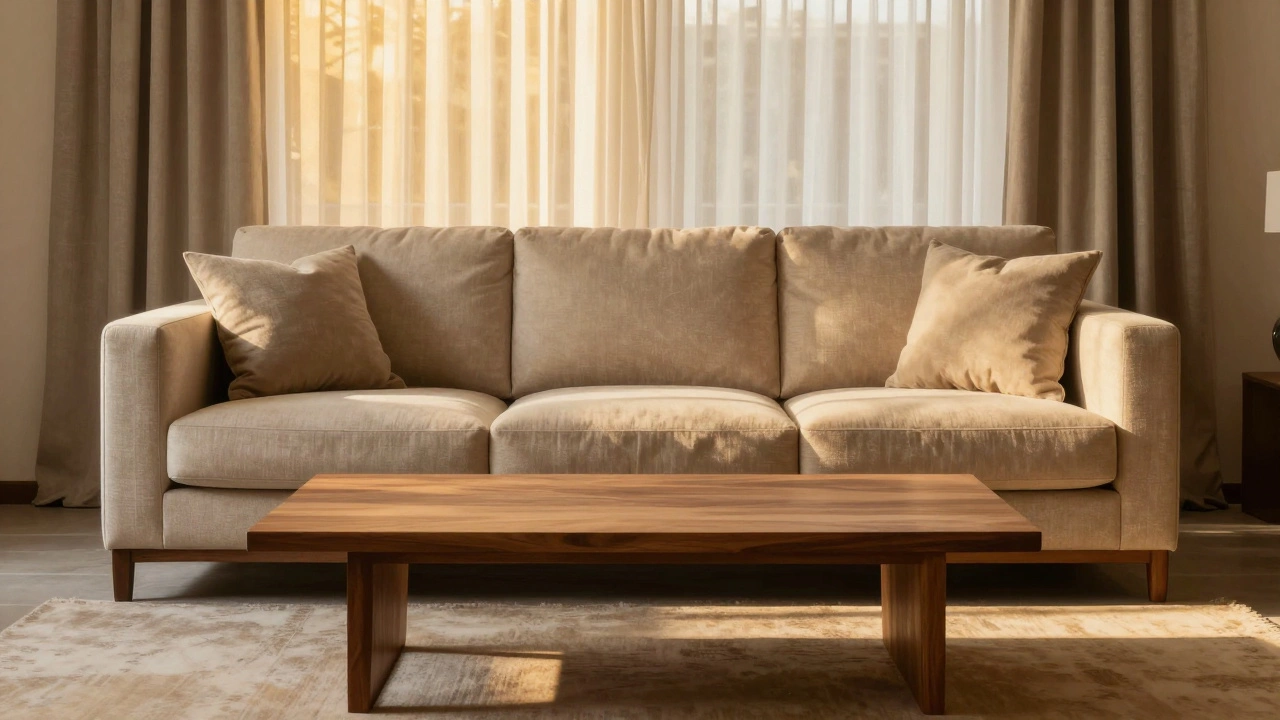
The most critical measurement starts with your sofa. Your coffee table should act as a visual anchor for your seating area, not a separate entity. The general rule here is simple: your coffee table should be roughly two-thirds the length of your sofa. Why two-thirds? Because this ratio creates a sense of proportion that the human eye finds naturally pleasing. It leaves enough space on either side of the table for end tables or floor lamps without making the center look cluttered.
If you have a standard three-seater sofa that is about 84 inches (213 cm) wide, you’re looking for a coffee table that is around 56 inches (142 cm) long. For larger sectional sofas that wrap around a corner, the math gets a bit trickier. In those cases, aim for a table that spans at least half the length of the longest section of the sofa. A common mistake people make is buying a tiny glass table for a massive L-shaped sectional. It looks cute in the showroom, but in your living room, it disappears. You end up reaching across empty air just to grab the remote.
Conversely, don’t go too big. If your table is longer than your sofa, it will dominate the room and make the seating feel cramped. You want the table to complement the sofa, not compete with it. Think of it as a frame for your social interactions-large enough to hold snacks and drinks, but small enough to keep the conversation flowing without physical barriers.
Height Matters More Than You Think
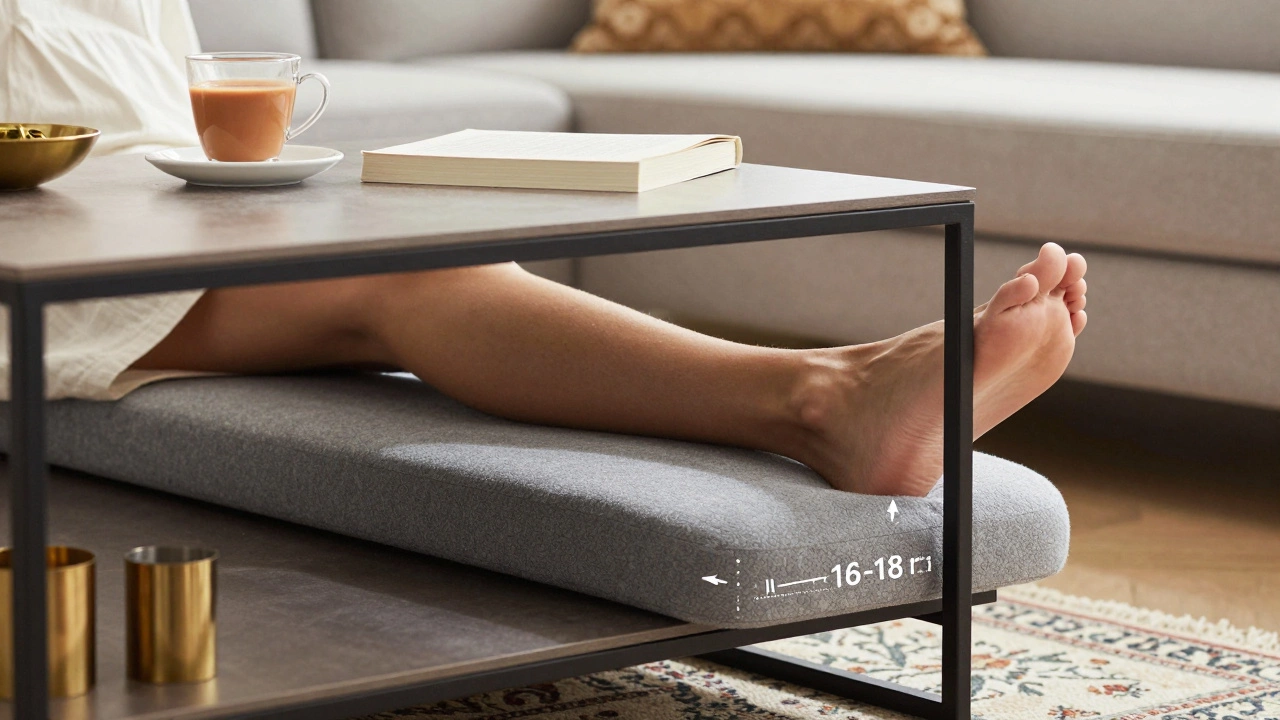
We often focus so much on length and width that we forget about height. But height is what determines whether your coffee table is actually usable. The ideal height for a coffee table is between 16 and 18 inches (40-45 cm). This range works because it aligns perfectly with the seat height of most modern sofas and armchairs.
Here is the test: sit down on your sofa. Look at your coffee table. Ideally, the top of the table should be level with the seat cushion of your sofa, or within one inch above or below it. If the table is significantly higher than your seat, your knees will bang against the underside every time you lean forward. That is annoying. If the table is significantly lower, you’ll find yourself hunching over to reach your phone or plate, which defeats the purpose of relaxing.
Some mid-century modern designs feature lower profiles, sometimes dipping down to 14 inches. These can work beautifully in minimalist spaces with low-slung seating, but they are risky if you have guests who prefer sitting upright. Stick to the 16-18 inch sweet spot unless you are deliberately going for a very specific aesthetic. Also, consider the thickness of the table top. A thick wooden slab might add two inches to the overall height, effectively raising the surface. Measure from the floor to the actual surface where you place your cup, not just the frame.
The Critical Clearance Zone
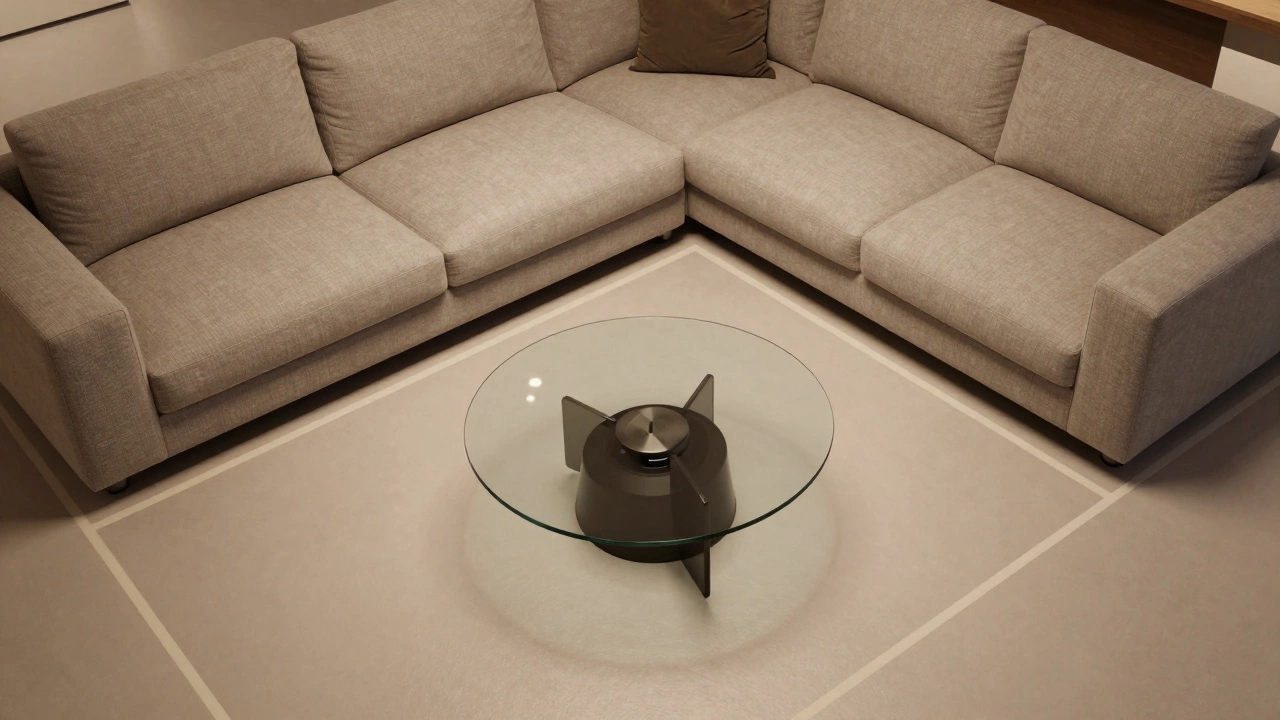
Size isn't just about the table itself; it’s about the space around it. This is where many people trip up. They buy a table that fits the length rule but ignore the walking space. You need a minimum of 18 inches (45 cm) of clearance between the edge of the coffee table and the front of your sofa. This allows you to slide your legs under the table comfortably and get in and out of your seat without kicking the table leg.
If you have a smaller apartment or a tighter layout, you can squeeze this down to 12 inches (30 cm), but anything less than that will feel claustrophobic. On the other side, between the coffee table and any opposing furniture (like another sofa, chairs, or a media console), you need at least 30 to 36 inches (76-91 cm) of walking space. This ensures that people can walk behind the table without having to step over it or squeeze through a narrow gap.
Think about traffic flow. If your living room is a thoroughfare to the kitchen or bedroom, you need more clearance. A tight fit might look good in a static photo, but living with it means constant minor collisions. Use painter’s tape on the floor to mark out the table’s footprint and the clearance zones before you buy. Walk around it. Sit on the sofa. Does it feel open? Or does it feel like you’re navigating an obstacle course?
Shape and Style Considerations
The shape of your coffee table also influences how its size is perceived. Rectangular tables are the safest bet for traditional layouts with a single sofa against a wall. They follow the linear flow of the room. Round or oval tables, however, are fantastic for open-concept spaces or rooms with lots of foot traffic. Their lack of sharp corners makes them safer for kids and pets, and they create a softer visual boundary that encourages movement around them rather than blocking it.
If you choose a round table, the diameter should still respect the two-thirds rule relative to your sofa width, but visually, a circle feels smaller than a rectangle of equivalent surface area. So, you might opt for a slightly larger diameter to maintain balance. Square tables work well in symmetrical arrangements, such as facing two sofas opposite each other, but they can look boxy and rigid in asymmetric layouts.
Material plays a role in perceived size too. Glass tops tend to make a table feel lighter and less bulky, allowing you to go slightly larger without overwhelming the room. Heavy wood or stone tables carry more visual weight, so you might want to scale back on the dimensions to avoid making the room feel heavy. A large marble table in a small apartment can feel oppressive, whereas a sleek metal-and-glass combo keeps the space airy.
Special Scenarios: Sectionals and Small Spaces
Living with a sectional sofa changes the game. Because sectionals often occupy more floor space and create a U-shape, a single rectangular table might not serve everyone equally. In these cases, consider a nested set of tables or a larger oval table that can accommodate multiple people reaching in from different angles. Alternatively, some people skip the central table entirely and use ottomans or side tables placed near each seating section. This modular approach offers flexibility-you can move the surfaces closer when you’re hosting friends and push them aside when you need more floor space for yoga or playtime.
For small apartments, the rule of thumb still applies, but you may need to prioritize clearance over surface area. A smaller table with storage underneath can be a lifesaver. You lose some counter space, but you gain functionality by hiding remotes, magazines, and blankets. Just ensure the drawers or shelves don’t protrude too far, reducing the effective clearance. A compact, lift-top coffee table is another excellent option for tight spaces. It provides extra height for eating or working, eliminating the need for a separate desk or dining table in studio apartments.
| Sofa Type | Ideal Table Length/Diameter | Ideal Height | Min. Clearance (Sofa to Table) |
|---|---|---|---|
| Standard 3-Seater (84" wide) | 56" - 60" Long | 16" - 18" | 18" (45 cm) |
| Large Sectional | 48" - 54" Oval/Round or Nested | 16" - 18" | 18" - 24" (45-60 cm) |
| Small Apartment Sofa (72" wide) | 48" Long or 36" Diameter | 16" - 18" | 12" - 18" (30-45 cm) |
| Love Seat (60" wide) | 40" Long or 30" Diameter | 16" - 18" | 12" - 18" (30-45 cm) |
Common Mistakes to Avoid
One of the biggest errors is ignoring the rug. Your coffee table should sit fully on top of your area rug. If the rug is too small, the front legs of the table will hang off the edge, creating a tripping hazard and breaking the visual cohesion of the seating area. Ensure your rug is large enough to accommodate both the sofa and the coffee table, with at least 18 inches of rug extending beyond the table on all sides.
Another pitfall is choosing a table that is too deep. While length is crucial, depth affects how much knee room you have. A table that is deeper than 20 inches (50 cm) can encroach on your leg space, especially if you sit close to the edge of the sofa. Keep the depth proportional to the length; a common ratio is a 2:1 length-to-depth ratio for rectangular tables. So, a 48-inch long table should be about 24 inches deep, max. Anything deeper starts to feel like a desk rather than a coffee table.
Finally, don’t forget to measure your doorways and hallways. A beautiful, oversized coffee table is useless if you can’t get it into your apartment. Take note of stairwell turns, elevator dimensions, and doorway widths. Some large pieces require professional movers or even removal of doors to navigate tight spaces. Planning for delivery saves you from expensive headaches later.
How do I know if my coffee table is too big?
Your coffee table is likely too big if it extends beyond the length of your sofa, blocks walking paths, or forces you to stand up to retrieve items. If you find yourself constantly bumping into it or if it makes the room feel cramped, it’s probably oversized. Aim for a table that is two-thirds the length of your sofa with at least 18 inches of clearance on all sides.
What is the standard height for a coffee table?
The standard height for a coffee table is between 16 and 18 inches (40-45 cm). This height aligns with the seat cushions of most sofas, allowing for comfortable legroom and easy access to items on the table. If your sofa has a higher seat, you may need a taller table, but generally, staying within this range ensures ergonomic comfort.
Should the coffee table be wider than the sofa?
No, the coffee table should never be wider than the sofa. Ideally, it should be about two-thirds the width of the sofa. A table that is wider than the sofa will look unbalanced and dominate the space, making the seating area feel smaller and less inviting. Proportion is key to a harmonious living room design.
How much space should be between the coffee table and the sofa?
You should have at least 18 inches (45 cm) of space between the edge of the coffee table and the front of the sofa. This clearance allows you to slide your legs under the table and get in and out of your seat comfortably. In tighter spaces, you can reduce this to 12 inches, but anything less will feel restrictive and increase the risk of injury.
Is a round or rectangular coffee table better for small spaces?
Round or oval coffee tables are often better for small spaces because they lack sharp corners, which improves safety and allows for easier movement around the table. They also create a softer visual flow, making the room feel more open. However, ensure the diameter is still proportional to your sofa to maintain balance.