
Mould Risk Calculator
How Your Storage Environment Affects Mould Growth
Mould thrives when temperature exceeds 60°F (15.5°C) and humidity exceeds 60%. This calculator helps you determine your risk level based on your specific storage conditions.
Prevention Tips
⚠️ Critical Warning
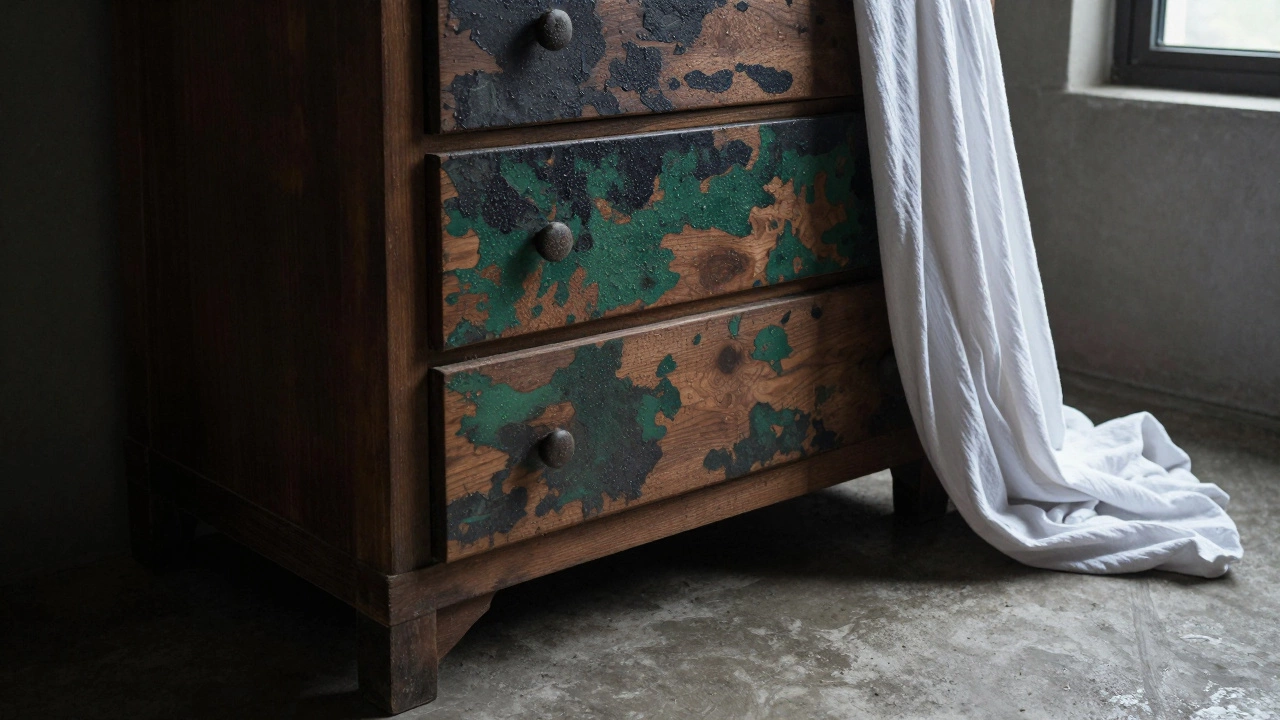
Ever pulled a piece of furniture out of storage only to find dark spots, a musty smell, or fuzzy patches growing on the surface? You’re not alone. Mould doesn’t just show up in bathrooms or basements-it can grow on your couch, dresser, or wooden table if they’ve been sitting in the wrong conditions. The good news? It’s preventable. The bad news? Once it starts, it’s not always easy to fix.
Why Furniture Gets Mouldy in Storage
Mould thrives in damp, dark, and poorly ventilated places. That’s exactly what most storage units or attics become-especially in humid climates. Wood, fabric, upholstery, and even particleboard can absorb moisture from the air. When temperatures stay above 60°F and humidity hits 60% or higher, mould spores wake up and start feeding.
It doesn’t matter if the furniture looks clean when you put it away. A single rainy season, a leaky roof, or even a damp floor can be enough. Cotton cushions, linen covers, and untreated wood are especially vulnerable. Even leather can develop mould if it’s stored in a humid environment without proper conditioning.
Which Types of Furniture Are Most at Risk?
Not all furniture is equally likely to grow mould. Here’s what to watch out for:
- Upholstered furniture-sofas, armchairs, ottomans: Fabric absorbs moisture like a sponge. Foam padding traps it inside, creating the perfect breeding ground.
- Wooden furniture-dressers, sideboards, bookshelves: Solid wood can warp and crack, but particleboard and MDF are worse. They’re made with glue and sawdust that turn into mould food when wet.
- Wicker and rattan: These natural fibres soak up humidity and hold it for weeks. Once mould takes root in the weave, it’s nearly impossible to remove without damaging the piece.
- Leather furniture: While leather itself resists mould, the dyes and finishes can break down in damp air, letting mould grow underneath.
On the flip side, metal frames, glass tops, and plastic-coated furniture are much safer-if they’re kept dry. But even those can get mould on fabric cushions or wooden accents attached to them.
How to Tell If Your Furniture Has Mould
Mould doesn’t always look like the black, fuzzy patches you see in textbooks. Here’s what to look for:
- A persistent musty smell-like wet socks or old books-when you open a storage unit or unwrap a piece.
- Discoloured spots: Green, brown, or black stains on fabric or wood. Sometimes they look like water damage, but they don’t dry out.
- Fuzzy or powdery texture on surfaces. Rub it gently with a white cloth-if it leaves a stain, it’s likely mould.
- Warping or swelling in wood. This isn’t always mould, but it’s a red flag that moisture has been present long enough for mould to grow.
If you’re unsure, use a home mould test kit. They cost under $20 and give you a clear yes or no. Don’t wait until you see visible growth-by then, it’s already spreading.
How to Prevent Mould on Furniture in Storage
Prevention is cheaper and easier than cleanup. Here’s how to keep your furniture safe:
- Clean everything before storing. Dust, crumbs, and body oils feed mould. Vacuum upholstery, wipe down wood with a damp cloth, and let everything dry completely for 48 hours.
- Use breathable covers. Plastic wrap traps moisture. Instead, use cotton sheets or specialised furniture moving blankets. If you must use plastic, leave it slightly open at the bottom to allow air to circulate.
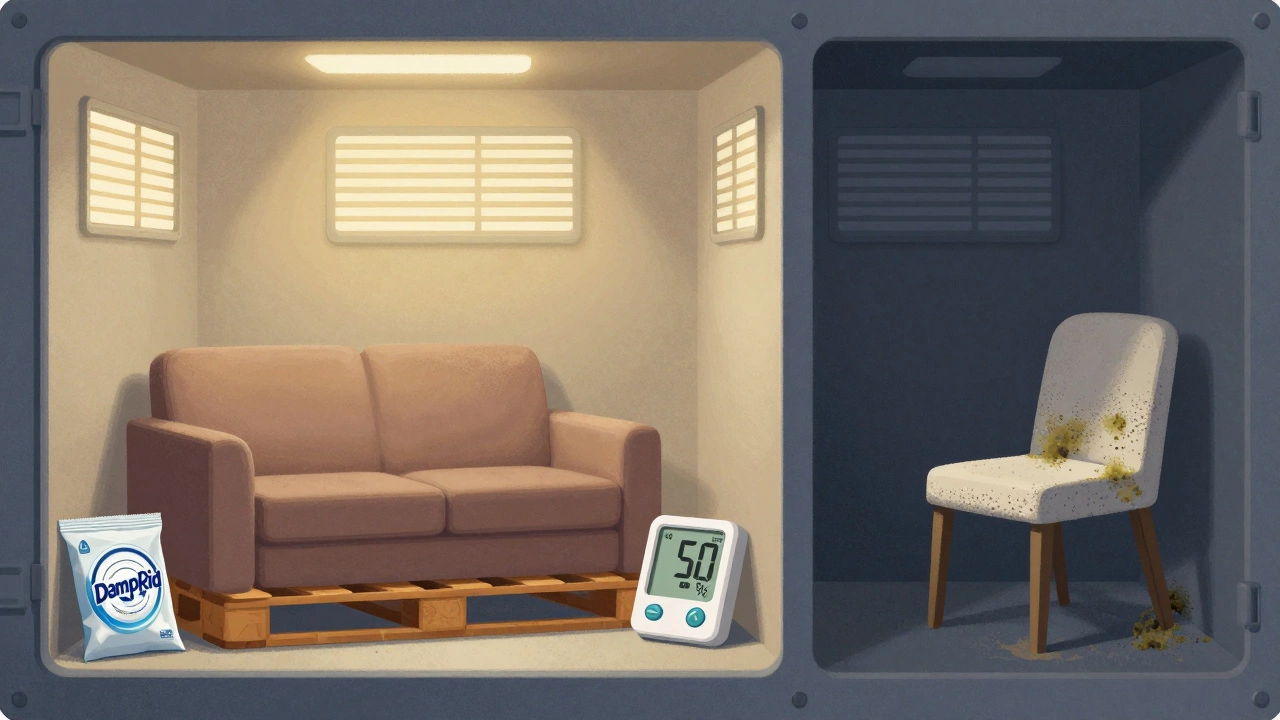
- Elevate furniture off the floor. Even a few inches helps. Use wooden pallets, cinder blocks, or plastic risers. Concrete floors sweat, especially in basements and warehouses.
- Control humidity. In climate-controlled storage, aim for 45-55% humidity. If you’re using a garage or attic, buy a small dehumidifier or use moisture-absorbing packs like DampRid. Replace them every 30-45 days.
- Check regularly. Visit your storage unit every 2-3 months. Open covers, sniff for odours, and wipe down surfaces with a dry cloth. Early detection saves the piece.
What to Do If Mould Is Already There
If you find mould, don’t panic-but don’t ignore it either. Here’s how to handle it based on material:
For Fabric and Upholstery
First, vacuum the surface with a HEPA filter to remove loose spores. Then mix one part white vinegar with one part water. Spray lightly-don’t soak-and let it sit for 10 minutes. Wipe with a clean, damp cloth, then dry thoroughly with a fan or dehumidifier. For stubborn stains, use a commercial upholstery cleaner designed for mould, like Concrobium Mold Control. Never use bleach on fabric-it weakens fibres and can leave yellow stains.
For Wood Furniture
Wear gloves and a mask. Scrub the surface with a solution of 1 cup of borax dissolved in 1 gallon of hot water. Use a stiff brush for grooves and carvings. Rinse with clean water, then dry completely. Sand lightly if needed, then reseal with wood finish. If the wood is warped or crumbling, it’s beyond saving.
For Leather
Wipe gently with a damp microfiber cloth and a leather cleaner. Avoid vinegar or alcohol-it dries out the leather. After cleaning, apply a leather conditioner with mould inhibitors. Let it air dry away from direct heat.
If the mould is deep, widespread, or smells strongly, professional restoration may be your only option. But if it’s just surface-level, you can often bring the piece back to life.
Storage Units vs. Home Storage: Which Is Safer?
Climate-controlled storage units are the gold standard. They keep temperature and humidity steady, which is why they cost more. If you’re storing valuable or sentimental pieces, it’s worth the extra $50-$100 a month.
Home storage-like attics, basements, or garages-is riskier. Attics get hot in summer and cold in winter, causing condensation. Basements are naturally damp. Garages aren’t sealed, so humidity swings with the weather.
If you must use home storage, pick the highest, driest spot. Avoid corners where air doesn’t flow. Use a hygrometer to monitor humidity. If it’s above 60% for more than a few days, move the furniture.
How Long Can Furniture Stay in Storage Before Mould Appears?
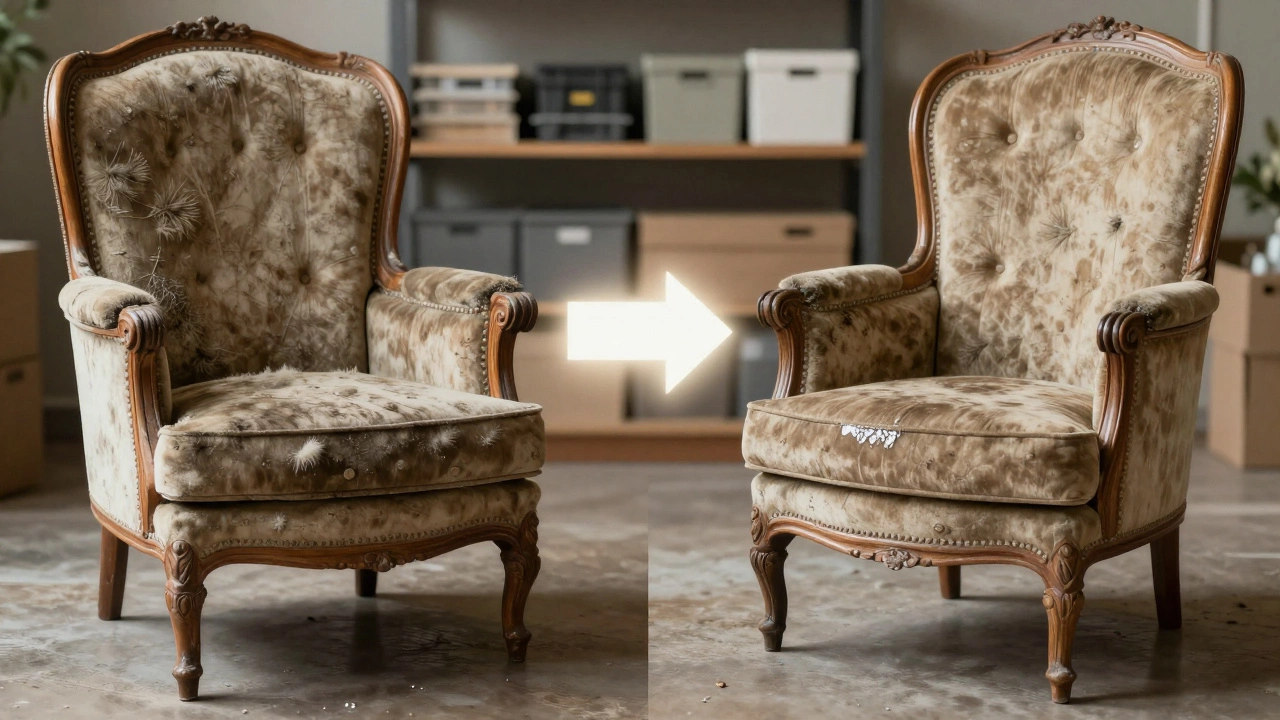
There’s no fixed timeline. In a dry, climate-controlled unit, furniture can sit for years without issue. In a humid basement? Mould can appear in as little as two weeks.
Here’s a rough guide:
- Low humidity (under 50%), well-ventilated: Safe for 1-3 years
- Medium humidity (50-65%), occasional moisture: Risk starts at 3-6 months
- High humidity (over 65%), poor airflow: Mould can form in 2-4 weeks
Don’t assume “it’s been fine so far” means it’s safe. Mould grows slowly at first. By the time you see it, it’s already spread.
What Happens If You Ignore Mould on Furniture?
Mould isn’t just ugly-it’s a health hazard. Spores can trigger allergies, asthma, and respiratory issues, especially in kids and older adults. The longer it grows, the deeper it penetrates. Fabric becomes brittle. Wood rots. Leather cracks. What started as a small stain can turn into a total loss.
And it doesn’t stop at one piece. Mould spreads through the air. One mouldy couch in storage can contaminate everything nearby. That’s why cleaning and prevention aren’t optional-they’re necessary.
Final Tips for Safe Furniture Storage
- Never store wet or damp furniture. Let it dry for at least two full days.
- Label boxes clearly so you don’t have to dig through everything to find a piece.
- Take photos of your furniture before storing. It helps with insurance claims if something goes wrong.
- Don’t store furniture with plastic wrap directly on it. Use paper or cloth first.
- If you’re moving and storing furniture long-term, consider professional movers who use climate-controlled trucks and storage.
Furniture is an investment. Whether it’s a family heirloom or a new sofa, protecting it from mould isn’t about being paranoid-it’s about being smart. A few hours of prep work now can save you hundreds-or thousands-in replacement costs later.