
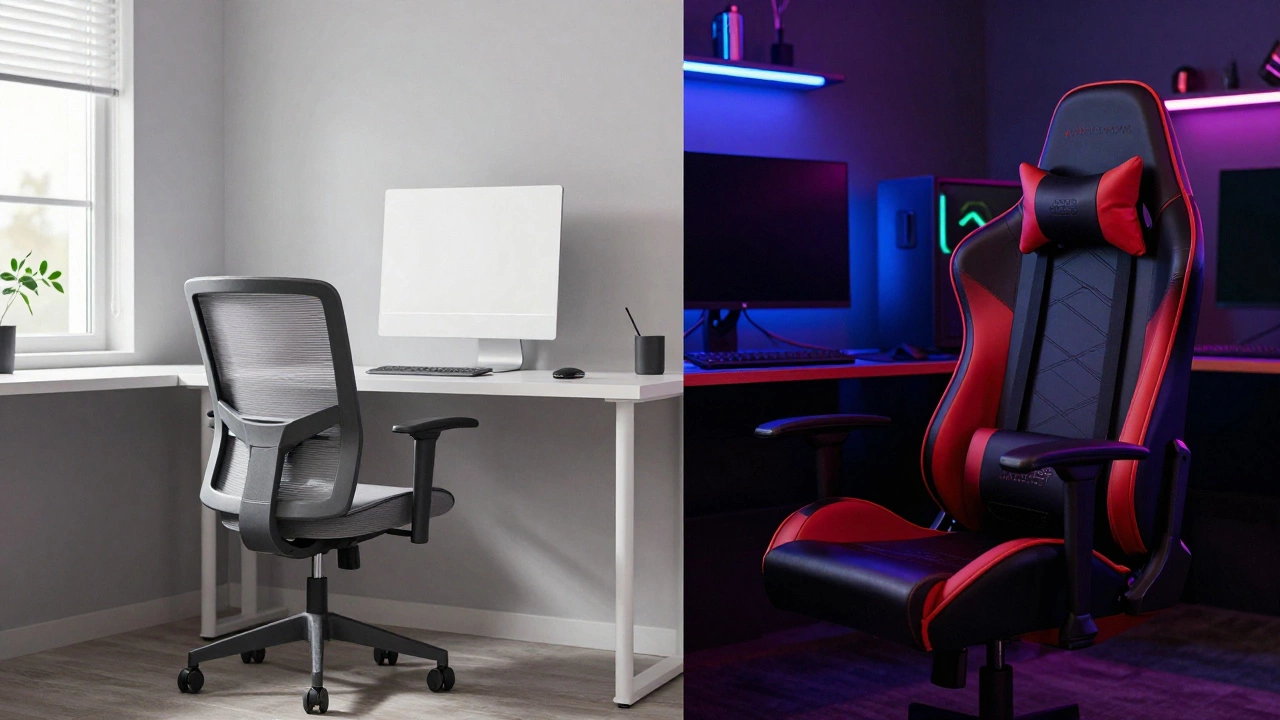
Chair Selector: Gaming vs Office
Answer these questions to find the perfect seat for your lifestyle.
Recommendation
Based on your inputs
It’s 11 PM on a Tuesday. Your shoulders are tight, your lower back is throbbing, and you’re staring at the same spreadsheet or game screen you’ve been looking at for six hours. The culprit isn’t just the work-it’s the seat beneath you. For years, we’ve been told that office chairs are the gold standard for productivity. But lately, gaming chairs have taken over living rooms, home offices, and even corporate break rooms. So, why should you consider swapping your traditional desk chair for one designed for gamers?
The answer isn’t as simple as “one is better than the other.” It comes down to how you sit, what you do while sitting, and how much you value aesthetics versus strict ergonomics. If you’re trying to decide whether to invest in a gaming setup or stick with professional furniture, here’s what you need to know about comfort, support, and style.
The Ergonomic Reality: Support vs. Structure
When people ask if they should get a gaming chair instead of an office chair, they’re usually worried about their back. Let’s look at the engineering behind both. Traditional ergonomic office chairs are built around a specific philosophy: adaptability. They feature adjustable lumbar support, seat depth controls, and armrests that move in multiple directions. The goal is to fit the chair to your body, no matter your height or weight. Brands like Herman Miller or Steelcase spend millions researching spinal alignment because their primary users sit for eight-hour shifts typing reports.
Gaming chairs, on the other hand, borrow heavily from automotive design. Think of a race car bucket seat. They use high-back designs with fixed lumbar pillows and neck cushions to keep your head and spine aligned during intense, static periods. This works great if you lean forward slightly, engaged in a task. However, if you slouch or recline frequently, those fixed pillows can actually push against your spine in uncomfortable ways. A high-quality office chair allows you to recline up to 135 degrees while maintaining lumbar contact; many gaming chairs lock you into a more upright posture.
- Office Chair Strength: Adjustable lumbar mechanisms that move with your spine.
- Gaming Chair Strength: Fixed bolstering that prevents slouching during focused tasks.
- Key Difference: Office chairs prioritize dynamic movement; gaming chairs prioritize static containment.
Material Matters: Breathability and Durability
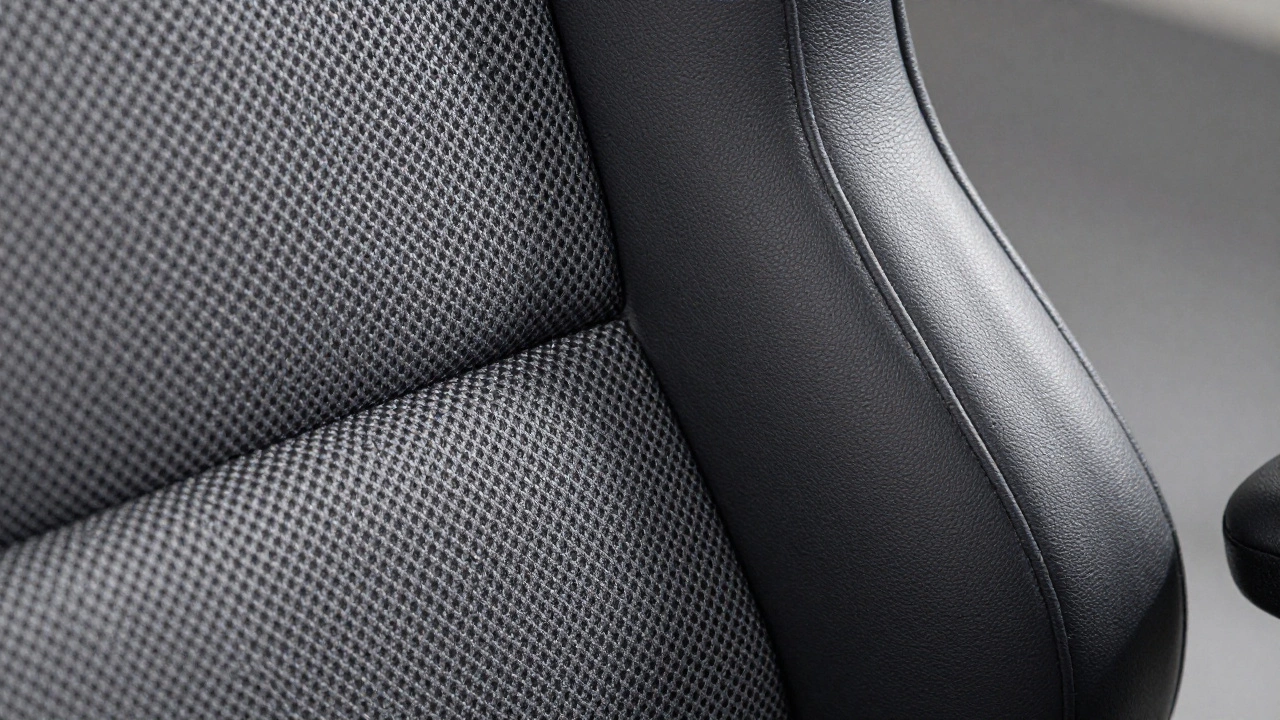
If you live in Melbourne, you know the humidity can be tricky. Material choice matters more than you think. Most budget-to-mid-range gaming chairs use synthetic leather (PU leather). It looks sleek and easy to wipe down, but it traps heat. After four hours of sitting, your back can feel clammy. Higher-end models use breathable mesh, but this is less common in the gaming category compared to office seating.
Traditional office chairs often use mesh backs. Mesh allows air to circulate freely, keeping you cool during long Zoom calls or coding sessions. The seats themselves are usually upholstered in fabric or durable vinyl that withstands daily wear without peeling. PU leather on gaming chairs tends to crack and peel after two to three years of heavy use, especially in warm climates. Fabric office chairs last longer but require vacuuming to remove dust and crumbs.
| Feature | Gaming Chair | Office Chair |
|---|---|---|
| Primary Back Material | Synthetic Leather / PU | Breathable Mesh / Fabric |
| Heat Retention | High (can get hot) | Low (breathable) |
| Durability | 2-4 years (peeling risk) | 5-10 years (fabric/mesh) |
| Cleaning | Wipe with damp cloth | Vacuum or spot clean |
Aesthetics and Room Vibe
Let’s be honest: part of the appeal is how they look. Gaming chairs scream personality. They come in bold reds, blacks, blues, and even neon greens. They fit perfectly in a room filled with RGB lighting, posters, and tech gear. If your home office doubles as a streaming studio or a playroom, a gaming chair adds visual energy. It says, “I’m here to engage.”
Office chairs tend to be neutral-black, grey, or beige. They blend into the background. In a shared workspace or a minimalist apartment, an office chair doesn’t distract. It disappears. If you care about interior design cohesion, an office chair is safer. If you want your chair to be a statement piece, go for the gaming style. Just remember that bright colors show dirt faster than dark neutrals.
Price and Value Proposition
You might expect gaming chairs to cost more because they’re marketed toward enthusiasts. Surprisingly, the entry-level price for a decent gaming chair is often lower than a true ergonomic office chair. You can find functional gaming chairs for $150-$300 AUD. These offer basic recline, tilt tension, and padded bolsters.
A genuine ergonomic office chair with full adjustability starts around $400 AUD and goes up to $1,500+ for premium brands. Why the gap? Office chairs undergo rigorous testing for workplace safety standards. They include complex mechanical bases, synchronized tilt mechanisms, and high-density foam that retains shape over years. Gaming chairs simplify these mechanisms to cut costs. If you’re on a tight budget, a mid-range gaming chair offers better immediate comfort than a cheap office chair with flimsy plastic parts.
Who Should Choose Which?
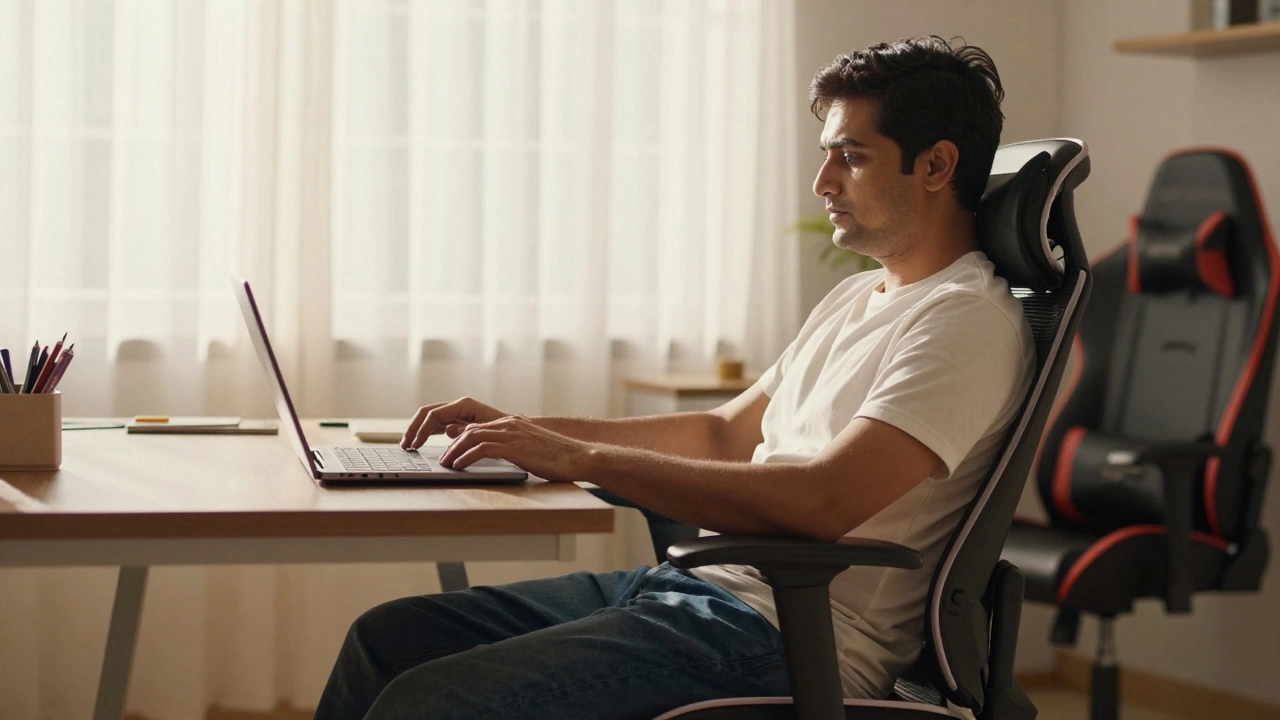
To make this decision easier, think about your daily routine. Are you playing video games for three hours straight? Do you stream content? Do you prefer leaning forward with elbows on armrests? If yes, a gaming chair supports that aggressive posture well. The wide armrests and high back keep you contained.
Now, imagine you’re writing a thesis, doing data entry, or attending back-to-back meetings. You shift positions often. You cross legs, stand up briefly, and lean back to think. An office chair accommodates these micro-movements. Its casters roll smoothly on carpet and hardwood, and its seat edge doesn’t dig into your thighs when you slide forward.
- Choose a Gaming Chair if: You game regularly, want bold aesthetics, sit in a relatively static position, and prioritize plush padding over adjustability.
- Choose an Office Chair if: You work 8+ hours daily, have existing back issues, need precise lumbar adjustment, and value breathability and long-term durability.
Maintenance and Long-Term Care
Both chairs require maintenance, but the types differ. Gaming chairs with PU leather need occasional conditioning to prevent cracking. Avoid direct sunlight, which accelerates degradation. Clean spills immediately to prevent staining. The metal frames are sturdy but can scratch easily if dragged across rough floors.
Office chairs with mesh backs collect lint and hair. Use a handheld vacuum weekly. Check the gas lift cylinder annually-if it sags unexpectedly, replace it. Fabric seats may need professional cleaning every few years depending on usage. Investing in a chair mat protects both your floor and the chair’s base, regardless of type.
Are gaming chairs bad for your back?
Not inherently, but they can be if used incorrectly. Fixed lumbar pillows don’t adjust to your spine’s natural curve. If you’re tall or have scoliosis, a gaming chair might force your back into an awkward position. Look for models with removable bolsters or adjustable lumbar support. For most people with average builds, short-term use is fine, but long-term workers should prioritize adjustable ergonomic chairs.
Can I use a gaming chair for work?
Yes, many people do. If your work involves creative tasks, gaming, or short bursts of focus, a gaming chair provides good support. However, if you sit for eight hours straight doing administrative work, you’ll likely benefit more from an office chair’s adjustability and breathability. Consider hybrid models that combine gaming aesthetics with ergonomic features.
Which lasts longer: gaming chair or office chair?
Office chairs generally last longer due to higher-quality materials and stricter manufacturing standards. Mesh and fabric resist wear better than PU leather. A well-made office chair can serve you for 7-10 years, while a gaming chair typically needs replacement after 3-5 years unless it’s a premium model with real leather or reinforced stitching.
Do gaming chairs help with posture?
They can, by preventing slouching through high backs and side bolsters. However, they don’t actively correct posture like some ergonomic chairs with dynamic lumbar support. If you tend to lean forward, a gaming chair keeps you upright. If you need flexibility to change positions throughout the day, an office chair is superior for promoting healthy movement.
Is it worth spending more on an ergonomic office chair?
If you sit for more than four hours daily, yes. The investment pays off in reduced back pain, improved circulation, and better focus. Cheaper chairs often lack proper weight distribution and lead to fatigue. Premium office chairs are engineered to distribute pressure evenly, reducing strain on hips, knees, and spine over time.