
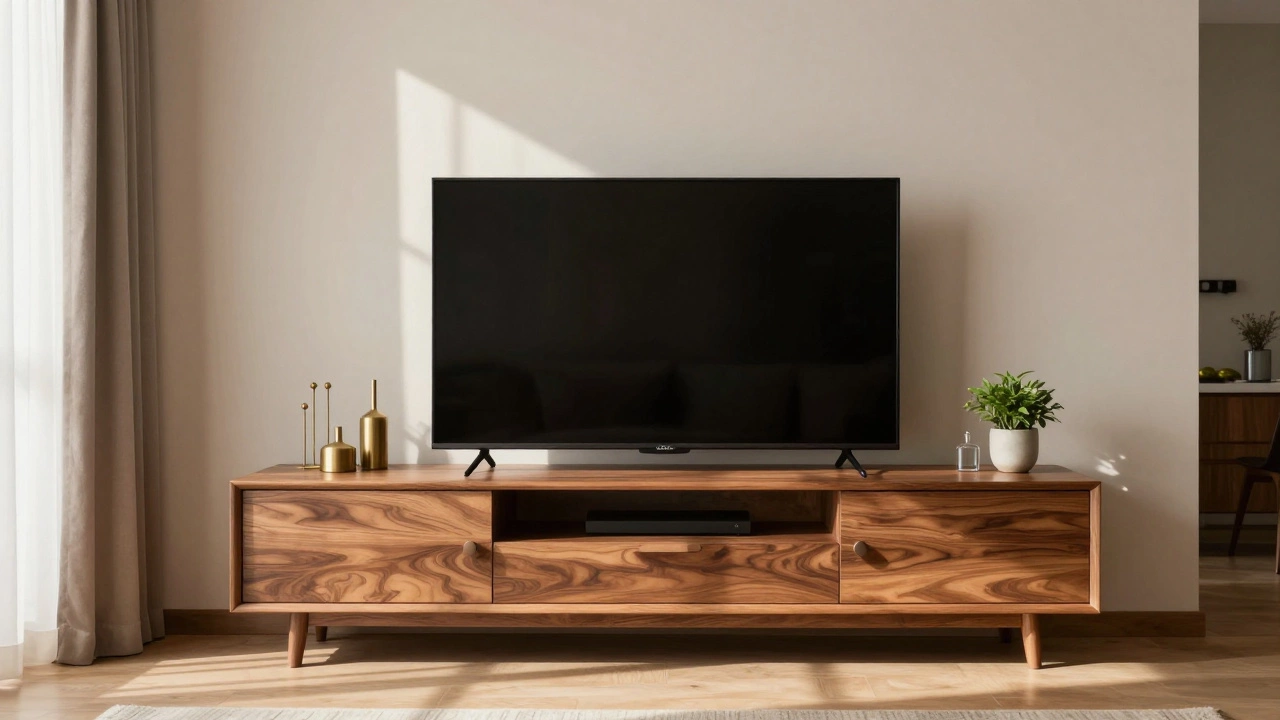
55-Inch TV Stand Size Calculator
Find the perfect TV stand dimensions for your 55-inch television based on safety, aesthetics, and device storage needs.
You’ve just bought that beautiful new 55-inch TV, and now you’re staring at an empty space in your living room. You don’t want the TV to look like it’s floating off the edge of a tiny table, but you also don’t want a massive piece of furniture dominating your wall. So, what is the right length for a TV stand for a 55-inch TV?
The short answer is: aim for a stand that is between 48 and 60 inches long. This range provides the best visual balance and practical stability. But getting it right involves more than just measuring width. You need to consider depth, height, weight capacity, and how the furniture fits into your specific room layout.
Why Width Matters More Than You Think
When people ask about TV stand size, they usually mean width. But why does this measurement matter so much? It comes down to two things: safety and aesthetics.
Visual Balance is the first priority. If your TV stand is narrower than your TV, the screen will overhang on both sides. This looks precarious and unbalanced. Imagine placing a large book on a small coaster; it feels unstable. Most interior designers recommend that your TV stand be at least as wide as your TV, or ideally, wider by 3 to 6 inches on each side. This creates a "frame" effect that grounds the television visually.
For a 55-inch TV, the actual screen width (excluding the bezel) is approximately 48.5 inches. Including the thin black border around the screen, the total width is usually around 48.7 to 49 inches. Therefore, a stand shorter than 48 inches will make your TV look top-heavy. A stand that is 55 to 60 inches long gives you that perfect buffer zone, allowing you to place speakers, consoles, or decor on either side without cluttering the immediate base of the TV.
Understanding Your TV's Actual Dimensions
Before you rush to the store, you need to know exactly what you are working with. The "55-inch" label refers to the diagonal measurement of the screen, not the width or height. This is a common source of confusion.
| Measurement | Average Value | Note |
|---|---|---|
| Width (with bezel) | 48.7 - 49.2 inches | Varies slightly by brand |
| Height (with stand) | 30 - 32 inches | Without stand: ~28 inches |
| Depth (with stand) | 10 - 12 inches | Very slim profile |
| Weight | 35 - 45 lbs | Without VESA mount hardware |
These numbers help you understand why a 48-inch stand is the absolute minimum. If your TV is 49 inches wide, a 48-inch stand leaves zero margin for error. One wrong move, and you risk tipping. Always check the manufacturer’s specifications for your specific model, as some premium models have thicker bezels or unique shapes.
Don't Forget Depth and Height
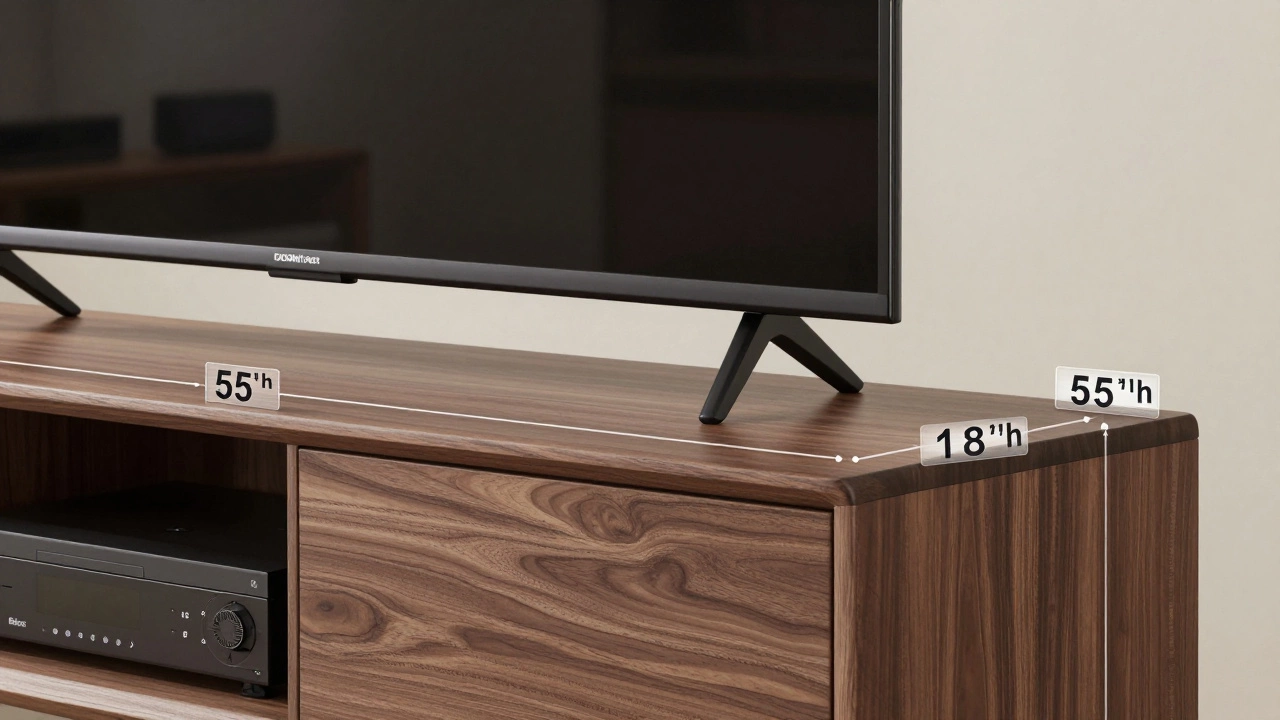
Width isn't the only dimension that affects fit. TV Stand Depth is crucial for stability and cable management. Modern TVs are incredibly thin, often less than 2 inches deep at the thickest point. However, the stand itself adds bulk.
Aim for a TV stand that is at least 15 to 20 inches deep. Here is why:
- Cable Management: You need space behind the TV for power bricks, HDMI cables, and streaming devices. A shallow stand (under 12 inches) forces these cables to dangle awkwardly or bulge out the back.
- Device Placement: Do you own a game console, a soundbar, or a DVD player? These devices need to sit on the shelf below the TV. A deeper stand ensures they fit comfortably without sticking out.
- Stability: A wider base (depth-wise) prevents the TV from wobbling if someone bumps into the unit.
Next, consider Viewing Height. The center of your TV screen should be at eye level when you are seated. For most adults, this means the center of the screen should be about 42 inches from the floor. Since a 55-inch TV is roughly 28 inches tall, the bottom of the TV needs to be about 28 inches off the ground. Add the thickness of the TV stand legs or base, and you can calculate the ideal stand height. Most standard media consoles range from 18 to 24 inches in height, which works well for most living rooms.
Choosing the Right Style for Your Space
Once you have the measurements down, you need to pick a style that fits your home. In Melbourne, where many homes have compact living areas, space efficiency is key. Here are the three most common types of stands for a 55-inch TV:
- Media Consoles: These are low, wide units with cabinets and drawers. They offer the most storage and are great for hiding clutter. Look for one that is 55-60 inches wide.
- TV Trays: Slim, open-frame stands. They take up less visual space and are easy to clean under. However, they offer little storage and may feel less stable for heavier setups.
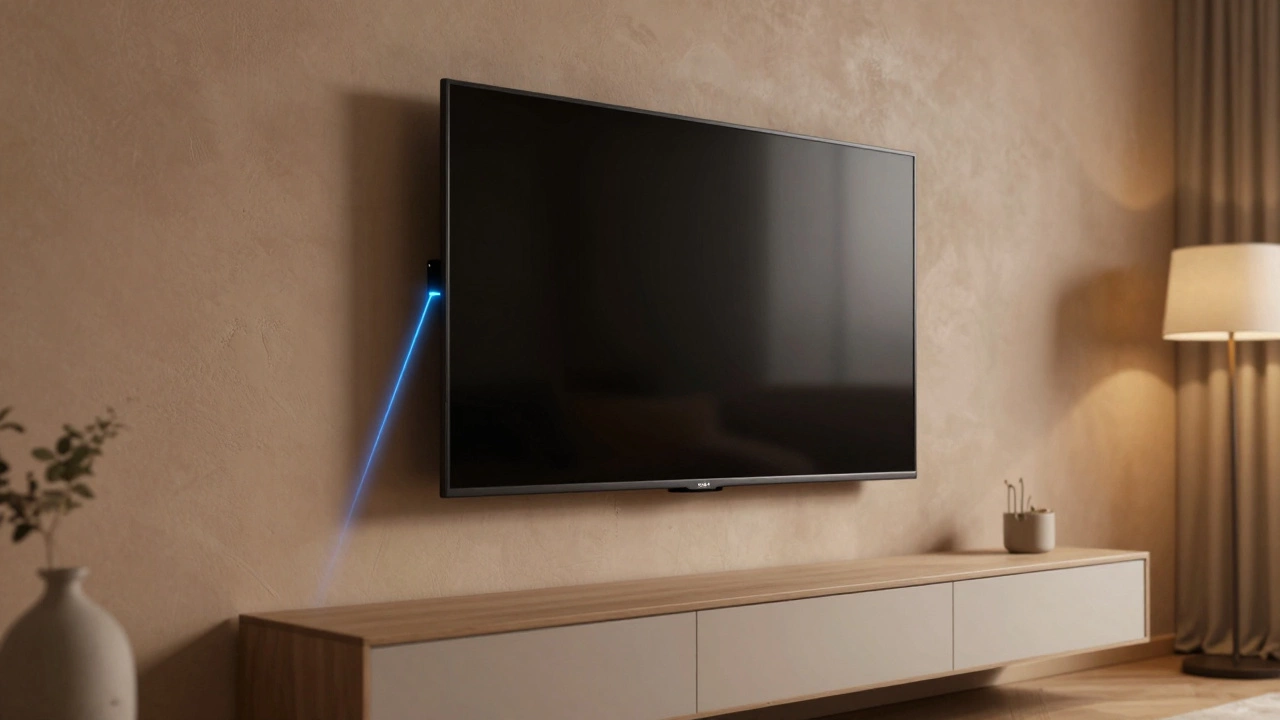
- Floating Shelves: Mounted directly to the wall. These save floor space entirely but require precise installation and strong wall anchors. Ensure your wall can support the weight of the TV plus the shelf.
If you have a small apartment, a narrow media console (around 48-50 inches) might be necessary, but ensure it has sturdy construction. For larger open-plan living areas, a wider unit (60+ inches) can serve as a focal point and anchor the room.
Safety First: Weight Capacity and Anchoring
This is the part most people skip, but it is critical. A 55-inch TV weighs between 35 and 45 pounds. That sounds light until you realize that the center of gravity is high. If the stand tips forward, that weight becomes a dangerous projectile.
Check the Weight Capacity of the TV stand. It should support at least 50-60 pounds to account for the TV plus any additional electronics. Never exceed the manufacturer’s limit.
More importantly, always anchor your TV to the wall. Even if the stand is perfectly sized, children, pets, or accidental bumps can cause tipping. Use an anti-tip kit, which usually includes a strap or bracket that connects the TV to the wall stud. This simple step can prevent serious injury and damage.
Practical Tips for Measuring Your Space
Before buying, measure your wall space carefully. Don’t just measure the wall; measure the obstacles. Are there radiators, air conditioning vents, or electrical outlets in the way?
- Clearance: Leave at least 2 inches of clearance on either side of the stand for airflow and aesthetic breathing room.
- Door Swing: Ensure the stand doesn’t block doors or walkways. In narrow hallways or entryways, a bulky stand can become a hazard.
- Lighting: Consider where your lamps are. A stand that is too deep might cast shadows on the TV screen, causing glare issues.
If you are unsure, use painter’s tape to mark the outline of the proposed stand on the floor. Walk around it for a few days. Does it feel cramped? Does it block traffic flow? This real-world test is invaluable.
Common Mistakes to Avoid
I see these errors all the time, and they are easy to fix if you catch them early:
- Buying Too Small: Trying to squeeze a 55-inch TV onto a 40-inch stand. It looks bad and is unsafe.
- Ignoring Depth: Choosing a sleek, shallow stand that can’t hold your gaming consoles or cable boxes.
- Overlooking Cable Access: Failing to check if the stand has holes or channels for running wires neatly.
- Skipping Assembly Instructions: Many modern stands require careful assembly. Rushing this process can lead to wobbly joints.
Remember, the goal is not just to hold the TV, but to create a functional and attractive entertainment center. Take your time, measure twice, and choose a stand that complements your lifestyle.
Can I put a 55-inch TV on a 48-inch stand?
Technically, yes, but it is not recommended. A 55-inch TV is typically 48.7 to 49 inches wide. Placing it on a 48-inch stand means the TV will overhang slightly on both sides, creating an unstable and visually unbalanced look. It increases the risk of tipping and offers no space for accessories.
What is the ideal depth for a 55-inch TV stand?
The ideal depth is between 15 and 20 inches. This provides enough space for the TV's own stand, cable management, and additional devices like soundbars or game consoles. Shallower stands may not accommodate all your electronics comfortably.
How high should a TV stand be for a 55-inch TV?
The center of the TV screen should be at eye level when seated, which is usually about 42 inches from the floor. For a 55-inch TV, this means a stand height of 18 to 24 inches is generally appropriate, depending on the thickness of the TV's own base.
Do I need to anchor my TV to the wall even with a stand?
Yes, absolutely. Anti-tip kits are essential for safety, especially if you have children or pets. They prevent the TV from falling forward if bumped, protecting both people and property from injury and damage.
Is a wider TV stand better for a 55-inch TV?
A wider stand (55-60 inches) is generally better because it provides visual balance, extra storage space, and a safer margin for the TV. It allows you to place speakers or decor on either side without cluttering the immediate area around the TV.