
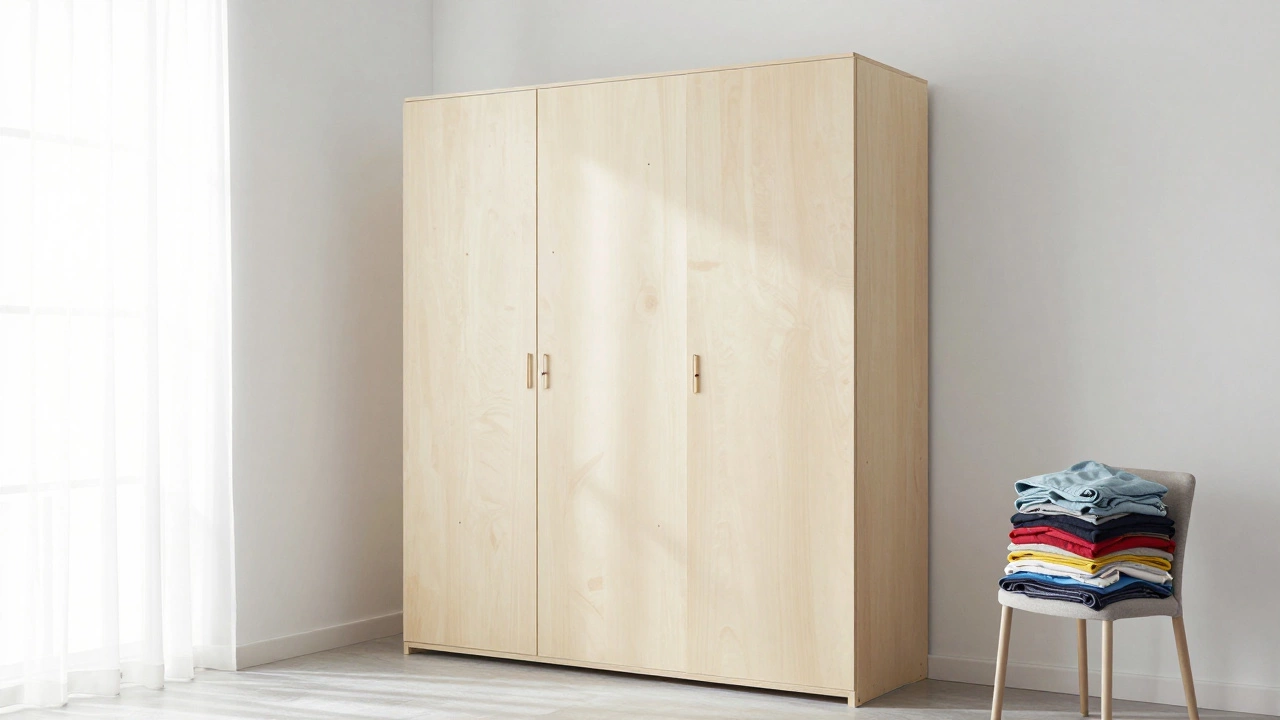
You're staring at a pile of clothes on a chair, and you realize your current storage just isn't cutting it. You need a new wardrobe, but the price tags are all over the place. One store sells a basic unit for $200, while a custom designer wants $5,000 for a single wall. It's enough to make anyone hesitate. The truth is, there is no single "correct" number, but there are clear benchmarks based on what you actually need from your space.
Key Budget Takeaways
- Budget/Entry Level: $150 - $600 (Flat-pack, basic materials)
- Mid-Range: $700 - $2,500 (Modular systems, better finishes)
- High-End/Custom: $3,000 - $10,000+ (Floor-to-ceiling, bespoke cabinetry)
- Main Driver: Material choice (MDF vs. Solid Wood) and installation labor.
Breaking Down the Budget Tiers
Before you swipe your card, you need to decide where you fit in the spectrum of storage. A wardrobe is a large, freestanding or built-in cabinet used specifically for storing clothes. Depending on your choice, you're paying for different things: convenience, durability, or aesthetics.
If you're renting a short-term apartment or furnishing a guest room, the entry-level tier is your best bet. You're looking at flat-pack furniture, usually made from particle board or thin MDF. These typically cost between $150 and $600. You get a functional space to hang clothes, but don't expect them to survive three house moves. The joints often loosen over time, and the backs are usually thin hardboard.
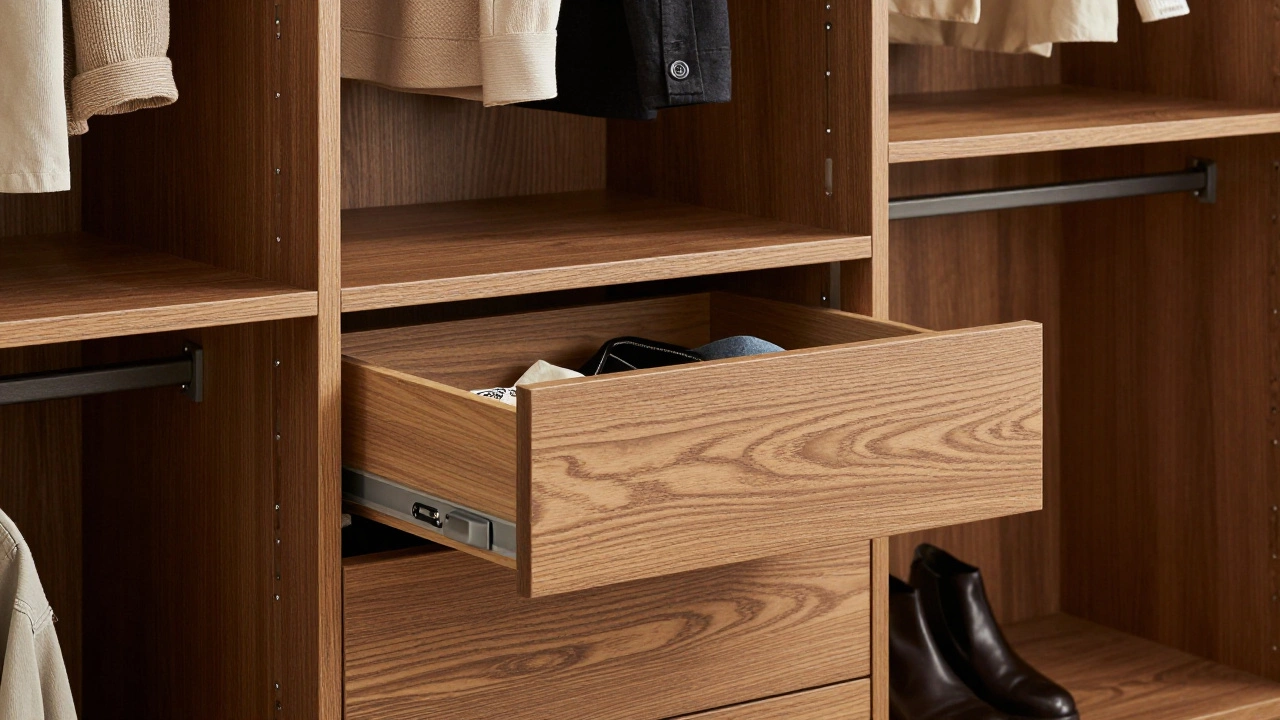
Once you move into the $700 to $2,500 range, you're entering the mid-range territory. This is where most homeowners land. Here, you'll find modular systems-think of the scalable units you see at big-box retailers. You get better drawer glides, stronger shelving, and often a choice of finishes like oak or walnut veneers. These are a wardrobe budget sweet spot because they offer a balance of longevity and affordability.
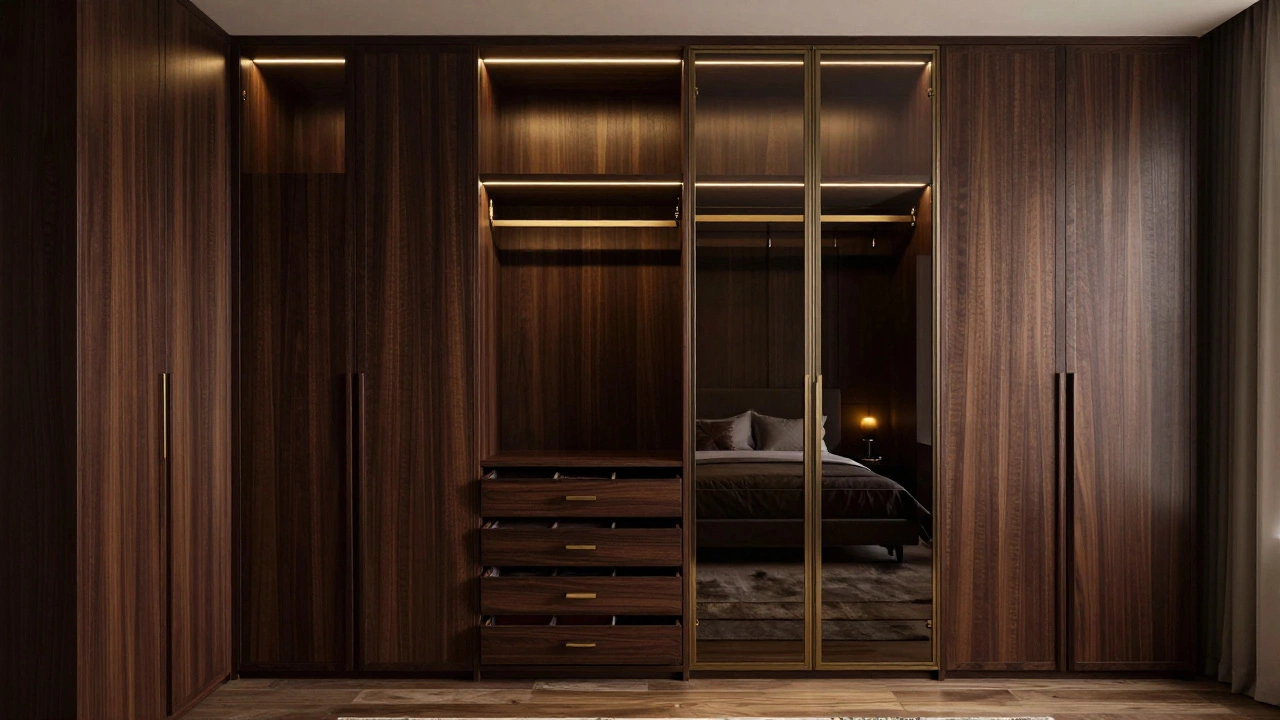
Then there's the high-end bracket. We're talking $3,000 and up. This isn't just about a box for clothes; it's about bespoke cabinetry. You're paying for a professional to measure your room to the millimeter, removing the "dead space" in corners. You'll see integrated LED lighting, soft-close hinges, and perhaps even velvet-lined jewelry drawers. The cost jumps because you're paying for skilled labor and premium materials like solid hardwood or tempered glass.
| Type | Estimated Cost | Primary Material | Lifespan |
|---|---|---|---|
| Freestanding (Basic) | $150 - $600 | Particle Board/MDF | 2-5 Years |
| Modular System | $700 - $2,500 | Engineered Wood/Veneer | 7-15 Years |
| Custom Built-in | $3,000 - $10,000+ | Solid Wood/Plywood | 20+ Years |
The Hidden Costs That Blow Your Budget
A common mistake is budgeting only for the unit itself. If you're going for a built-in wardrobe, the "sticker price" is rarely the final price. You have to account for the installation. In a city like Melbourne, a professional carpenter might charge anywhere from $500 to $1,500 just to install the unit, depending on the complexity of your walls.
Then there are the internals. Standard wardrobes come with a basic rail and maybe one shelf. If you want pull-out trouser racks, shoe cubbies, or a built-in laundry hamper, each of these "extras" adds up. A high-quality pull-out mirror or a motorized lighting system can easily add another $200 to $500 to your total. Don't forget the hardware. Swapping generic plastic handles for brushed brass or matte black steel can change the whole look, but it adds to the tally.
Delivery is another sneak cost. A large wardrobe is heavy and bulky. If you aren't picking it up yourself, delivery fees can range from $50 for a simple drop-off to $200 if the delivery team is helping you carry it up a flight of stairs. Always check if "white glove delivery" is included, or if you'll be left with a massive box on your driveway.
Choosing Materials: Value vs. Luxury
What you're actually paying for is the material. If you see a wardrobe for $300, it's almost certainly made of MDF (Medium Density Fibreboard). It's cheap and smooth, but it sags under heavy weight over time. If you have a massive collection of winter coats, an MDF shelf might bow in the middle within a year.
Step up to plywood or solid wood, and your budget increases, but so does the structural integrity. Plywood is incredibly strong and resists warping. Solid wood is the gold standard for luxury, offering a timeless look and the ability to be sanded and refinished if it gets scratched. While a solid oak wardrobe might cost three times as much as an MDF one, it's an investment that can last a lifetime.
You should also consider the finish. Laminates are the most budget-friendly and are great for hiding scratches. Painted finishes look more "high-end" but can chip. For those who want a modern, airy feel, glass doors are a popular choice, though they drive the price up significantly due to the cost of the glass and the specialized hinges required to hold the extra weight.
How to Get a Custom Look on a Budget
You don't need to spend $5,000 to make your room look like it was designed by a pro. One of the best tricks is using "hackable" modular furniture. By buying several standard-sized freestanding units and placing them side-by-side, you create the illusion of a wall-to-wall built-in. The secret sauce? Add a piece of crown molding or a simple filler strip of wood between the top of the wardrobe and the ceiling.
Another way to save is to focus your spending on the exterior and go cheap on the interior. Use high-quality doors and a nice finish for the outside, but use simple wire shelving or basic rails inside. Since nobody sees the inside of your closet except you, there's no need to pay for premium cabinetry there. You can always add organizers, like hanging fabric bins, for a fraction of the cost of built-in drawers.
Lastly, consider the layout. A simple reach-in wardrobe is significantly cheaper than a walk-in wardrobe. If you're tight on cash, stick to a double-door layout with a hanging rail. You can maximize the space by adding a second rail below the first for shirts and trousers, effectively doubling your storage without adding a cent to the hardware cost.
Avoiding Common Budgeting Pitfalls
The biggest mistake people make is buying a wardrobe that's too small for their needs. It sounds counterintuitive, but buying a $400 wardrobe that you outgrow in two years is more expensive than buying an $800 one that lasts a decade. Measure your clothes, not just your room. If you have twenty long dresses, a standard short-hanging rail is useless to you.
Be wary of "too good to be true" deals on marketplaces. A second-hand solid wood wardrobe can be a steal, but be careful about pests (like moths or termites) and ensure the piece can actually fit through your front door. There's nothing worse than buying a vintage bargain only to realize it won't fit in the bedroom.
Finally, don't ignore the floor. If you're installing a heavy wardrobe on a carpet, it can create permanent indentations. If you're on hardwood, you'll need felt pads to prevent scratching. These small additions might only cost $20, but they prevent hundreds of dollars in floor repair costs down the line.
Is a custom wardrobe worth the extra money?
Yes, if you have an awkward room layout or a very large wardrobe. Custom units eliminate wasted space and typically use higher-grade materials like plywood or solid wood, which last much longer than the particle board used in budget options. It's an investment in your home's value as well as your organization.
How can I tell if a wardrobe is high quality?
Check the joints and the weight. Solid wood or high-grade plywood will be heavier and feel sturdier. Look for "dovetail" joints in drawers, which are a sign of quality craftsmanship. Avoid wardrobes that feel "wobbly" or have very thin back panels that flex when you push them.
What is the cheapest way to increase wardrobe space?
The most cost-effective method is using "double-hang" rails. By adding a second rail halfway down your hanging space, you double the amount of clothing you can store. Additionally, using vacuum bags for off-season clothes and hanging organizers can maximize existing space without buying new furniture.
Do I need a professional to install a built-in wardrobe?
If you're handy with a drill and a level, you can install modular built-ins yourself. However, for true custom cabinetry that involves cutting into walls or installing crown molding, a professional is recommended to ensure the unit is plumb and secure, especially if it's anchored to the wall for safety.
Which material is best for a humid climate?
In humid areas, avoid cheap particle board as it can swell and warp when it absorbs moisture. Solid wood (properly sealed) or high-quality plywood are much more resilient. Using a wardrobe with a small gap between the back and the wall can also help with airflow and prevent mold.
Next Steps for Your Wardrobe Search
If you're still unsure, start by auditing your clothes. Group them by length (long dresses vs. shirts) and frequency of use. This will tell you if you need more drawers or more hanging space, which prevents you from overspending on features you won't use.
For those on a tight budget, spend a weekend browsing local second-hand listings for "solid wood" pieces that just need a fresh coat of paint. For those looking for a permanent home solution, get three different quotes from local carpenters to understand the market rate for custom work in your specific neighborhood.