
Corner Sofa Size & Fit Calculator
Room Dimensions
Sofa Specifications
Recommendations
Imagine dragging a massive piece of furniture through your front door, only to realize it blocks the hallway or leaves no room for your coffee table. It’s a nightmare scenario that happens more often than you’d think. Choosing a corner sofa isn’t just about picking a color you like; it’s a logistical puzzle involving measurements, lifestyle habits, and long-term comfort.
If you are looking to upgrade your living space in 2026, this guide cuts through the noise. We will look at how to measure your space correctly, which shapes fit which rooms, and what fabrics actually hold up against daily life.
Measure Twice, Buy Once: The Golden Rules of Sizing
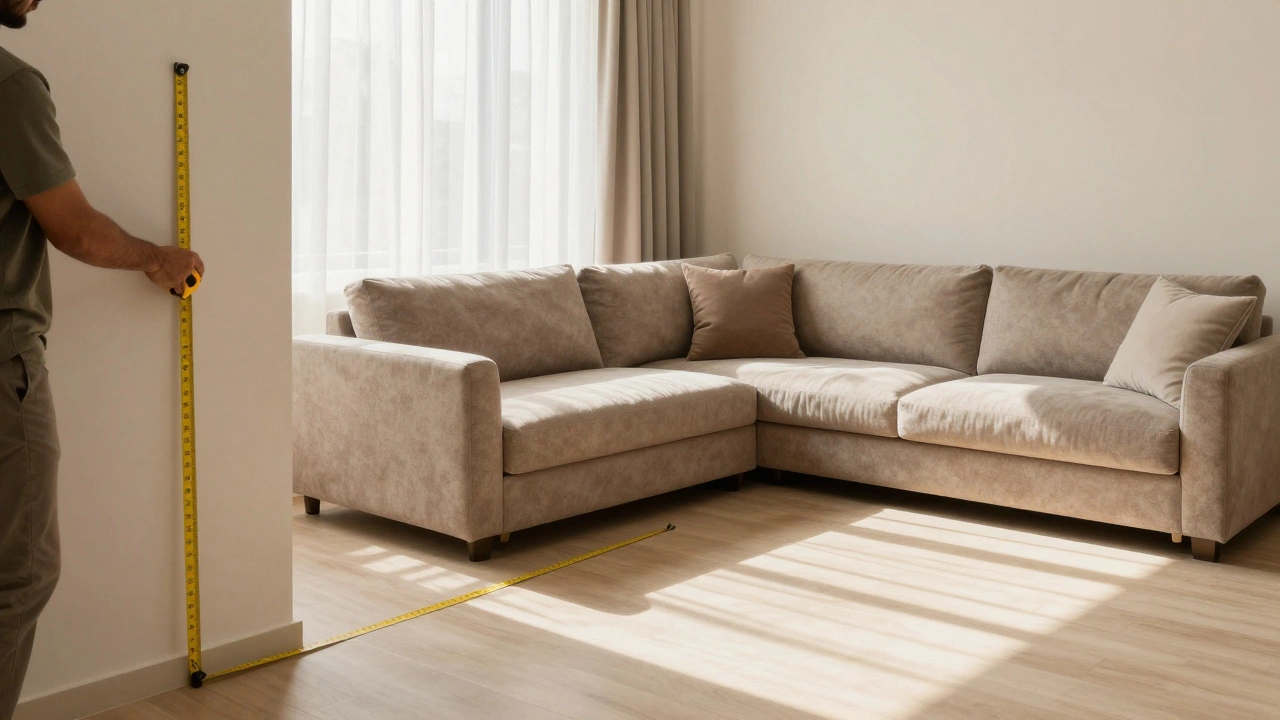
The biggest mistake people make is measuring their floor space and assuming the sofa will fit. They forget about the walls, the doors, and the need to walk around the room. A corner sofa dominates a room, so getting the scale right is critical.
Start by measuring the wall space where the sofa will sit. You need two numbers: the length of the left arm and the length of the right arm. Most standard L-shaped sofas range from 200cm to 300cm in total width. If your living room is smaller than 4 meters wide, you likely need a compact model under 220cm.
But don’t stop at the walls. Measure the depth too. Standard depths run between 90cm and 110cm. If you want that deep, sink-in feel, look for depths over 100cm, but remember this eats into your walking space. Leave at least 60cm of clearance on all sides for easy movement.
| Sofa Type | Total Width (cm) | Depth (cm) | Ideal Room Size (m²) |
|---|---|---|---|
| Compact L-Shape | 180 - 220 | 85 - 95 | 10 - 15 |
| Standard L-Shape | 220 - 260 | 95 - 105 | 15 - 25 |
| Oversized/Chaise | 260 - 300+ | 105 - 120 | 25+ |
Also, check your entry points. Measure your front door, hallways, and staircases. Many large corner sofas come in modular pieces, but some are one solid unit. If you have tight corners in your home, ensure the manufacturer specifies if the sofa can be disassembled for delivery.
Picking the Right Shape for Your Layout
Not all corner sofas are created equal. The shape determines how many people can sit and how the furniture flows in the room. Here are the three most common configurations you’ll encounter.
L-Shaped Sofa is the classic design with a main seating area and a perpendicular chaise lounge. This is the most versatile option. It defines a corner without taking over the entire room. It works well in open-plan living areas because it creates a natural barrier between the living zone and the dining or kitchen area.
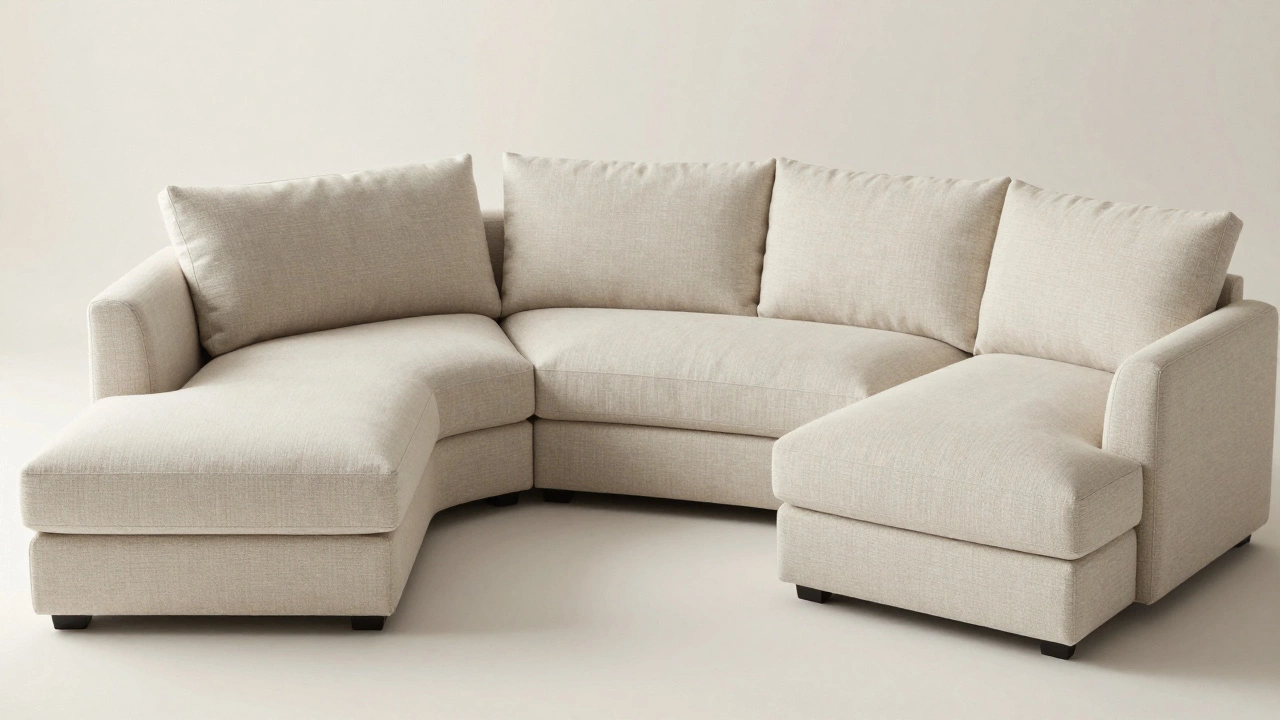
U-Shaped Sofa is a larger configuration that wraps around three sides of a room. This is ideal for large families or frequent entertainers. It offers maximum seating capacity, often accommodating six to eight people. However, it requires a spacious room to avoid feeling cramped. If your living room is less than 25 square meters, a U-shape will likely overwhelm the space.
Modular Sofa is a flexible system made of individual sections that can be rearranged. This is the best choice for renters or those who like to change their layout. You can start with an L-shape and add extra seats or ottomans later. The downside is that modular pieces can sometimes shift apart if not anchored properly, and replacing a single damaged section might require matching the exact batch of fabric years later.
Fabric Matters More Than You Think
You might love the look of white linen, but do you have kids? Pets? Or a habit of eating dinner on the couch? Fabric choice is where aesthetics meet reality. In 2026, performance fabrics have become the industry standard for good reason.
If you have pets, avoid loose weaves like bouclé or velvet unless they are treated with stain-resistant coatings. Cats scratch, and claws get trapped in textured fabrics. Instead, look for tight-weave synthetics or microfiber. These materials are durable, easy to wipe clean, and resist snagging. Brands like Sunbrella or Crypton offer fabrics that repel water and stains effectively.
For households with young children, leather is still a top contender. Full-grain leather ages beautifully and is incredibly easy to clean. A quick wipe removes spills before they soak in. However, leather can feel cold in winter and sticky in summer. If you prefer the warmth of fabric, consider cotton blends with high rub counts (over 50,000 double rubs) for durability.
Don’t ignore the cushion fill either. High-resilience foam provides firm support and retains its shape over time. Down feathers offer a plush, hotel-like comfort but require regular fluffing and tend to flatten out quickly. A hybrid of foam wrapped in down gives you the best of both worlds: initial softness with long-term structure.
Comfort and Ergonomics: Testing the Sit
A beautiful sofa is useless if it hurts your back. Comfort is subjective, but there are objective metrics to help you decide. Pay attention to the seat depth and height.
Seat depth refers to the distance from the front edge of the cushion to the backrest. Shallow seats (less than 50cm) are better for older adults or those with mobility issues, as they make it easier to stand up. Deep seats (60cm+) are great for lounging and sleeping but can cause poor posture if you don’t use lumbar pillows. If you plan to nap on the sofa, aim for a depth of at least 60cm.
Seat height should align with your knee height. Standard heights range from 40cm to 45cm. If the seat is too low, you’ll struggle to get up. If it’s too high, your feet won’t touch the ground, putting strain on your thighs. When testing a sofa in-store, sit for at least five minutes. Check if your lower back is supported and if your arms rest comfortably on the armrests.
Armrest height is another overlooked detail. Low armrests are stylish but impractical if you frequently place drinks on them. Higher armrests provide better leverage when standing up and serve as functional surfaces for tablets or cups.

Budgeting and Long-Term Value
Corner sofas are an investment. Prices vary wildly based on materials, construction, and brand. In Australia, a budget-friendly corner sofa might cost between $800 and $1,500. Mid-range options typically fall between $1,500 and $3,000, while premium designer pieces can exceed $5,000.
Don’t just look at the sticker price. Consider the lifespan. A cheap sofa with particle board frames and low-density foam may need replacing in three to five years. A higher-quality sofa with solid hardwood frames and high-resilience foam can last ten years or more. Calculate the cost per year of use. Often, spending more upfront saves money in the long run.
Check the warranty. Reputable brands offer warranties of five to ten years on the frame and mechanisms. Short warranties (one to two years) often signal lower quality control. Also, ask about fabric guarantees. Some retailers offer extended protection plans for stains and tears, which can be worth the extra cost if you have active kids or pets.
Common Pitfalls to Avoid
Before you sign the contract, watch out for these common traps:
- Ignoring Traffic Flow: Ensure the sofa doesn’t block pathways to other rooms or windows. You should be able to walk behind it without squeezing.
- Overlooking Power Outlets: If you plan to charge devices or plug in lamps near the sofa, make sure the placement doesn’t cover essential outlets.
- Choosing Dark Colors in Small Rooms: Dark sofas absorb light and can make small spaces feel claustrophobic. Lighter tones reflect light and create an illusion of space.
- Skipping the Return Policy: Online shopping makes it hard to judge size and comfort. Ensure the retailer has a clear return or exchange policy in case the sofa doesn’t work in your home.
Choosing the right corner sofa takes patience, but the result is a centerpiece that enhances your daily life. Take your time with measurements, test the comfort, and choose materials that match your lifestyle. Your future self will thank you every time you relax after a long day.
What is the best size corner sofa for a small living room?
For a small living room (under 15 square meters), choose a compact L-shaped sofa with a total width of 180-220cm and a depth of 85-95cm. Look for models with slim armrests and exposed legs to create a sense of openness.
Is a modular sofa better than a traditional L-shaped sofa?
Modular sofas offer greater flexibility and easier moving, making them ideal for renters or changing layouts. Traditional L-shaped sofas often provide better structural integrity and uniformity in design, which is preferable for permanent installations.
Which fabric is best for pet owners?
Tight-weave microfiber, leather, and performance fabrics like Crypton are best for pet owners. They resist scratches, hide hair, and are easy to clean. Avoid loose weaves like bouclé or chenille, which trap claws and fur.
How much clearance do I need around a corner sofa?
You should leave at least 60cm of clearance on all sides for comfortable walking. If the sofa faces a TV, ensure there is enough space for a coffee table (usually 40-50cm gap) without obstructing foot traffic.
Can I move a large corner sofa myself?
It is not recommended to move a large corner sofa alone due to weight and bulk. Most retailers offer professional delivery services. If you must move it yourself, ensure you have helpers and protective covers for floors and walls.