
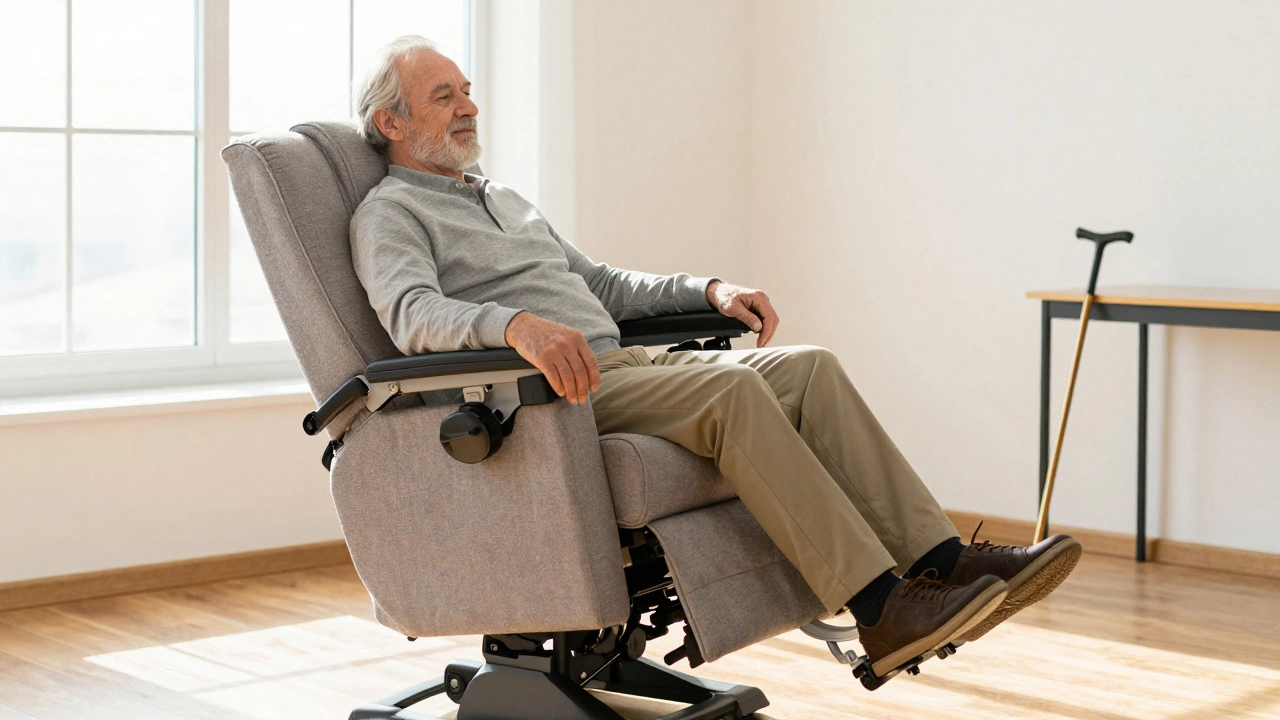
Recliner Chair Selection Guide
This tool helps you determine if you need a power lift recliner and identifies key features to look for based on your pain level, mobility, and budget. Use the information below to make an informed decision for improved comfort and independence.
Recommended Recliner Type
Key Features to Look For
Your body deserves better than to be held down by furniture. The right chair can improve your daily comfort and independence.
If you’re over 60 and waking up stiff, struggling to stand up from the couch, or dreading bedtime because your hips and knees scream for mercy-you’re not alone. Millions of older adults deal with daily aches from arthritis, joint degeneration, muscle loss, and poor posture. But here’s the truth no one tells you: recliner chairs aren’t just for napping. When chosen right, they can be your best tool for reducing pain, improving mobility, and getting real relief without drugs or surgery.
Why regular chairs make old age aches worse
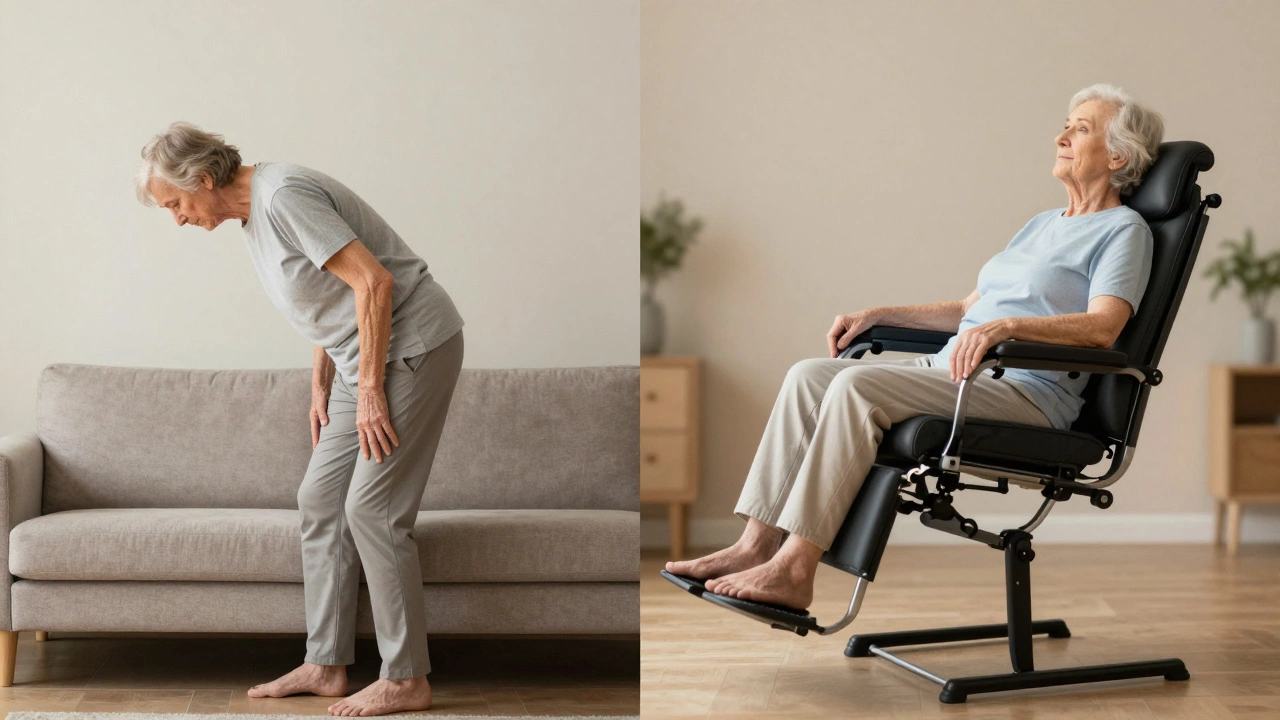
Most standard sofas and dining chairs are designed for people under 50. They’re too low, too flat, and too hard. When you sit in one, your hips drop below your knees, forcing your spine into a C-curve. That puts pressure on your lower back discs and pinches nerves. Your knees get compressed. Your hips don’t get the support they need to stay aligned. And when you try to stand? Your muscles have to work twice as hard just to lift you up.Studies from the Arthritis Foundation show that 62% of seniors with joint pain report worsening symptoms after sitting in non-supportive chairs for more than 30 minutes. It’s not just discomfort-it’s a cycle. Pain makes you move less. Less movement makes muscles weaker. Weaker muscles mean more pressure on joints. And the cycle keeps going.
How a good recliner breaks the cycle
A quality recliner isn’t just a chair with a footrest. It’s a posture correction system. The best ones for seniors do four things:- They lift you up gently-no more wrestling with armrests to stand.
- They support your spine in a neutral position-no slouching, no strain.
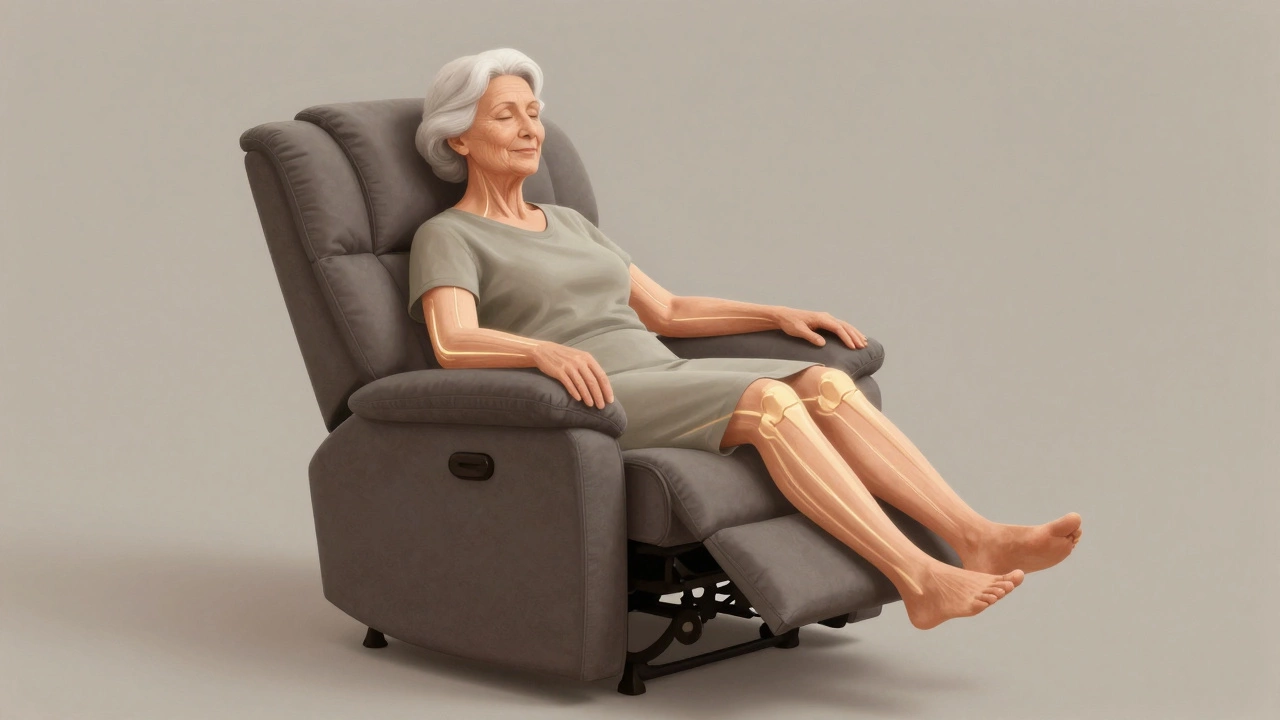
- They elevate your legs to reduce swelling and improve circulation.
- They let you adjust the angle so your joints aren’t locked in one painful position.
Take the recliner chairs with power lift mechanisms. These aren’t luxury gadgets-they’re medical-grade mobility aids. They slowly raise the entire seat, tilting you forward so your center of gravity shifts naturally. You don’t push off with your legs. You don’t swing your arms. You just press a button, and the chair does the work. For someone with knee osteoarthritis or lower back degeneration, this isn’t convenience-it’s independence.
One 72-year-old Melbourne resident, Margaret T., switched from her old fabric sofa to a power-lift recliner after a fall. "I used to need help getting up. Now I get coffee by myself. My back doesn’t ache all day anymore. It’s like the chair remembers how my body should sit."
What to look for in a recliner for pain relief
Not all recliners are created equal. Here’s what actually matters when you’re buying for pain relief:- Seat height: At least 19 inches from floor to seat. Anything lower makes standing nearly impossible without help.
- Back support: Look for lumbar contouring that matches the natural curve of your spine. Memory foam or high-density polyurethane works better than spring coils.
- Recline range: You need at least 140 degrees of recline-not just 120. That’s the sweet spot where pressure on your hips drops by 40% (per biomechanics research from the University of Sydney).
- Leg elevation: The footrest should lift independently and extend fully so your knees aren’t bent more than 90 degrees.
- Material: Breathable, stretchy fabrics like performance microfiber or leatherette. Avoid thick, stiff upholstery that traps heat and restricts movement.
- Weight capacity: Make sure it supports your body weight with room to spare. Many chairs max out at 250 lbs-too low for many seniors.
Also check for heat and massage functions. While not essential, they help relax tight muscles and improve blood flow. A 2024 study in the Journal of Geriatric Physical Therapy found that seniors using recliners with heat therapy reported 30% less morning stiffness than those without.
Power lift vs manual recliners: which is better?
| Feature | Power Lift Recliner | Manual Recliner |
|---|---|---|
| Standing assistance | Yes-lifts you up automatically | No-you push off with arms and legs |
| Joint strain | Minimal-no muscle effort needed | High-can trigger pain flare-ups |
| Adjustability | Motorized-precise angles, memory settings | Manual lever-limited positions |
| Price range | $1,200-$2,500 | $400-$900 |
| Best for | Arthritis, hip replacements, severe back pain | Mild discomfort, budget buyers, occasional use |
If you have moderate to severe joint pain, power lift is worth the investment. It’s not an expense-it’s a prevention tool. Falling while trying to stand from a low chair is one of the top causes of hip fractures in seniors. A power-lift recliner cuts that risk by over 60%, according to data from the Australian Institute of Health and Welfare.
Where to test before you buy
Never buy a recliner online without trying it first. Sit in it for at least 15 minutes. Try to stand up without using your hands. Does it feel natural? Does your back feel supported? Do your knees feel relaxed?Check out showrooms in Melbourne like Countryside Comfort or Elderly Living Solutions. Many offer free home trials-bring the chair to your living room for 7 days. If it doesn’t help your pain, return it. No fine print.
Real results: what users actually feel
One man in Ballarat, 78, had been on painkillers for 8 years due to spinal stenosis. He bought a power recliner with heat and zero-gravity positioning. Within two weeks, he cut his medication in half. By month three, he was gardening again. "I didn’t think a chair could do that," he said. "But now I sleep better, sit longer, and I don’t feel like I’m breaking apart every morning."That’s not magic. It’s biomechanics. When your spine is aligned, your muscles don’t overwork. When your legs are elevated, fluid doesn’t pool in your ankles. When you can rise without strain, your confidence comes back.
What to avoid
Steer clear of these common mistakes:- Buying a recliner that’s too wide-you’ll sink into it and lose support.
- Choosing one with a fixed footrest-it won’t adjust to your leg length.
- Ignoring warranty-look for at least 5 years on the frame, 2 on the motor.
- Thinking "more cushion = more comfort"-too much softness sinks you into bad posture.
- Skipping the test-your body knows what feels right before your brain does.
Final thought: It’s not about comfort. It’s about function.
A recliner chair that helps with old age aches isn’t a luxury. It’s a health device. Just like a good pair of shoes or a cane, it’s part of your daily care routine. The goal isn’t to sit longer. It’s to move better, feel stronger, and stay independent.If you’ve been living with daily pain, don’t wait for it to get worse. Your body is telling you something. Listen. And choose a chair that doesn’t just hold you-it helps you.
Can a recliner chair really reduce arthritis pain?
Yes. A well-designed recliner reduces pressure on arthritic joints by supporting proper posture and elevating the legs. Studies show seniors using supportive recliners report up to 40% less joint stiffness and pain after consistent use. The key is correct alignment-your spine, hips, and knees must be in neutral positions.
Is a power-lift recliner worth the extra cost?
If you struggle to stand from a regular chair, yes. Power-lift recliners prevent falls, reduce muscle strain, and preserve independence. The average cost is $1,500-$2,000, but consider it an investment in safety. Falls in seniors often lead to hospitalization, surgery, and loss of mobility-costing far more than a chair. Many health funds in Australia offer rebates for mobility aids like these.
How long should I sit in a recliner each day?
There’s no strict limit, but aim for 1-2 hours at a time, with breaks to stand and walk. Sitting too long-even in a good chair-can stiffen joints. Use the recliner for rest, not all-day lounging. Pair it with light movement: 5 minutes of stretching or walking every hour keeps your joints lubricated and muscles active.
Do I need heat and massage features?
Not required, but helpful. Heat increases blood flow to stiff muscles, and gentle vibration can ease tension. These features are especially useful for people with chronic back pain or fibromyalgia. If you’re on a budget, skip them and focus on support, height, and lift function first.
Can I use a recliner after hip or knee replacement surgery?
Yes-but only if it meets specific criteria. After surgery, your doctor will advise against chairs lower than 19 inches or those that require deep bending. Power-lift recliners with a high seat and zero-gravity recline are ideal. Always check with your physiotherapist before using one post-op. Many hospitals provide rental options during recovery.
What’s the best fabric for a senior’s recliner?
Performance microfiber or leatherette. These are easy to clean, breathable, and stretch slightly to accommodate movement. Avoid thick, stiff cotton or velvet-they trap heat and make it harder to shift positions. Also, look for stain-resistant and antimicrobial finishes, especially if you have limited mobility or incontinence concerns.
Are there recliners designed specifically for smaller frames?
Yes. Many brands now offer petite or narrow models with seat widths of 18-20 inches (standard is 22+). These prevent sinking and provide better side support. Brands like La-Z-Boy and Ashley have specific lines for smaller seniors. Always measure your space and body before buying.
Next steps: What to do today
If you’re tired of waking up stiff or dreading sitting down:- Measure your current chair’s height from floor to seat. If it’s under 18 inches, it’s likely hurting you.
- Visit a local furniture store and sit in at least three different recliners. Try standing up from each one.
- Ask about power-lift models with heat and memory settings.
- Check if your health fund or Medicare covers mobility aids-some do.
- Don’t wait for pain to get worse. The right chair can change your daily life in days, not months.
Your body deserves better than to be held down by furniture. Choose a chair that lifts you up-literally and figuratively.