
Mold Prevention Humidity Calculator
Current Risk Level
If you’ve ever opened a closet or pulled out a storage chest and smelled that musty, earthy odor, you’re not alone. Mold doesn’t just grow on walls or in bathrooms-it thrives on wood, fabric, and upholstery in storage furniture, especially in humid climates like Melbourne. And once it takes hold, it’s not just ugly or smelly. It can damage your furniture, ruin clothes, and even trigger allergies or breathing problems. The good news? Stopping mold before it starts is easier than you think.
Why Mold Grows on Storage Furniture
Mold doesn’t appear out of nowhere. It needs three things: moisture, warmth, and something to feed on. Storage furniture-like wardrobes, dressers, and cabinets-is often tucked away in corners, rarely opened, and sometimes placed against outside walls or in basements. These spots trap humidity. Wood absorbs moisture from the air. Dust and fabric fibers become food. In Melbourne’s damp winters and humid summers, that’s a perfect storm.
Even if your furniture looks dry, hidden moisture builds up. A wool coat stored in a wardrobe with poor airflow? Mold spores settle on the fabric. A wooden drawer left closed for months? Condensation forms inside. You won’t see it until the smell hits-or you pull out a stained shirt.
Step 1: Control the Humidity
The number one rule: keep the air dry. Mold starts growing when relative humidity hits 60% or higher. In Melbourne, indoor humidity often hits 70-80% in winter. You don’t need a fancy dehumidifier-though one helps-but you do need to act.
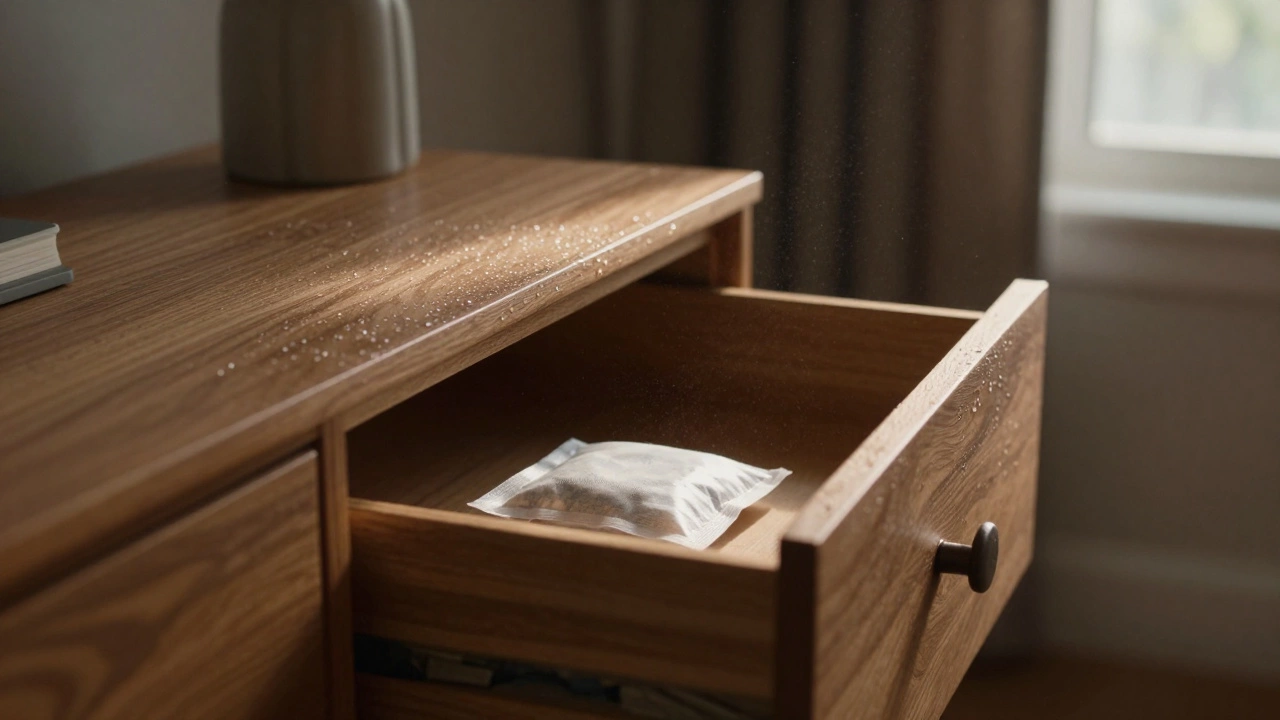
- Place a desiccant pack or silica gel beads inside drawers and cabinets. These absorb moisture without electricity.
- Use a small, quiet dehumidifier in the room where your storage furniture sits. Run it for 6-8 hours a day during damp months.
- Open windows for 15-20 minutes in the morning if the outdoor air is drier than inside. This is especially effective in autumn and spring.
Check your humidity with a cheap digital hygrometer-available at hardware stores. If it’s consistently above 60%, you’re at risk.
Step 2: Improve Airflow Around Furniture
Mold loves still air. If your wardrobe is pushed tight against a wall, or your chest of drawers is in a corner with no space behind it, moisture gets trapped. Air needs to move.
- Leave at least 5 cm of space between your furniture and walls. Even a few centimeters make a difference.
- Use furniture risers or small wooden blocks under the legs of heavy pieces. This lets air flow underneath.
- Don’t overload drawers. Clothes packed too tightly block airflow. Leave room for air to circulate between items.
Try this: Open your wardrobe doors for 10 minutes every morning. It sounds simple, but it’s one of the most effective habits for preventing mold in storage furniture.
Step 3: Clean and Dry Items Before Storing
Never store damp clothes, towels, or blankets. Even slightly damp fabric can start mold growth in 24-48 hours. That old winter coat you tossed in the closet without checking? It could be the source.
- Always wash and fully dry clothes before putting them away. Use a dryer on high heat if possible-it kills mold spores.
- Wipe down wooden surfaces with a dry cloth before placing items inside. Dust and oils attract moisture.
- For upholstered storage pieces (like ottomans or padded chests), vacuum the inside with a brush attachment every few months.
Pro tip: Store seasonal items in breathable cotton bags, not plastic. Plastic traps moisture. Cotton lets air move and lets any dampness escape.
Step 4: Use Natural Mold Inhibitors
Chemical sprays can kill mold, but they don’t stop it from coming back-and they can leave harsh fumes. Instead, use natural, safe options that work long-term.
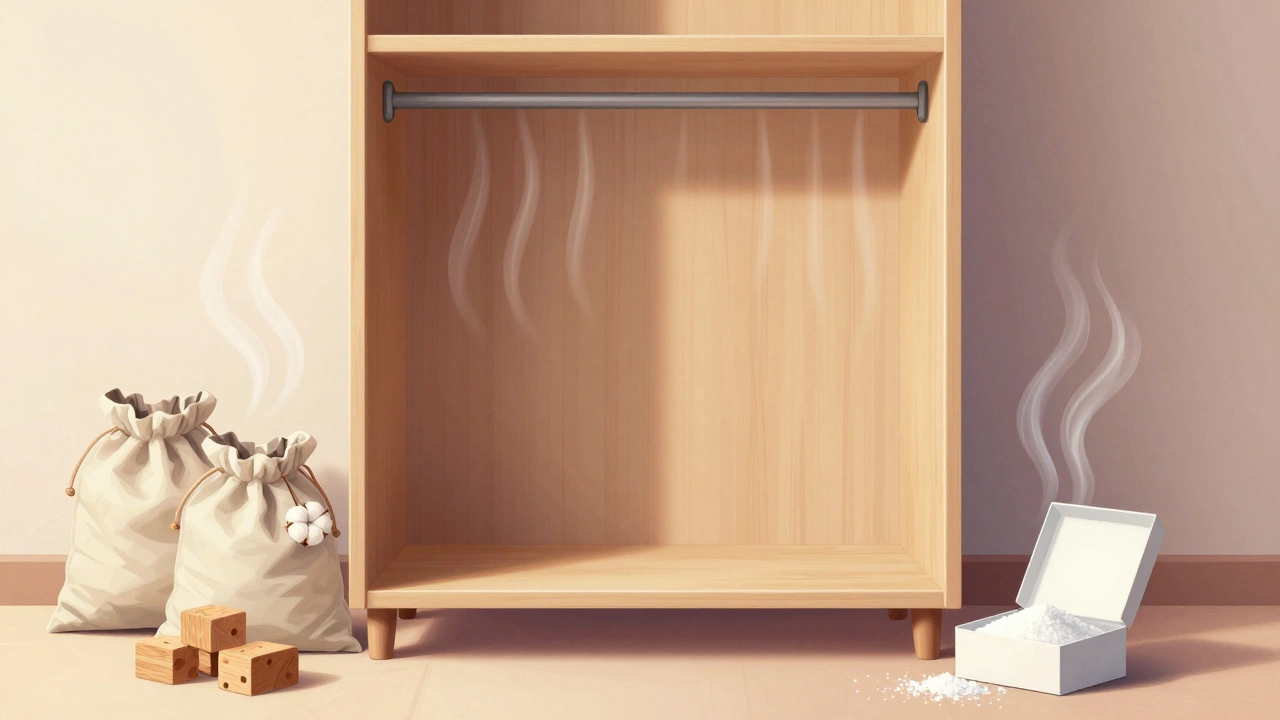
- Place open boxes of baking soda inside drawers. It absorbs moisture and odor. Replace every 2-3 months.
- Hang small sachets of dried lavender or cedar blocks. Cedar naturally repels mold and insects. It also smells better than chemical deodorizers.
- Use a mixture of white vinegar and water (1:1 ratio) to wipe down wooden surfaces every 6 weeks. Vinegar kills existing mold spores and prevents new ones.
Don’t use tea tree oil or essential oils as a primary solution. They’re great for spot cleaning but don’t provide lasting protection in large spaces.
Step 5: Inspect and Act Fast
Mold spreads fast. If you see even a small black or green spot on a drawer or fabric lining, don’t wait. Act immediately.
- Wear gloves and a mask. Don’t breathe in spores.
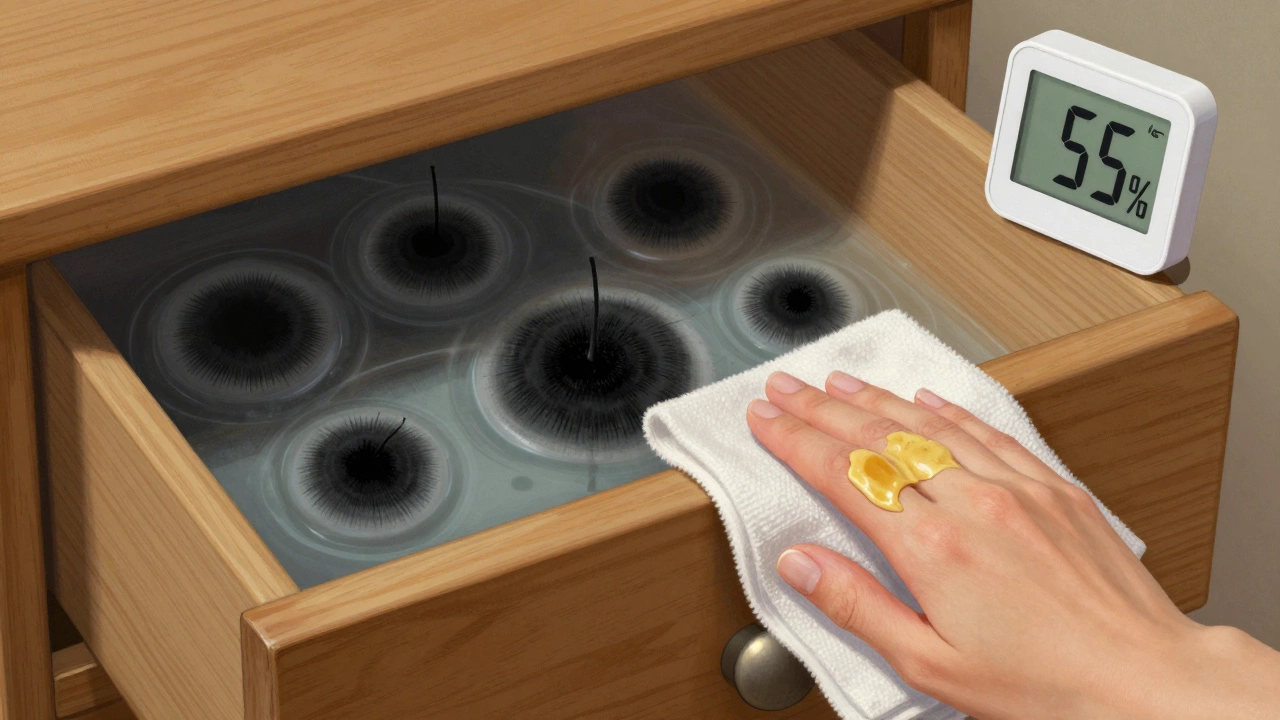
- Scrub the area with a solution of 1 part white vinegar to 1 part water. Use a soft brush for wood, a cloth for fabric.
- Dry the area completely with a fan or hairdryer on low heat.
- Apply a thin coat of tung oil or beeswax to wooden surfaces after cleaning. This creates a protective barrier.
If the mold is deep in the wood or covers more than a 10 cm patch, it may be time to replace the affected part. Sanding won’t help if the mold has grown into the grain.
What Not to Do
There are plenty of myths about mold prevention that make things worse.
- Don’t use bleach. Bleach kills surface mold but doesn’t penetrate wood. It also leaves behind moisture, which encourages regrowth. Plus, it damages wood finishes.
- Don’t seal furniture with polyurethane or varnish. These trap moisture inside the wood, making mold grow worse from the inside out.
- Don’t ignore the smell. If it smells musty, mold is there-even if you can’t see it. Trust your nose.
When to Call a Professional
Most mold on furniture can be handled at home. But if you’ve tried everything and mold keeps coming back, or if it’s spreading to multiple pieces, it might be a sign of a bigger problem.
Call a professional if:
- Mold appears on multiple pieces of furniture in different rooms.
- You see mold on walls or ceilings near your storage furniture.
- Someone in your home has asthma, allergies, or a weakened immune system.
A moisture inspector can check for hidden leaks, poor ventilation, or rising damp in your home’s structure. Fixing the root cause is the only way to stop mold for good.
Long-Term Habits to Keep Mold Away
Prevention is always better than cleanup. Build these habits into your routine:
- Check your storage furniture every month-open drawers, look inside, sniff for mustiness.
- Replace silica gel packs or baking soda every 2-3 months.
- Rotate seasonal items every 3-4 months. Don’t leave things packed away for a year.
- Keep a small fan running in the room with your storage furniture during humid months.
It takes less than 5 minutes a month. But over time, it saves you hundreds in damaged furniture and health costs.
Can mold on furniture make you sick?
Yes. Mold spores can trigger allergies, asthma attacks, and respiratory irritation, especially in children, the elderly, or people with weakened immune systems. Symptoms include sneezing, coughing, itchy eyes, and headaches. Long-term exposure to black mold can lead to more serious health issues. If you notice symptoms worsening when you’re near your storage furniture, treat it as a health concern, not just a cleaning problem.
Is it safe to clean mold off fabric upholstery?
It depends. For light surface mold, a vinegar-water solution and gentle scrubbing can work. But if the mold has soaked into the padding or backing, it’s usually not safe to clean. Mold spores can remain embedded, and cleaning may spread them. In those cases, replacing the fabric or having it professionally cleaned is the best option.
Does air conditioning help prevent mold on furniture?
Yes, but only if it’s used correctly. Air conditioners remove moisture from the air, which helps control humidity. However, if the unit is dirty or the filter is clogged, it can blow mold spores around. Clean your AC filter every month during use, and set the temperature above 22°C to avoid condensation on furniture surfaces.
Can I use a dehumidifier in a small closet?
Standard dehumidifiers are too big for small closets. Instead, use compact desiccant dehumidifiers designed for closets and drawers. These don’t need electricity-they work by absorbing moisture into crystals. They’re quiet, safe, and perfect for enclosed spaces. Replace them when the indicator shows they’re full.
Why does mold keep coming back even after cleaning?
Mold returns when the underlying cause isn’t fixed. If your room is too humid, if air doesn’t circulate, or if you keep storing damp items, cleaning alone won’t help. You need to address moisture sources and airflow. Mold spores are everywhere-they’ll grow back if the environment stays perfect for them.
Final Tip: Think Like a Detective
Don’t just clean the mold. Ask: Why is it here? Is the room too damp? Is the furniture against a cold wall? Are clothes not drying properly? Find the pattern. Fix the cause. Then, keep checking. Mold doesn’t care how nice your furniture is-it just wants moisture. Control that, and you control the problem.