
Round Coffee Table Styling Simulator
Stop guessing what goes in the middle. Input your table's dimensions and household context to get a tailored styling plan.
Table Specifications
Enter your details to see how to style your specific round table.
You’ve bought the perfect round coffee table. It’s sleek, it fits the space, and it looks great from a distance. But then you stand back, look at that empty circular surface, and freeze. Do you put a tray? A stack of books? A plant? Or just leave it bare?
Styling a round coffee table is trickier than styling a rectangular one because there are no corners to anchor your eye. The center is all you have. If you get it wrong, the table looks like a lonely island in the middle of your living room. If you get it right, it becomes the gravitational pull of the entire space.
The Rule of Three (and Why It Works)
Designers swear by odd numbers. It’s not magic; it’s psychology. Odd-numbered groupings feel more dynamic and natural to the human eye than even-numbered ones, which can look too static or symmetrical. When you’re looking at what to put in the middle of a round coffee table, aim for three distinct items.
But here’s the catch: they need height variation. If you place three flat objects side-by-side, it looks like a showroom display, not a lived-in home. You want a triangle shape. One tall item, one medium item, and one low, wide item. This creates depth and makes the small footprint of a round table feel larger.
The Anchor Piece: Your Foundation
Every successful round table setup starts with an anchor. This isn’t necessarily the biggest thing, but it’s the visual base that holds everything else together. Without an anchor, your decor pieces tend to drift apart visually, making the table look cluttered rather than curated.
| Anchor Type | Best For | Why It Works |
|---|---|---|
| Tray | Small tables or messy households | Contains smaller items and defines the "zone" on the curved surface. |
| Stack of Books | Tall-legged tables | Adds instant height and intellectual vibe; hides wobbly legs. |
| Large Bowl | Minimalist spaces | Softens hard edges and adds organic curves that match the table shape. |
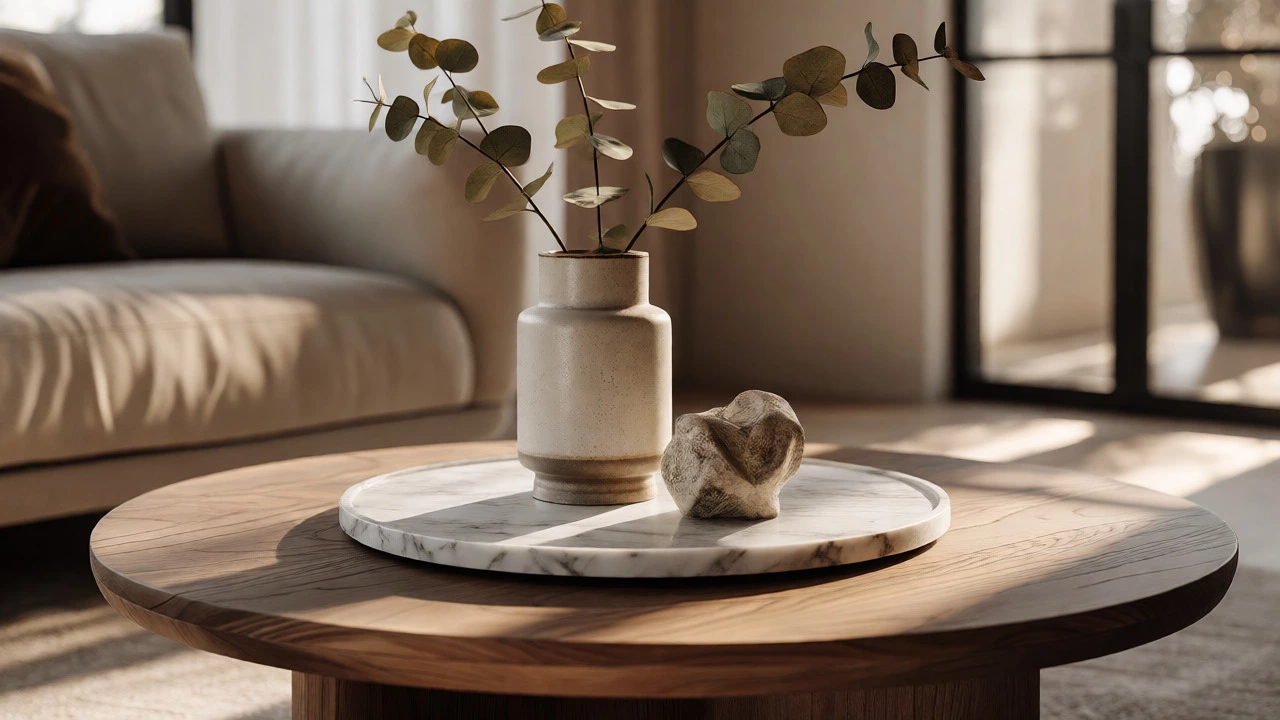
A tray is often the unsung hero of round table styling. Because round tables lack straight lines, items can easily slide off or look like they’re floating. A round or oval tray made of wood, metal, or marble gives you a defined boundary. It tells the eye, "Everything inside this circle belongs together." Plus, if you have kids or pets, you can clear the whole look in ten seconds by grabbing the tray handle.
Adding Height: The Vertical Element
Once your anchor is down, you need to break up the horizontal plane. This is where the vertical element comes in. On a rectangular table, you might push a vase to the back corner. On a round table, you have to be careful not to block sightlines across the room.
Vases are the classic choice, but don’t just grab any vase. Since the table is round, a cylindrical or spherical vase complements the geometry without fighting it. However, if your table has a busy pattern (like terrazzo or heavy wood grain), go for a simple, solid-colored vase to avoid visual noise.
Consider using dried branches or eucalyptus stems instead of fresh flowers. Fresh flowers wilt, and replacing them constantly is annoying. Dried elements last months, add texture, and bring a bit of nature indoors without the maintenance. Place them slightly off-center. Perfect symmetry on a round object can feel sterile; a slight offset feels intentional and relaxed.
The Organic Touch: Plants and Nature
If you ask me what I’d put on my own round table in Melbourne, I’d say plants every time. They soften the furniture and improve air quality. But which plant? Avoid spiky succulents if you have small children-they poke. Go for something lush and trailing, like a Pothos or a Philodendron, placed in a pot that sits within your anchor zone.
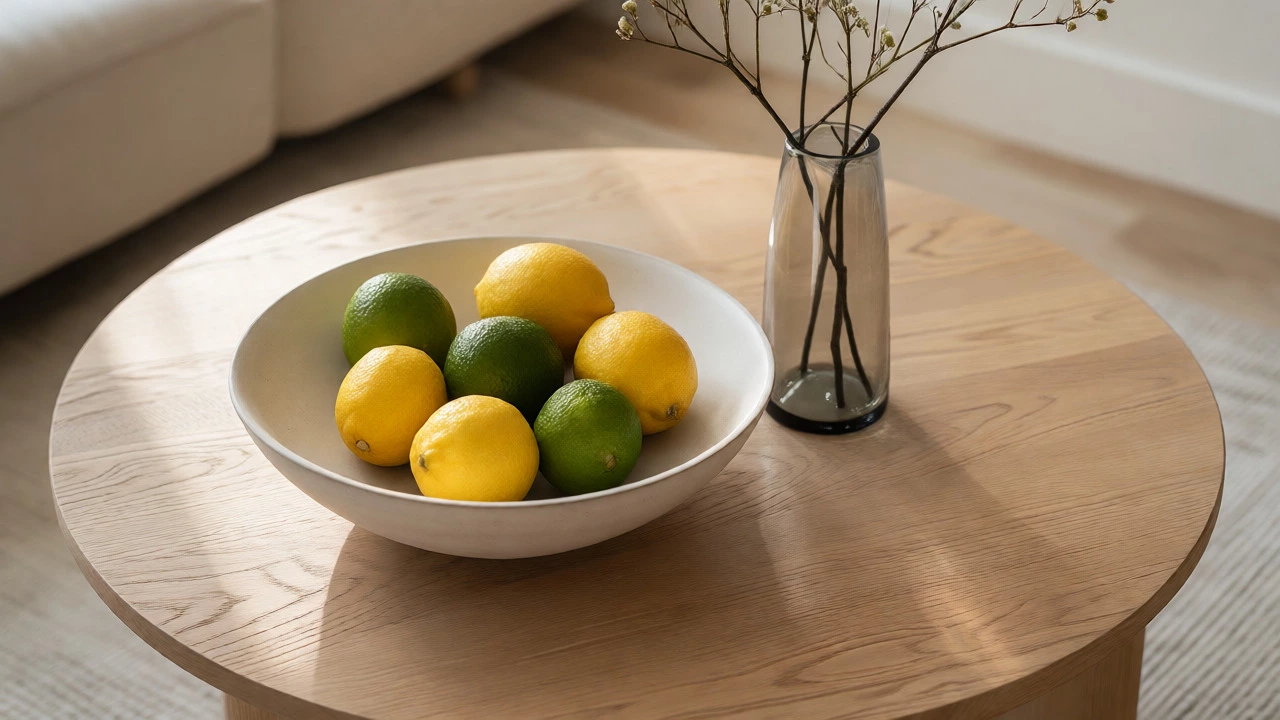
Alternatively, use a bowl of seasonal fruit. It sounds cliché because it is, but it works. A ceramic bowl filled with lemons, limes, or apples adds color and life. Just make sure the fruit is real or high-quality faux. Fake fruit that looks plastic cheapens the room instantly. Real fruit invites conversation and smells good, especially citrus.
Texture and Personalization
Your coffee table shouldn’t just be pretty; it should tell people who you are. This is where texture plays a huge role. Smooth glass or polished stone needs contrast. Add something rough, woven, or matte.
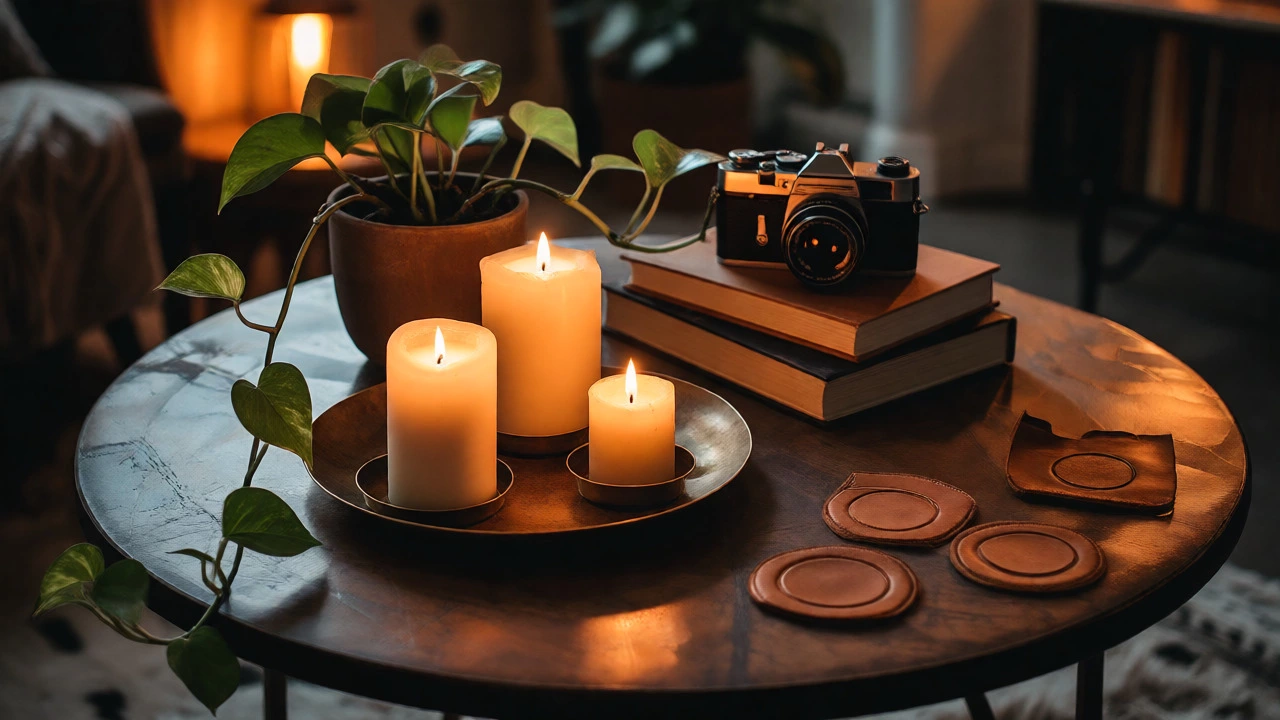
- Candles: Cluster three pillar candles of varying heights. They add warmth and scent. Use holders to catch wax.
- Coasters: Don’t hide them. Choose a set of unique stone or leather coasters. They’re functional art.
- Personal Objects: A vintage camera, a sculptural piece, or a travel souvenir. These spark stories when guests sit down.
Remember the "negative space" rule. You don’t need to fill every inch of the circle. In fact, leaving some empty space is crucial. If the table is 80cm in diameter, your decor cluster should probably only occupy about 40-50cm of that width. Letting the material of the table breathe shows you respect the craftsmanship of the furniture itself.
Common Mistakes to Avoid
I see these errors constantly in showrooms and homes alike. First, putting everything dead center. While round tables invite central focus, pushing everything into a tight little knot in the exact middle makes the table look tiny. Spread your items out slightly within the anchor zone to create balance.
Second, ignoring scale. A massive sculpture on a petite side-table-sized coffee table will overwhelm the room. Conversely, tiny trinkets on a large dining-height coffee table will look like lost change. Measure your table before buying decor. If your table is under 60cm in diameter, stick to two items max. If it’s over 90cm, you can safely do the full three-item grouping.
Third, forgetting function. Is this a family room? If yes, can you actually put your feet up? Can you set a mug down without knocking over the vase? Style matters, but utility keeps the peace. If you find yourself moving decor every time you watch TV, simplify the arrangement.
Final Thoughts on Balance
There is no single "right" answer to what goes in the middle of a round coffee table. It depends on your lifestyle, your aesthetic, and the specific dimensions of your piece. Start with an anchor, add height, include something organic, and step back. Adjust until it feels balanced-not perfectly symmetrical, but harmonious.
Should I use a tray on a round coffee table?
Yes, trays are highly recommended for round coffee tables. They define the decorative area, prevent small items from sliding off the curved edge, and allow you to style the table as a single unit. Choose a round or oval tray to complement the table's shape, or a square one for a modern contrast.
How many items should I put on a round coffee table?
The general rule is to use an odd number of items, typically three. This creates a more visually interesting and dynamic arrangement than even numbers. Ensure the items vary in height and texture to add depth to the circular surface.
What is the best plant for a coffee table?
Low-maintenance plants like Pothos, Snake Plants, or Succulents work well. For round tables, trailing plants in hanging pots or compact bushy plants in decorative ceramic pots fit nicely within the anchor zone. Avoid large, sprawling plants that take up too much usable surface area.
How do I style a very small round coffee table?
For small tables (under 60cm diameter), simplicity is key. Use a single statement piece, such as a unique book stack topped with a small object, or a single elegant vase. Avoid clutter, as too many items will make the table look crowded and the room feel smaller.
Can I mix metals on a round coffee table?
Absolutely. Mixing metals like brass, silver, and black iron adds character and prevents the look from feeling too matched or dated. Just try to keep the finish consistent within individual items (e.g., a brass lamp base) while mixing finishes across different accessories.