
Posture Risk & Fix Analyzer
Select the position that describes how you are sitting right now to see the impact on your spine and how to fix it:
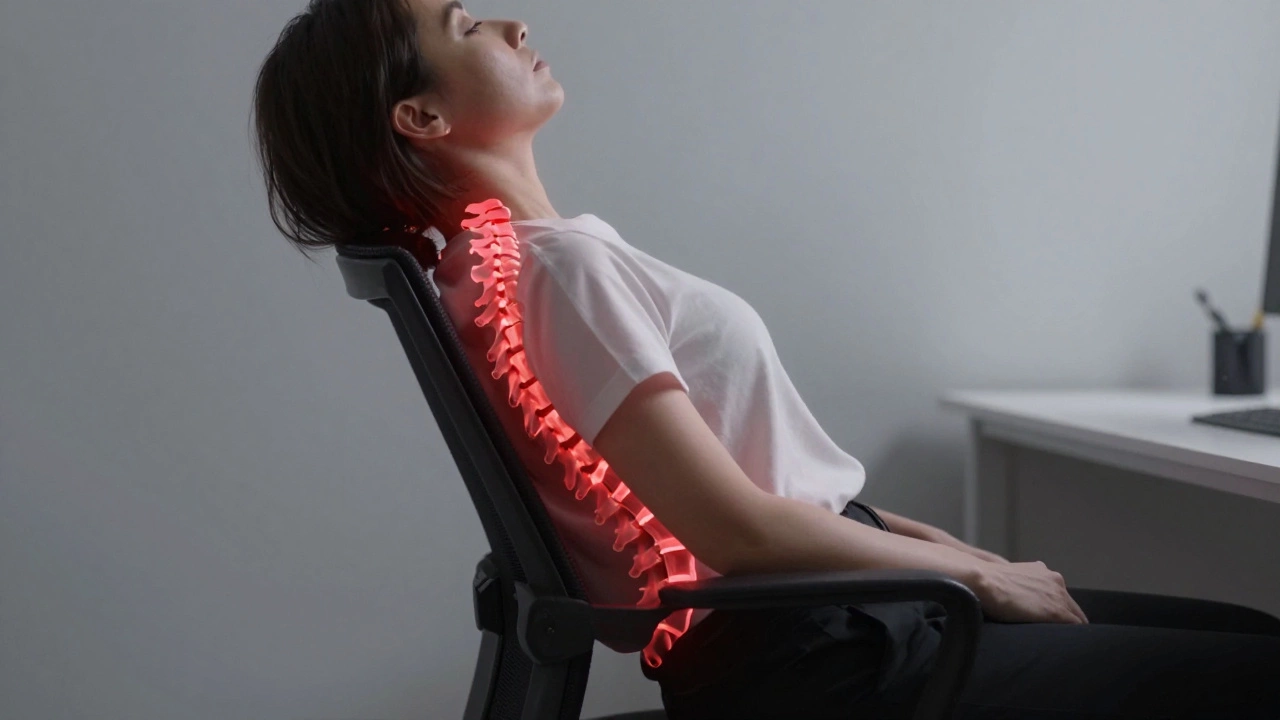
⚠️ The "C-Curve" Impact
You are putting immense pressure on the front of your intervertebral discs, pushing the gel-like interior backward. This is the primary cause of bulging discs and chronic lower back pain.
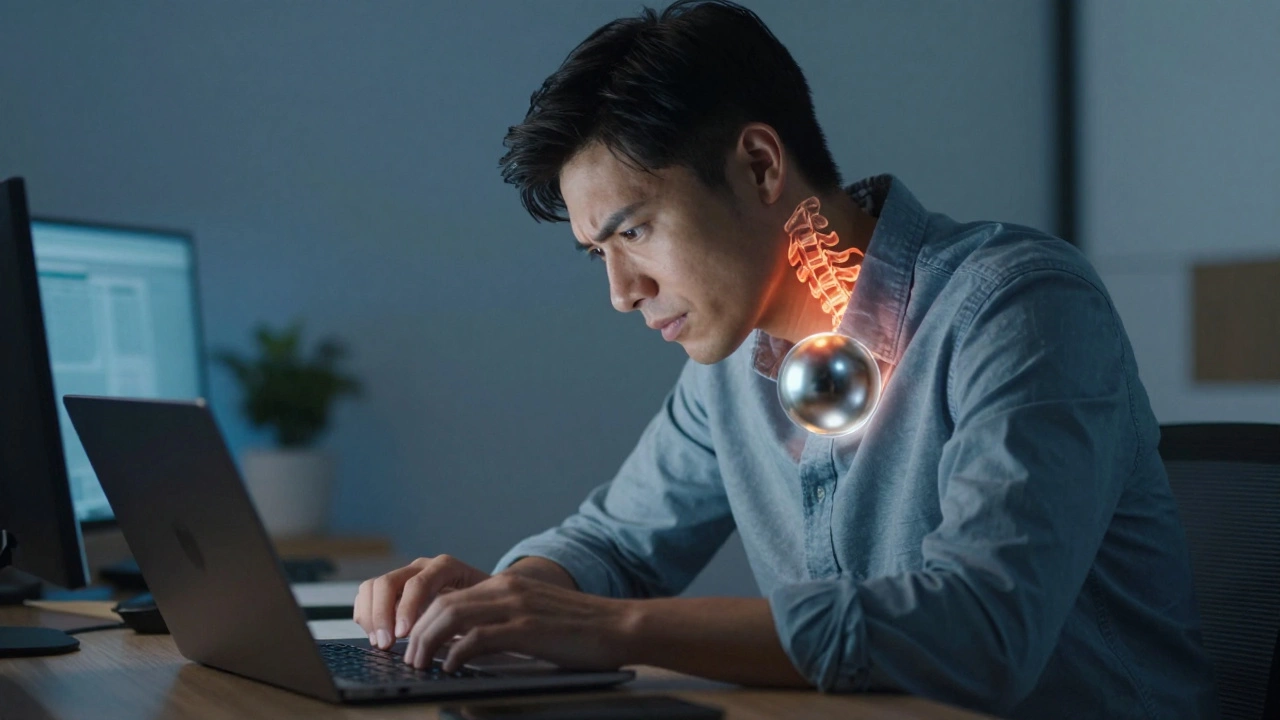
⚠️ Forward Head Posture Impact
Your neck is currently supporting significantly more than the usual 12 lbs. For every inch forward, the load increases, leading to tension headaches and shoulder rounding.
⚠️ Pelvic Tilt Impact
Crossing your legs tilts your pelvis, forcing your spine to curve sideways to keep your head level. This causes hip misalignment and can pinch the sciatic nerve.
⚠️ Static Loading Impact
Even a "perfect" position becomes harmful if held too long. You are restricting blood flow and oxygen to your tissues, leading to muscle fatigue and stiffness.
You might be doing it right now: leaning back in your chair with your chin tucked into your chest, or maybe sliding your hips forward so you're basically lying down while sitting. It feels cozy for a few minutes, but your spine is screaming. Most of us don't realize that the way we sit is slowly reshaping our muscles and compressing our discs. If you've noticed a dull ache in your lower back or a sharp pinch in your neck by 3 PM, it's not just 'getting old'-it's likely your posture.
Главные выводы
- The "C-curve" or slouching is the most damaging position for spinal discs.
- Crossing legs for long periods puts uneven pressure on the pelvis and hips.
- Forward head posture (tech neck) adds up to 60 lbs of extra weight on the cervical spine.
- The best position is the one that changes frequently.
The Worst Offender: The Slouch (The C-Curve)
If we have to name the most unhealthy sitting position, it's the deep slouch. This is when your lower back rounds out, your pelvis tilts backward, and your spine forms a shape like the letter C. When you sit like this, you aren't using your muscles for support; instead, you're dumping all your weight onto the passive structures of your spine.
Intervertebral Discs is the cushioning pads between the vertebrae that distribute weight and absorb shock. When you slouch, you squeeze the front of these discs, pushing the gel-like interior backward. Over time, this constant pressure can lead to bulging or herniated discs, which is why so many office workers experience chronic lower back pain.
Think of your spine like a stack of donuts. If you press down evenly, they stay put. If you tilt the stack and push from the top, the middle donuts start to bulge out. That's exactly what happens in your lumbar region when you slide down in your chair.
The "Tech Neck" and Forward Head Posture
We've all seen it-the person hunched over a laptop with their chin jutting forward. This is called forward head posture. Your head weighs about 10 to 12 pounds when balanced perfectly over your shoulders. But for every inch your head moves forward, the effective weight on your neck muscles doubles.
When your head is shifted forward by just a few inches, Cervical Vertebrae (the seven bones in the neck) must support what feels like 60 pounds of pressure. This forces the muscles at the base of your skull to tighten up, leading to tension headaches that feel like a tight band around your forehead.
If you find yourself leaning in to read a screen, you're not just straining your eyes; you're training your muscles to stay in a shortened, tight state, which eventually pulls your shoulders forward and rounds your upper back.
The Danger of Crossing Legs and Asymmetry
Crossing your legs feels natural, but it's a recipe for hip misalignment. When you cross one leg over the other, you tilt your pelvis. This doesn't just affect your hips; it creates a ripple effect up your spine. Because your pelvis is the foundation for your back, a tilt at the bottom means your spine has to curve sideways to keep your head level.
Over several hours, this puts uneven pressure on the Scoliosis-like curvature of the spine, even if you don't have a medical condition. It also restricts blood flow to the legs, which is why your foot might fall asleep. More importantly, it can lead to chronic tightness in the piriformis muscle, which can pinch the sciatic nerve and send shooting pains down your leg.
How Your Chair Might Be Sabotaging You
Not all chairs are created equal. If you're sitting in a dining chair or a cheap task chair with no lumbar support, you're fighting a losing battle. A chair without a contoured back forces your muscles to do all the work. Once those muscles fatigue-usually after about 20 minutes-you naturally collapse into that dreaded C-curve.
| Chair Type | Spinal Support | Common Risk | Verdict |
|---|---|---|---|
| Standard Dining Chair | None / Flat | Lower back flattening | Poor for long term |
| Basic Office Chair | Minimal | Slouching after 30 mins | Average |
| Ergonomic Chair | Adjustable Lumbar | Over-reliance on support | Excellent |
| Gaming Chair | High Back / Bucket | Shoulder rounding | Good for neck, varies for back |
The Myth of the "Perfect" Position
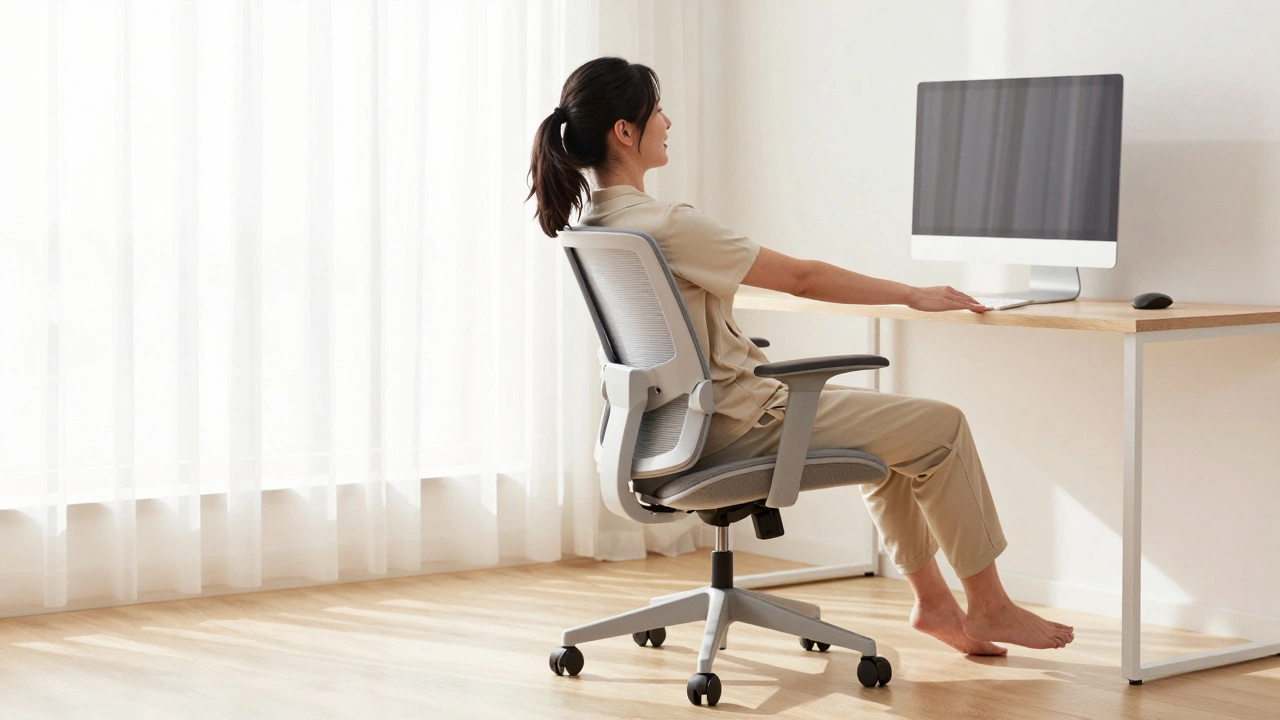
Here is a secret: there is no single "perfect" position you can hold for eight hours. Even the most ergonomically correct posture becomes unhealthy if you stay in it too long. The human body is designed for movement. Static loading-where muscles stay contracted in one position-reduces blood flow and oxygen to your tissues.
The real goal is "dynamic sitting." This means shifting your weight, stretching your ankles, and changing the angle of your back throughout the day. If you're locked into a rigid 90-degree angle, you're actually restricting the natural movement of your joints.
A Practical Guide to Better Sitting
You don't need a $1,000 chair to stop hurting. You just need to follow a few basic rules of thumb to keep your joints happy.
- The 90-90-90 Rule: Aim for a 90-degree angle at your elbows, hips, and knees. Your feet should be flat on the floor. If they don't reach, get a footrest.
- Support the Curve: Your lower back has a natural inward curve. If your chair doesn't have a bump there, roll up a small towel and place it at the small of your back.
- Eye Level is Key: Your monitor should be at a height where you're looking straight ahead. If you're using a laptop, put it on a stack of books and use an external keyboard.
- The 20-Minute Reset: Set a timer. Every 20 minutes, stand up for 10 seconds, reach for the ceiling, and squeeze your shoulder blades together.
Connecting the Dots: Posture and Overall Health
Bad sitting habits don't just stay in the back. When you slouch and compress your chest, you limit the space your lungs have to expand. This means shallower breathing, which can lead to lower energy levels and increased anxiety. Your digestive system also suffers; compressing your abdominal organs can slow down digestion and lead to bloating.
By fixing your position, you're not just saving your spine-you're improving your breathing, your digestion, and your focus. It's a ripple effect that starts with how you place your hips in a chair.
Is leaning back in a chair actually bad?
Not necessarily. Leaning back slightly (about 100 to 110 degrees) can actually reduce the pressure on your spinal discs compared to sitting perfectly upright at 90 degrees. The problem is when you lean back and "slide" your hips forward, creating a curve in your lower back. If your hips stay tucked back into the chair, a slight recline is often more comfortable and healthier for long periods.
Can an ergonomic chair fix my existing back pain?
A chair is a tool, not a cure. While a high-quality chair can prevent further damage and reduce daily strain, it won't "fix" a herniated disc or chronic muscle imbalances. It provides the support necessary for your body to heal, but you'll likely need a combination of movement, stretching, and potentially physical therapy to resolve existing pain.
Why does my neck hurt even if I sit up straight?
You might be sitting up straight in your torso, but your head might still be drifting forward. This is often caused by the placement of your screen. If your monitor is too low, your neck will naturally bend forward to see it, regardless of how straight your back is. Ensure the top third of your screen is at eye level.
Is it better to sit on a stool or a chair?
For short periods, a stool can encourage "active sitting" because it forces your core muscles to engage to keep you upright. However, for a full workday, a stool is generally worse because it lacks lumbar support. Once your core tires, you will inevitably slouch, putting all the pressure on your lower spine.
How do I know if my posture is improving?
The first sign is usually a decrease in "end-of-day" fatigue. If you no longer feel the need to aggressively stretch your back the moment you stand up from your desk, you're making progress. You can also take a side-profile photo of yourself sitting naturally; if your ear is aligned over your shoulder, you're in a good spot.