
US Clothing Storage Terminology Guide
Confused by American terms for clothes storage? Use this guide to identify the correct term based on how the item is built or used.
Quick Reference Table
| Term | Type | Key Feature |
|---|---|---|
| Closet | Built-in | Architectural feature; cannot be moved. |
| Armoire | Freestanding | Tall, decorative, often ornate wood/glass. |
| Dresser | Freestanding | Drawers only; no hanging rails. |
| Wardrobe | Freestanding | Modern minimalist term; less common in US homes. |
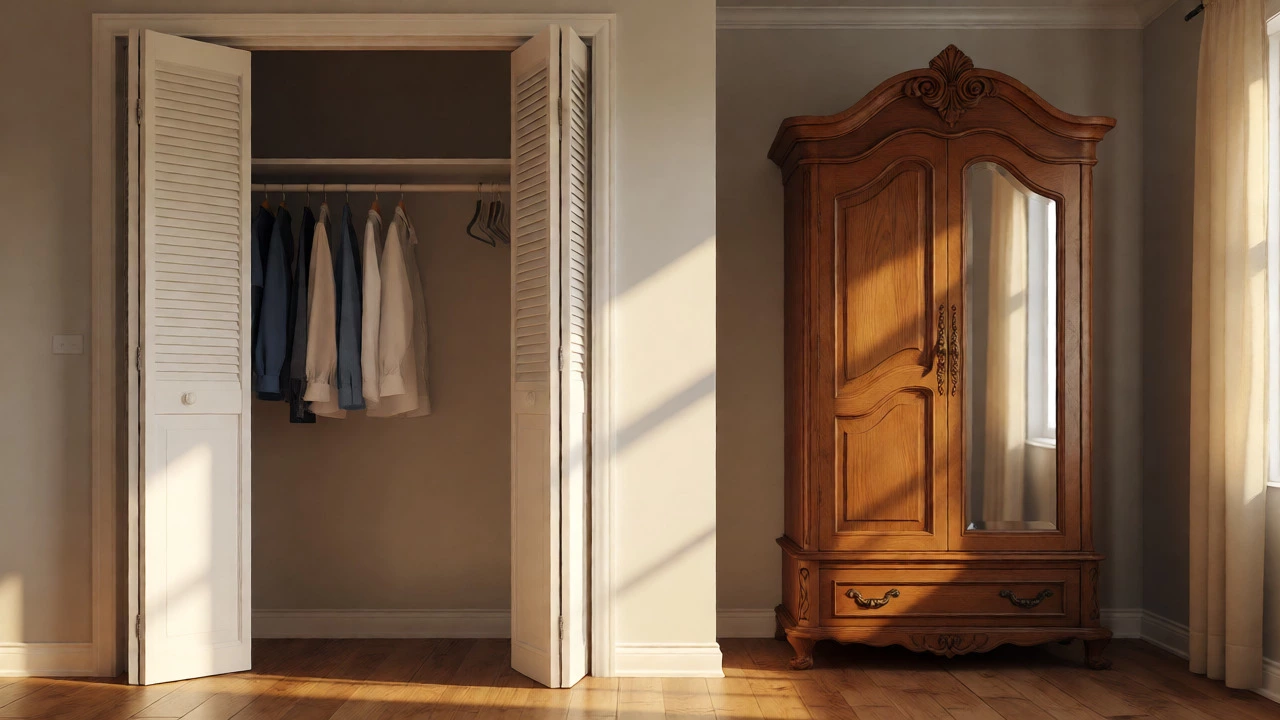
You walk into a friend's house in Ohio and ask where the wardrobe is. They look at you blankly, then point to a door in the hallway. "You mean the closet?" they ask. You're confused because you clearly see a tall wooden cabinet with doors in the corner of their bedroom, not just an empty recessed space behind a sliding door. This linguistic gap trips up millions of people every year who move between the UK, Australia, Canada, and the US. The confusion isn't just about vocabulary; it’s about how Americans actually store their clothes and what pieces of furniture they buy.
The short answer? In America, the word "wardrobe" usually refers to a specific type of freestanding piece of furniture, while the general concept of a place to hang clothes is called a closet. But that definition has layers. If you’re shopping for storage solutions or trying to describe your home to an American real estate agent, using the wrong term can lead to awkward misunderstandings or buying the wrong product. Let’s break down exactly what these terms mean, when to use them, and why the distinction matters more than you think.
The Big Shift: From Furniture to Architecture
To understand why Americans don’t say "wardrobe," you have to look at housing history. In many parts of Europe and older British homes, bedrooms were often small. You didn’t have a dedicated room for clothes. Instead, you bought a large, heavy piece of furniture-a wardrobe. It was a standalone cabinet, often made of oak or mahogany, with hanging rails and shelves inside. It was furniture, plain and simple.
American housing trends shifted dramatically in the mid-20th century. As suburban sprawl expanded after World War II, builders started incorporating dedicated spaces for clothing directly into the floor plans. These weren’t separate rooms; they were nooks carved out of the bedroom walls. Because these spaces were part of the architecture rather than movable objects, they got a different name: the closet. Specifically, the walk-in closet or the reach-in closet.
This architectural shift changed the language. When you buy a house in Texas or Florida, you aren’t looking for a cabinet to fit in the corner; you’re checking if the master bedroom has a closet. If it doesn’t, the house might be considered less valuable. So, when Americans hear "wardrobe," they don’t picture the standard storage solution in their home. They picture something else entirely.
What Is a Closet in American English?
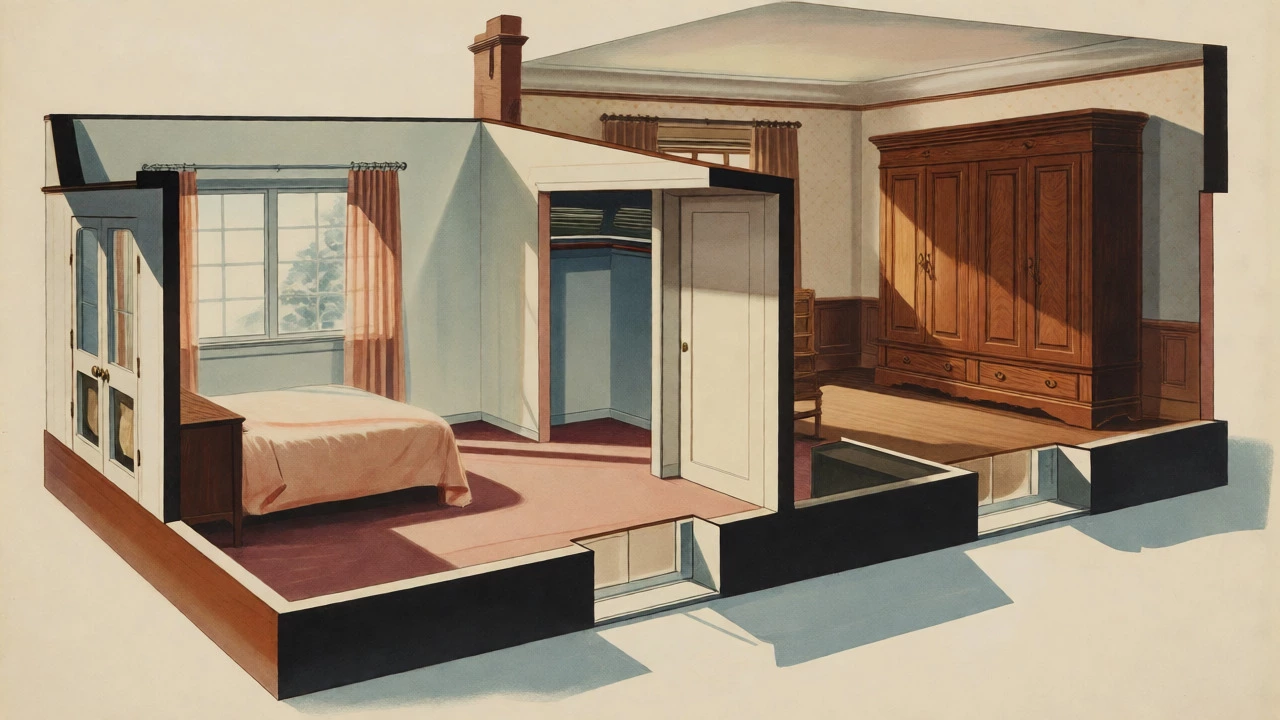
In the US, a closet is a small room or recessed space used for storing clothes, linens, or other household items. It is built into the structure of the house. There are two main types you’ll encounter:
- Reach-in closets: These are shallow spaces, usually about 24 inches deep, with double doors (often bi-fold or sliding). You stand outside and reach in to hang your shirts. Most standard American bedrooms have these.
- Walk-in closets: Larger spaces where you can step inside. These often have shelving on multiple walls and may include islands or drawers. In luxury homes, these are treated like dressing rooms.
If you tell an American you want to install a new wardrobe, they might assume you want to renovate the closet itself-adding shelves, better lighting, or custom organizers. They won’t necessarily think you want to buy a new piece of furniture. This is the first major trap for non-Americans living in the States.
So, What Do Americans Call a Freestanding Cabinet?
If the built-in space is the closet, what do you call the big wooden cabinet that stands against the wall? Here, the terminology gets tricky because Americans use several words depending on style, era, and region.
Armoire
The most common substitute for "wardrobe" in modern American interior design is the armoire. Originally a French term for a cupboard, Americans adopted this word to describe tall, decorative cabinets used for clothing storage.
Why the switch? It sounds fancier. A "wardrobe" can sound old-fashioned or institutional (like school lockers). An "armoire" sounds elegant, rustic, or chic. You’ll find armoires in catalogs from Pottery Barn, Wayfair, and Crate & Barrel. They often feature ornate carvings, distressed wood finishes, or mirrored doors. Functionally, they are identical to a British wardrobe: hanging space, shelves, and sometimes drawers. But if you search Amazon.com for "wardrobe," you’ll get fewer results than if you search for "armoire." That’s a clear signal of cultural preference.
| Term | Type | Typical Context | Key Features |
|---|---|---|---|
| Closet | Built-in | Standard bedroom, hallway | Recessed, doors (sliding/bi-fold), fixed location |
| Armoire | Freestanding | Decorative, vintage style, small apartments | Tall, often ornate, movable, high aesthetic value |
| Dresser | Freestanding | Bedroom | Drawers primarily, low height, folded clothes |
| Cabinet | Freestanding/Built-in | Kitchen, office, utility | Enclosed storage, varied sizes, generic term |
| Wardrobe | Freestanding | Modern minimalist, IKEA-style, retail displays | Simple lines, functional, increasingly common due to global brands |
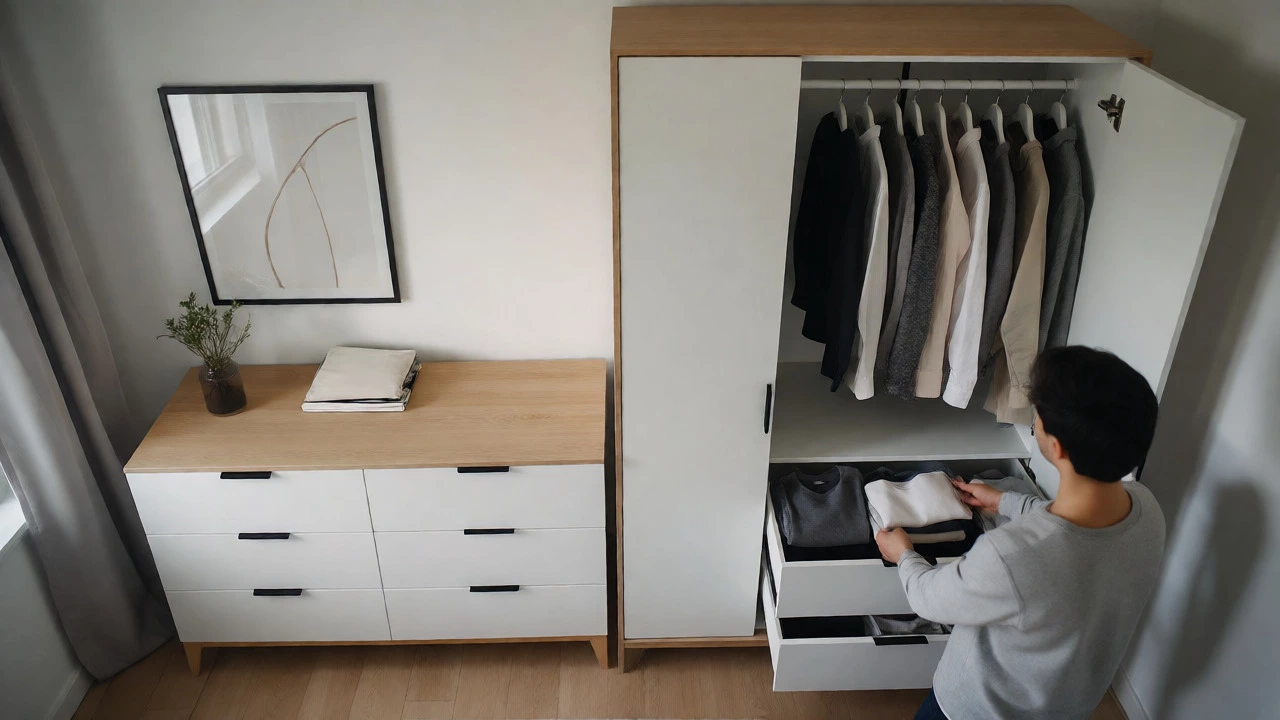
Dresser
Don’t confuse a wardrobe with a dresser. While a dresser stores clothes, it is defined by its drawers, not its hanging space. Dressers are wide and low. You put folded t-shirts, socks, and underwear in them. If you need to hang a suit jacket, you can’t put it in a standard dresser. Americans often pair a dresser with a closet. The closet holds the hangers; the dresser holds the folds. If you ask for a "wardrobe" but show a picture of a chest of drawers, an American will correct you: "That’s a dresser."