
TV Stand Compatibility Calculator
Putting a TV in your bedroom is common-but finding the right spot for it isn’t always easy. You don’t want a bulky stand eating up floor space, and you definitely don’t want to ruin your nightstand with heat or cables. So what can you use instead of a traditional TV stand? The answer isn’t just about buying something new. It’s about repurposing what you already have.
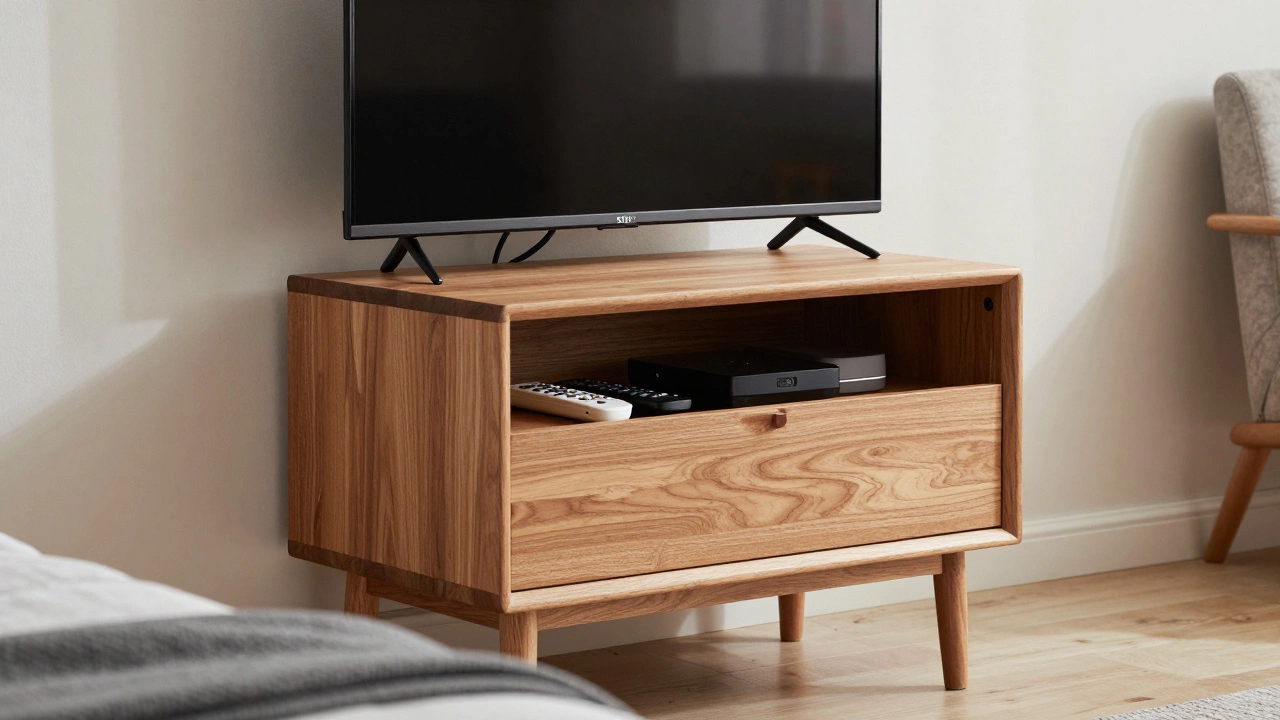
Use a sturdy nightstand
Most people think nightstands are just for lamps and books. But if yours is wide enough-around 40 inches or more-and strong enough to hold 50 pounds, it can double as a TV stand. Look for solid wood or metal frames. Avoid particleboard or thin veneers; they’ll sag over time. A nightstand with drawers is even better. You can stash remotes, gaming consoles, or streaming sticks out of sight. Just make sure the TV’s base fits snugly. Measure the width of your TV’s feet. If they’re more than 20 inches apart, most nightstands won’t work. Stick to TVs under 55 inches for safety.
Turn a console table into your media hub
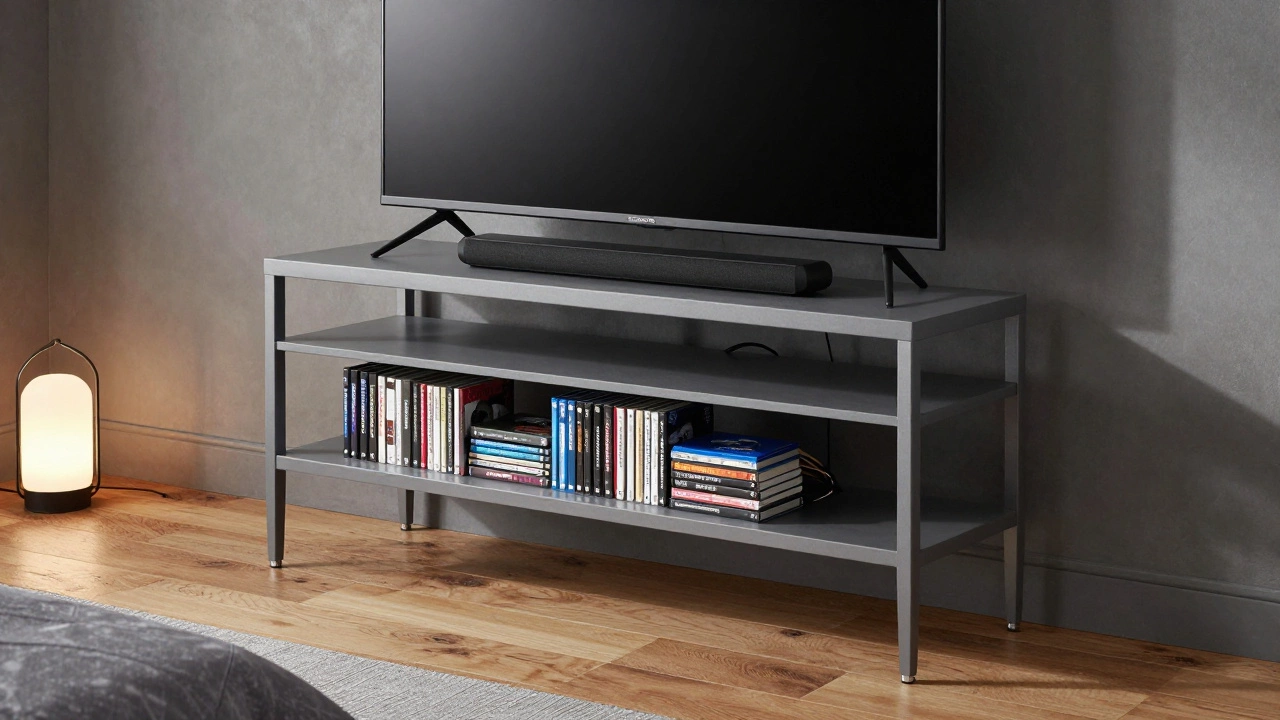
Console tables are slim, tall, and built to hold weight. They’re often used behind sofas, but they’re perfect for bedrooms too. Find one that’s at least 48 inches wide and 18 inches deep. That gives you room for a 65-inch TV and still leaves space for soundbars or speakers. Many come with open shelves or cabinets underneath-great for hiding cables or storing Blu-ray discs. Look for models with adjustable legs. If your floor isn’t level, you can tweak the height to keep the TV straight. Bonus: console tables often have a modern, minimalist look that fits any bedroom style, from Scandinavian to industrial.
Repurpose a bookshelf
Bookshelves aren’t just for books. A solid, low-profile bookshelf with a flat top can hold your TV just fine. Pick one with a solid back panel and thick shelves-no wire racks or flimsy plastic. Avoid tall, narrow units; they’re top-heavy and dangerous with a TV on top. Instead, go for a low, wide shelf with three or four levels. Place the TV on the bottom shelf for stability. Use the upper shelves for speakers, game systems, or decorative items. Make sure the shelf is anchored to the wall. A 60-pound TV on an unsecured shelf is a falling hazard. You can find used wooden bookshelves at thrift stores for under $50. Sand and paint them to match your room.
Mount the TV on the wall
Forget stands entirely. Wall mounting is the cleanest, most space-saving option for small bedrooms. You save floor space, get better viewing angles, and eliminate clutter. You’ll need a wall mount, drill, stud finder, and some basic tools. Most mounts cost between $40 and $100. Look for one that supports your TV’s weight and size. Check the VESA pattern on the back of your TV-it’s the hole spacing-and match it to the mount. Install it into wall studs, not drywall alone. If you’re unsure, hire a handyman for $75-$150. Once mounted, use a cable management kit to hide wires behind the wall or in a raceway. You’ll be amazed at how much cleaner the room looks.
Use a dresser as a media base
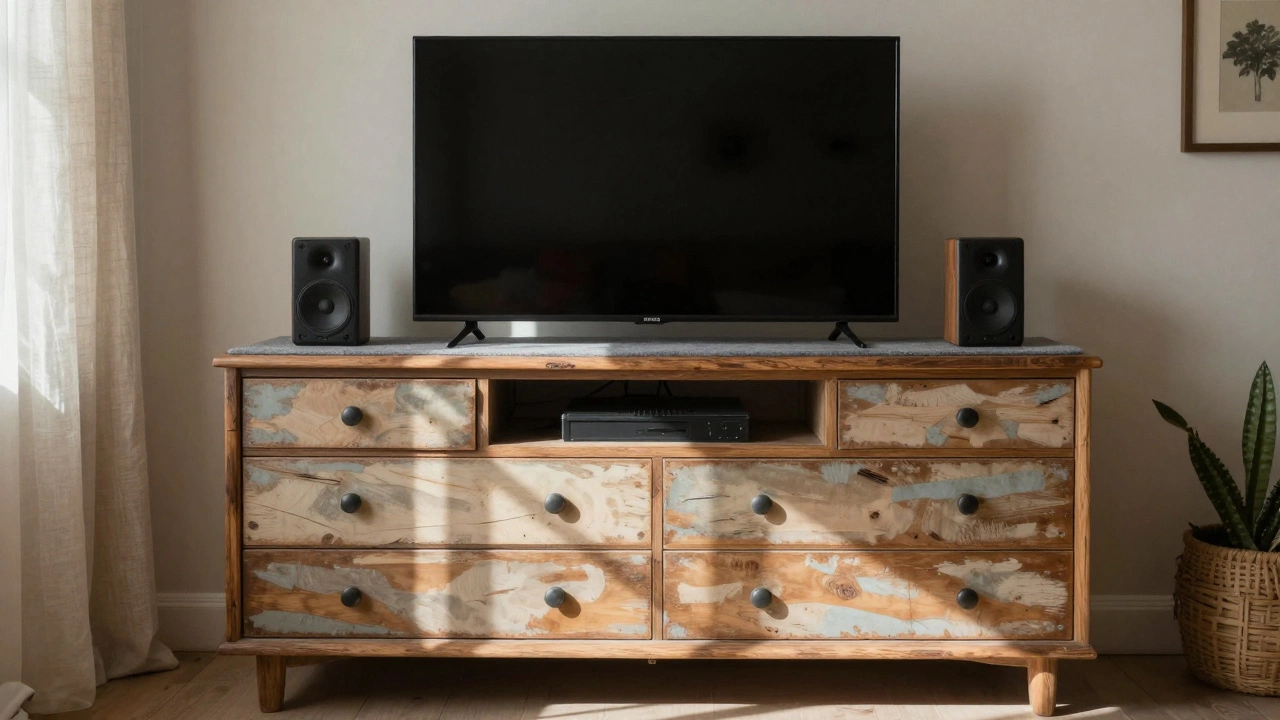
Old dressers are underrated TV stand candidates. A wide, low dresser with solid construction can easily hold a TV. The drawers? Perfect for hiding cables, controllers, or extra blankets. Just make sure the top is flat and wide enough. A standard 6-drawer dresser is usually 54-60 inches wide-that’s plenty. Avoid glass tops or wobbly legs. Sand down any rough edges. If the dresser is too tall, place the TV on the top drawer instead of the main surface. That lowers the viewing height. You can even add felt pads under the TV to prevent scratches. Vintage dressers from the ’70s and ’80s often have great wood grain and sturdy joints. They’re also cheaper than new furniture.
Try a floating shelf
For ultra-small bedrooms, floating shelves are the ultimate minimalist fix. Install a heavy-duty shelf made of solid wood or metal, at least 36 inches wide and 12 inches deep. Mount it securely into wall studs. Use brackets rated for 100+ pounds. Place your TV on top and mount a soundbar underneath if needed. This setup looks like art, not furniture. But it’s not for everyone. You’ll need to run cables through the wall or use a wireless system. Also, you can’t store anything under it-no consoles, no streaming boxes. It’s best for people who stream everything from their phone or tablet and keep their setup simple.
Get creative with a side table or bench
Don’t overlook oddball options. A wide, low side table from a dining set can work if it’s heavy and stable. Or try a wooden bench-like the kind used at the foot of a bed. Flip it around so the longer side faces the wall. Place the TV on top. Add a small tray or basket underneath for accessories. Even a sturdy, low coffee table from the living room can move into the bedroom if it’s the right size. Just test it first. Put a 20-pound weight on the corner. If it wobbles or creaks, it’s not safe for your TV.
What to avoid
Some things look cool but are risky. Glass tables? Too fragile. Metal folding tables? They shift under weight. IKEA BILLY bookshelves? Too narrow and lightweight. Plastic storage cubes? They can’t handle the heat or weight. And never put a TV on top of a radiator, heater, or near a window where direct sun hits-it damages the screen. Also, avoid stands that are too narrow. If the TV sticks out past the edges, it’s a tipping hazard. Always check the manufacturer’s weight limit. Most TVs weigh 30-70 pounds. Your stand should support at least 1.5 times that.
Final tips for safety and style
Before you settle on anything, ask yourself: Is it stable? Is it wide enough? Can it handle the heat? If the answer to any of those is no, keep looking. Also, think about cable management. Use adhesive clips, Velcro straps, or a cable box to keep wires tidy. A messy bundle behind the TV looks sloppy and can overheat. For style, match your stand to your room’s vibe. Rustic wood? Go for a reclaimed dresser. Modern? Pick a sleek console. Boho? Try a painted wooden crate. The best TV stand isn’t always the one you buy-it’s the one you repurpose.
Can I put a TV on a regular nightstand?
Yes, if the nightstand is wide enough (at least 40 inches) and made of solid wood or metal. Check that the TV’s base fits securely and that the stand can support the weight-most TVs weigh 30-70 pounds. Avoid thin particleboard or wobbly legs.
Is it safe to mount a TV on the bedroom wall?
Yes, as long as you mount it into wall studs using a bracket rated for your TV’s size and weight. Drywall alone can’t hold a TV. Use a stud finder and follow the mount’s instructions. If you’re unsure, hire a professional. Wall mounting saves space and reduces tipping risks.
What size TV can I put on a dresser?
Most dressers can handle TVs up to 65 inches as long as the top surface is flat and wide enough (at least 54 inches). Make sure the TV’s base fits within the dresser’s width and that the dresser is sturdy. Anchor it to the wall if it’s tall or wobbly.
Can I use a bookshelf as a TV stand?
Only if it’s low, wide, and made of solid wood with thick shelves. Avoid tall or narrow units. Place the TV on the bottom shelf for stability and anchor the whole unit to the wall. Wire shelves or plastic units are unsafe.
Do I need a special stand for a 75-inch TV in the bedroom?
Yes. A 75-inch TV weighs 70-100 pounds and is very wide. You need a heavy-duty console table, custom media unit, or wall mount. Most dressers and nightstands won’t support it safely. Check the weight rating and width before buying anything.