
Accent Chair Color Matcher
1. Analyze Your Couch
Ready to style your space
Select your options and click match
Gray is the neutral backbone of modern interiors. It’s safe, versatile, and everywhere you look. But here’s the problem: a gray couch without any color contrast can feel flat, sterile, or even a bit boring. You don’t want your living room to look like an airport lounge. That’s where accent chairs come in. They are the punchline to the joke your sofa started. They bring personality, warmth, and visual interest to a space that might otherwise fade into the background.
If you’re staring at a blank wall wondering what color accent chair goes with a gray couch, you’re not alone. This is one of the most common dilemmas in home decor. The good news? Gray plays well with almost every color on the spectrum. The bad news? Choosing the wrong shade can make your room look muddy or chaotic. Let’s break down the best color combinations, how to pick the right tone, and why texture matters just as much as hue.
Understanding Your Gray Base
Before you pick a chair, you need to know what kind of gray you have. Not all grays are created equal. A light, cool-toned gray (think silver or mist) behaves very differently from a dark, warm-toned charcoal or taupe. If you buy a bright yellow chair for a cool blue-gray couch, it might clash instead of pop. Conversely, that same yellow could look stunning against a warm greige (gray-beige) sofa.
Hold up a white piece of paper next to your couch in natural light. Does the gray look bluish or greenish? That’s a cool gray. Does it look brownish or beige-ish? That’s a warm gray. This simple trick will guide your entire color palette. Cool grays pair best with crisp whites, icy blues, and jewel tones. Warm grays shine when paired with earthy terracottas, olive greens, and mustard yellows.
Top 7 Colors for Accent Chairs with Gray Sofas
Here are the seven most effective color choices for accent chairs when paired with a gray couch, ranging from subtle elegance to bold statements.
1. Mustard Yellow
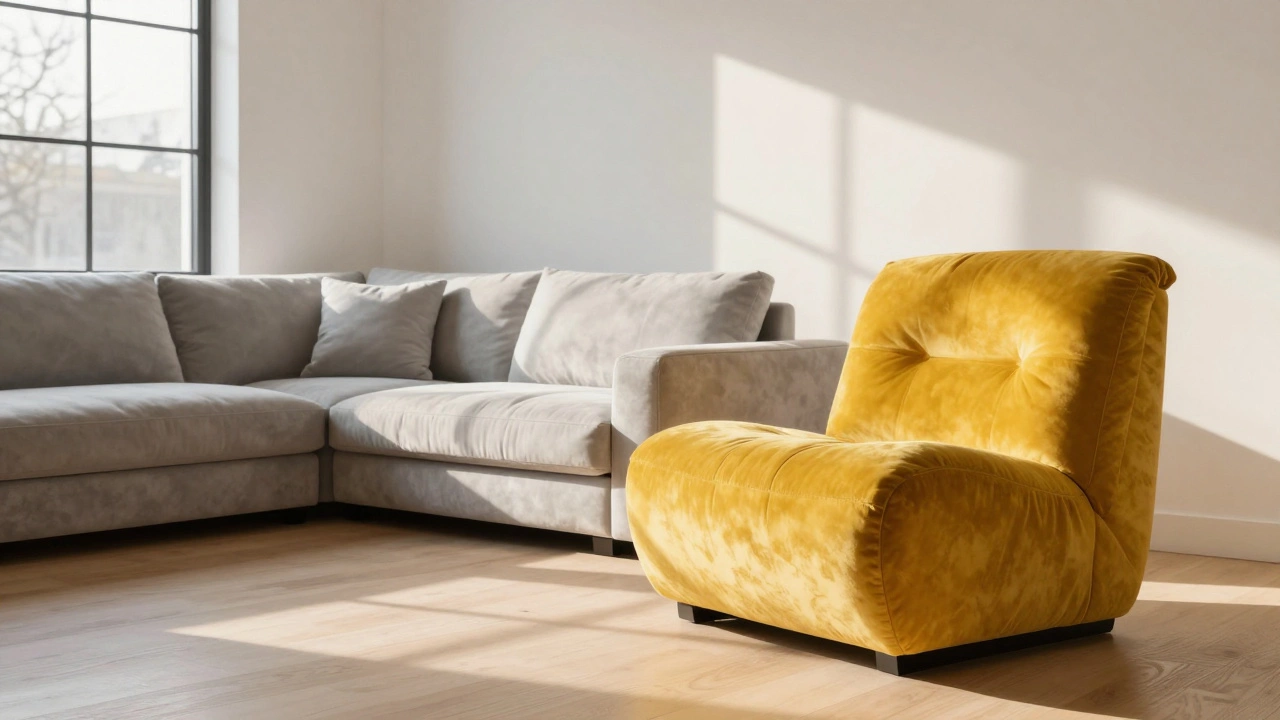
Mustard yellow is perhaps the most popular partner for gray. Why? Because it provides high contrast without being neon-bright. It adds warmth and energy to a cool gray space. Think of it as the sunshine breaking through the clouds. A velvet mustard chair against a charcoal sectional creates a cozy, inviting vibe that works in both modern and mid-century modern styles.
2. Emerald Green
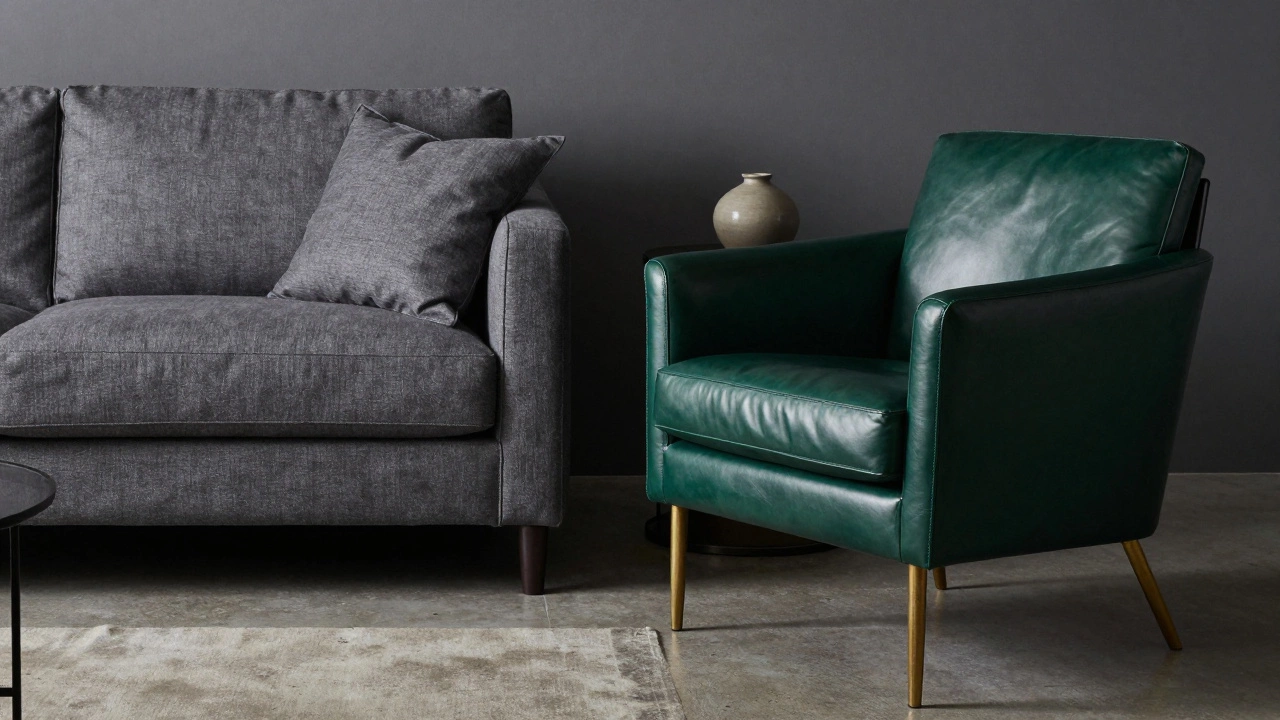
Green is nature’s neutral. An emerald or forest green chair brings organic life into a room dominated by manufactured materials like metal legs and synthetic fabrics. Deep green looks luxurious against light gray and grounded against dark gray. It’s a sophisticated choice that doesn’t scream for attention but commands respect.
3. Navy Blue
If you want a timeless, nautical, or preppy look, navy blue is your go-to. Navy and gray is a classic combination found in many high-end hotels. It’s masculine, calm, and incredibly easy to live with. Unlike bright blue, which can feel childish, navy adds depth and seriousness to the space. Pair it with brass accents for a touch of glamour.
4. Terracotta or Burnt Orange
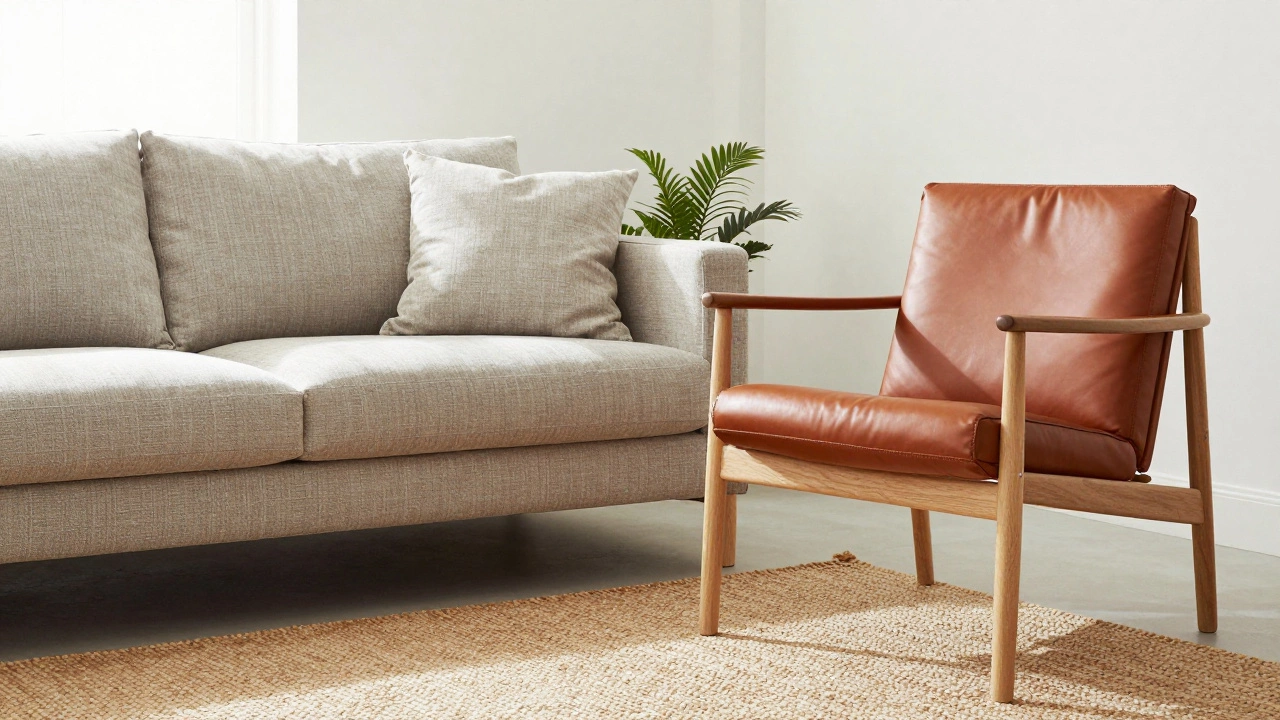
This is the trendiest option for 2026. As interiors move away from stark minimalism toward warmer, earthier tones, terracotta has become a favorite. It complements the undertones in warm grays beautifully. A burnt orange leather chair against a light gray fabric sofa creates a striking, desert-modern aesthetic that feels current and curated.
5. Blush Pink
Don’t let the name fool you; blush pink isn’t just for nurseries. When paired with gray, it softens the hardness of the neutral base. It adds a feminine, gentle touch without being overly sweet. Dusty rose or millennial pink works better than hot pink, which can look dated. This combo is perfect for creating a serene, spa-like atmosphere.
6. Black
Yes, black is a color. And yes, it works. A black accent chair adds drama and definition. It anchors the room, especially if your gray couch is light. Think of a sleek, black leather armchair next to a fluffy light gray sectional. The contrast in both color and texture makes the space feel intentional and chic. Just ensure you have enough lighting so the black doesn’t swallow the room.
7. Cream or Off-White
Sometimes less is more. If you love a monochromatic look, choose an accent chair in cream, ivory, or oatmeal. To make this work, you must vary the textures. A wool boucle chair next to a linen gray couch creates visual interest through material differences rather than color contrast. It’s airy, spacious, and makes small rooms feel larger.
| Accent Color | Vibe/Style | Best Gray Tone | Material Tip |
|---|---|---|---|
| Mustard Yellow | Cheerful, Energetic | Cool Light Gray | Velvet for richness |
| Emerald Green | Luxurious, Organic | Medium Charcoal | Leather or Linen |
| Navy Blue | Classic, Calm | Any Neutral Gray | Tweed or Cotton |
| Terracotta | Earthy, Modern | Warm Greige | Faux Leather or Wool |
| Blush Pink | Soft, Feminine | Cool Silver Gray | Chenille or Silk Blend |
| Black | Dramatic, Sleek | Light to Medium Gray | Glossy Leather |
Why Texture Matters More Than You Think
You can pick the perfect color, but if the texture matches your couch exactly, the room will still look flat. Texture is the secret weapon of interior designers. It adds layers and depth that keep the eye moving around the room.
If your gray couch is smooth leather, try a rough-textured wool or boucle accent chair. If your couch is a plush, soft microfiber, go for a structured linen or crisp cotton blend. Mixing materials prevents the "matchy-matchy" hotel suite look. For example, a woven rattan chair with a mustard cushion introduces wood grain, weave patterns, and fabric-all distinct from a standard upholstered gray sofa.
Using Patterns to Bridge the Gap
Solid colors are safe, but patterns can tie a room together. If you’re worried about committing to a bold solid color, consider a patterned accent chair. The key is to include your chosen accent color within the pattern.
For instance, a chair with a navy and white geometric print includes the navy accent while the white keeps it light and connected to other neutrals in the room. Floral prints, abstract art-inspired designs, or even animal prints (like zebra or leopard) can add character. Just remember: if the chair is busy, keep the rest of the room calm. Don’t pair a loud patterned chair with a busy area rug. Let the chair be the star.
Practical Tips for Choosing the Right Chair
Before you click "buy," consider these practical factors:
- Scale and Proportion: Make sure the accent chair fits the scale of your couch. A tiny club chair next to a massive three-seater sectional will look lost. Aim for a chair that is roughly half to two-thirds the width of the sofa.
- Legs vs. Skirted: Leggy chairs make a room feel airier and more open. Skirted or floor-hugging chairs feel cozier and heavier. Choose based on whether you want to lighten or ground the space.
- Armrest Height: Check the height of the armrests. If you plan to place a side table between the couch and the chair, ensure the armrests aren’t too high, blocking access to the table surface.
- Lighting Conditions: Colors look different under warm LED bulbs versus cool daylight. Always view fabric swatches in the actual room at different times of day.
Common Mistakes to Avoid
Even seasoned decorators make these errors. Avoid them to keep your living room looking polished.
Mistake 1: Matching the Gray Exactly. Don’t buy a gray accent chair that is the exact same shade as your couch. It will look like you bought a set from a discount outlet. If you want another gray chair, make it significantly lighter or darker, or change the texture drastically.
Mistake 2: Ignoring Undertones. As mentioned earlier, mixing cool and warm undertones without intention creates a muddy look. A pink chair with blue undertones next to a gray couch with yellow undertones will clash subtly but noticeably.
Mistake 3: Overcrowding. Two accent chairs are usually enough for a standard living room. Three can clutter the space unless you have a large open-plan area. Leave breathing room for movement and visual rest.
Final Thoughts on Styling Your Space
Choosing an accent chair for a gray couch is about balance. You want enough contrast to create interest, but not so much that it feels chaotic. Start with the mood you want to achieve. Do you want energetic and bright? Go yellow or orange. Do you want calm and sophisticated? Choose navy or green. Do you want soft and serene? Pick blush or cream.
Remember, your home should reflect your personality, not just follow trends. If you love purple, try a deep plum velvet chair. If you adore teal, go for it. Gray is the perfect canvas because it allows your personal style to shine. Experiment with samples, trust your instincts, and don’t be afraid to mix things up. After all, rules are meant to be bent, especially in your own living room.
What is the best accent color for a light gray couch?
The best accent colors for a light gray couch are those that provide strong contrast. Mustard yellow, navy blue, and emerald green are top choices. These colors pop against the pale background without overwhelming the space. For a softer look, blush pink or terracotta works well, adding warmth to the cool neutrality of light gray.
Can I use a black accent chair with a dark gray couch?
Yes, but you need to be careful with texture and lighting. A black chair next to a dark gray couch can look heavy or gloomy if the room lacks light. To make it work, ensure there is a significant difference in texture-such as glossy black leather against matte gray fabric. Add metallic accents like gold or brass lamps to break up the darkness and add sparkle.
How do I match accent chairs if I have two of them?
You have two main options: symmetry or variety. For symmetry, buy two identical chairs in your chosen accent color. This creates a formal, balanced look. For a more eclectic, modern vibe, choose two different chairs that share a common element, such as the same leg style, similar height, or a shared color in their upholstery. This approach feels curated and less rigid.
Does the wall color affect my choice of accent chair?
Absolutely. Your wall color sets the overall tone of the room. If your walls are white or light gray, you have maximum freedom to choose bold accent chairs. If your walls are a darker color like navy or charcoal, you might want to choose a lighter accent chair to prevent the room from feeling cave-like. Always consider the entire color palette, not just the furniture.
What material is best for an accent chair in a high-traffic area?
For high-traffic areas, durability is key. Leather and faux leather are excellent choices because they wipe clean easily and resist stains. Tight-weave fabrics like microfiber or performance velvets are also great options. Avoid delicate silks or loose weaves if you have pets or young children. Look for rub counts above 30,000 for long-lasting comfort.