
White Sofa Color Complement Calculator
Find the perfect complementary color for your white corner sofa based on your sofa's undertone and room lighting.
Just answer two quick questions to get personalized recommendations.
How does your white sofa look in natural light?
How does light enter your room?
Select options above to see recommendations
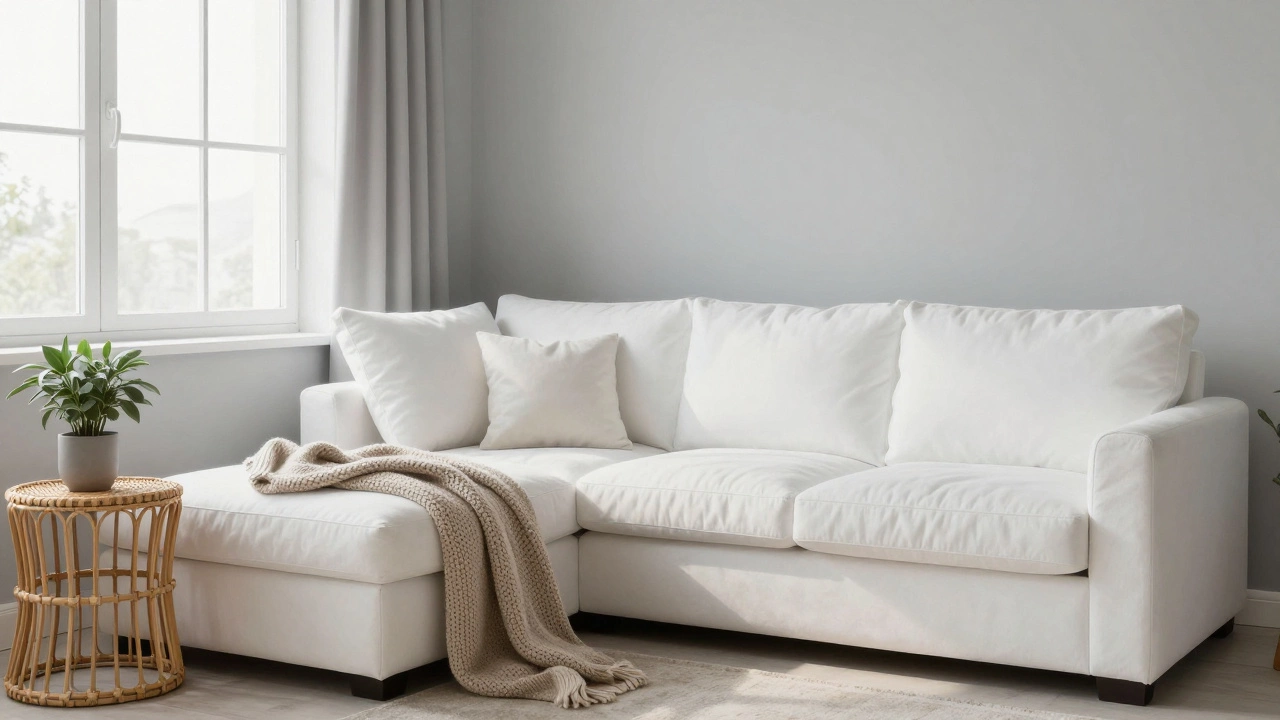
White corner sofas are one of the most popular choices for modern living rooms. They clean up a space, reflect light, and feel fresh. But here’s the problem: once you’ve got that crisp white sofa, the next question always comes up - what color goes with it? Not just any color. The right one. The one that doesn’t fight with the sofa but lifts it up, makes the room feel alive, and stops the whole space from looking like a hospital waiting room.
White isn’t just white
First, let’s clear up a myth. White isn’t a single tone. It’s a family. Your sofa might be bright white, off-white, cream, or even slightly gray-toned. That changes everything. A sofa labeled "pure white" on the tag could be leaning cool (with blue undertones) or warm (with yellow or beige hints). If you don’t match the undertone, your accent colors will look off - even if they’re technically "complementary."
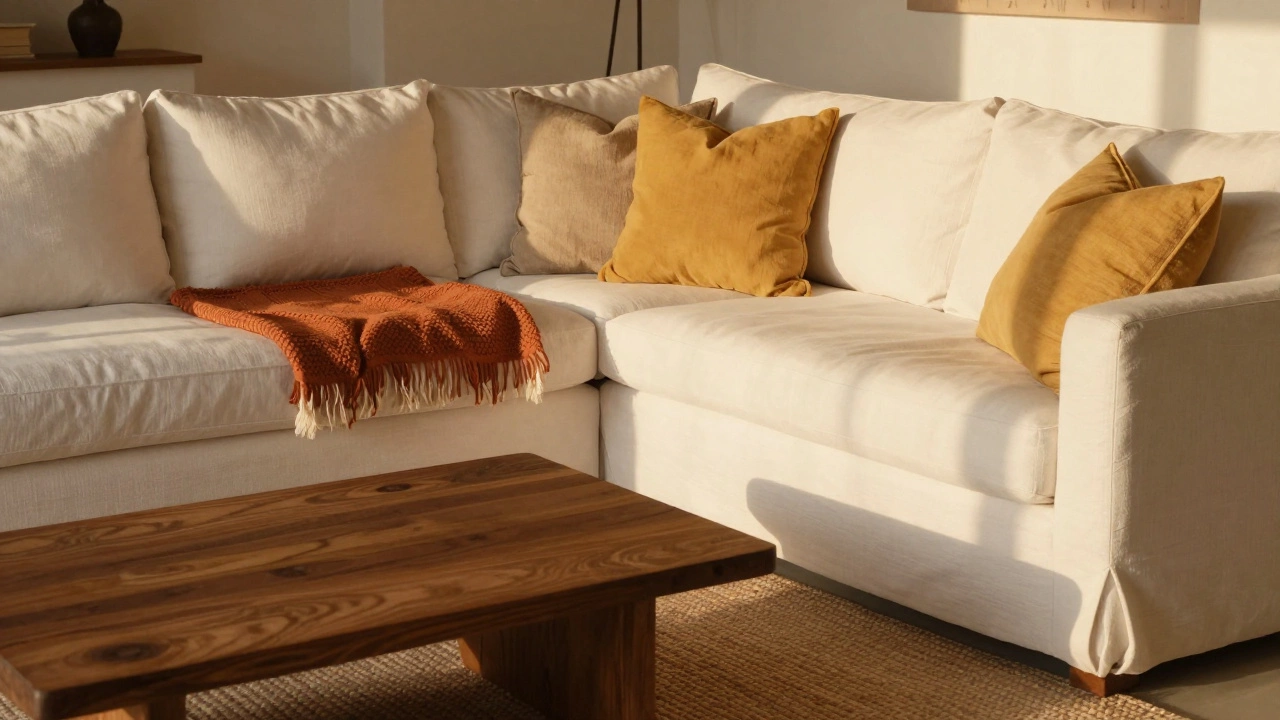
Look at your sofa in natural light. Does it look icy? Then it’s cool. Does it glow softly? Then it’s warm. This matters because cool whites pair best with cool tones like slate gray, navy, or forest green. Warm whites sing with terracotta, mustard, or warm taupe.
The safest bet: gray
If you want zero risk and maximum sophistication, go with gray. Not the flat, boring kind. Go for a mid-tone gray with a hint of blue or green - like Repose Gray or Agreeable Gray. These colors don’t compete with white. They cradle it. They add depth without heaviness.
Real-world example: A Melbourne home I worked with had a bright white corner sofa in a sunlit north-facing lounge. We painted the wall behind it in a soft gray with a 20% black tint. The result? The sofa looked like it was floating. The room felt airy but grounded. No one mentioned the color - they just said, "This feels so calm."
Go bold with navy
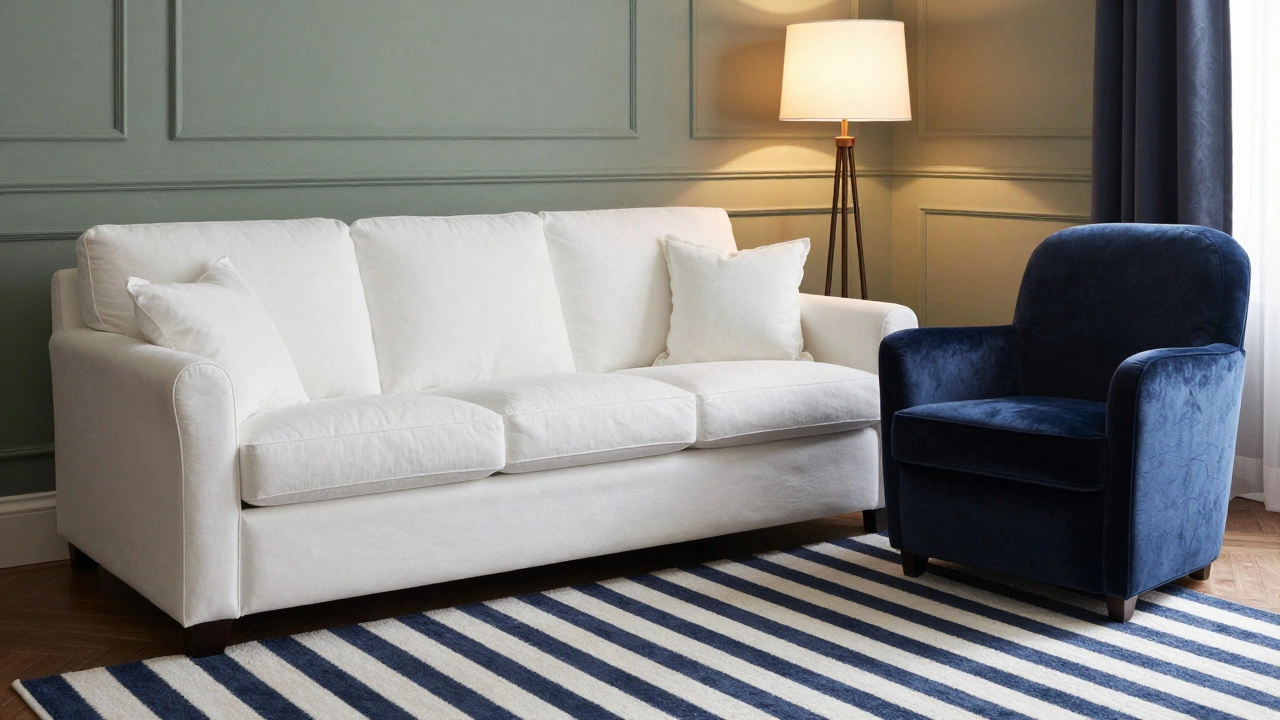
White and navy is the classic combo for a reason. It’s timeless. It’s elegant. And it works better than you think on a corner sofa. Navy doesn’t overwhelm white - it gives it structure. Think of it like a crisp white shirt with dark blue trousers. It’s formal, but not stiff.
Try navy on an accent wall, or use it in curtains, a rug, or throw pillows. A navy velvet throw pillow on a white corner sofa? Instant luxury. A navy sectional rug? Instant anchor. You’re not painting the room dark - you’re just giving the white something solid to lean on.
Pro tip: If your room gets lots of sun, navy can look almost black in shadowy corners. Test it on a large swatch. Paint a 2x2 foot square on the wall. Live with it for three days. See how it changes from morning to night.
Warm tones that make white glow
White sofas in cool rooms (think Melbourne winters) can feel chilly. That’s where warm colors come in. Think of them as a thermal blanket for your space.
- Terracotta: Earthy, soft, and rich. It brings warmth without being loud. Perfect for a corner sofa in a room with wooden floors.
- Mustard yellow: A pop of energy. Use it in a single armchair, a lamp, or two cushions. Too much and it overwhelms. Just enough, and your white sofa looks intentional, not sterile.
- Warm taupe: Like beige, but more refined. It’s the color of linen sheets and sun-baked clay. It doesn’t scream - it whispers comfort.
A client in Fitzroy had a white corner sofa and was terrified of color. We added a terracotta rug and two taupe linen cushions. She said, "I didn’t think I liked color - but now I don’t want to leave the room."
Don’t ignore green
Green is having a moment, and for good reason. It’s calming. It connects indoors to outdoors. And paired with white? Magic.
Go for muted greens - sage, olive, or eucalyptus. Not neon, not lime. These tones work because they’re close enough to neutral to feel safe, but alive enough to feel interesting. A sage green armchair beside a white corner sofa? Instant organic elegance.
Real-world win: A small apartment in St Kilda used sage green on the window trim and a single wall. The white sofa became the centerpiece, not the problem. The room felt like a garden room - calm, fresh, and deeply livable.
What colors to avoid
Not all colors play nice with white. Here’s what to skip:
- Fluorescent colors: Hot pink, electric blue, lime green. They don’t complement - they attack.
- Too many pastels: Baby blue, lavender, mint. They make white look dirty by comparison. It’s like putting a faded shirt next to a new one.
- Warm beige on cool white: If your sofa has a blue undertone and you bring in a beige that’s too yellow, the room feels unbalanced. It’s a clash of undertones.
- Black: Unless you’re going for a high-contrast modern look (and even then, use charcoal, not jet black), black can make the white look like a mistake.
Texture matters more than you think
Color isn’t everything. Texture is the secret weapon. A white corner sofa can look flat if everything around it is smooth. Add:
- A chunky knit throw in oatmeal
- A rattan side table
- Woven jute rug
- Matte ceramic lamps
These textures give the eye something to rest on. They soften the white. They make the room feel lived-in, not staged. A white sofa with smooth plastic side tables? Feels like a showroom. White sofa with wood, wool, and clay? Feels like home.
The 60-30-10 rule for white sofas
Here’s a simple trick used by interior designers worldwide: the 60-30-10 rule.
- 60%: Your main color - white (the sofa, ceiling, maybe walls).
- 30%: Secondary color - the supporting tone (gray, navy, or warm taupe on walls, curtains, or rug).
- 10%: Accent color - the punch (a mustard pillow, a terracotta vase, a green plant).
This keeps things balanced. No one color dominates. The white stays the star. The other colors support it. And the accent? It’s the spark that makes you pause when you walk in.
Lighting changes everything
Color looks different at 8 a.m. vs. 8 p.m. White sofas react to light like a mirror. If your room has north-facing windows (common in Melbourne), the light is cool and even. That’s perfect for cool-toned accents. South-facing? The light is warm and golden. Then you want warmer tones.
Also, avoid harsh overhead lighting. It turns white into a glare. Use layered lighting: floor lamps, table lamps, even string lights. Let the light kiss the sofa, not blast it.
Final thought: let the sofa breathe
The best color for a white corner sofa isn’t a color at all - it’s space. Don’t overcrowd. Leave breathing room. One statement chair. One bold rug. One plant with big leaves. That’s enough.
White is the canvas. The rest is the brushstroke. Don’t paint over it. Frame it.
Can I use patterned fabrics with a white corner sofa?
Yes - but keep it simple. Stick to one or two patterns: a subtle stripe on a throw pillow, or a tonal geometric rug. Avoid busy florals or loud geometrics. The white sofa should stay calm. Patterns should add rhythm, not noise. A navy-and-white stripe on a cushion? Perfect. A rainbow polka dot? Not so much.
What if my white sofa looks yellow after a few months?
That’s normal. White fabric, especially cotton or linen, can pick up yellow tones from sunlight or body oils. The fix? Wash removable covers regularly (follow the care label). Use a fabric protector spray when new. And if the yellowing is stubborn, consider professional cleaning. Don’t bleach - it can damage fibers and make the color uneven.
Should I match the color of my coffee table to the sofa?
No - and you shouldn’t try. A white sofa doesn’t need to match the table. Instead, let the table contrast. A dark wood table grounds the space. A black metal table adds edge. A white table? It’ll disappear. Let the sofa be the star. The table should be the supporting actor.
Is it okay to have a white sofa in a home with pets or kids?
Absolutely - if you choose the right fabric. Look for performance fabrics labeled as stain-resistant or easy-clean. Brands like Crypton or Sunbrella are designed for this. Avoid plain cotton. Go for tightly woven microfiber or a blend with polyester. Add a removable, washable slipcover. It’s not about avoiding mess - it’s about managing it.
What’s the best way to test colors before painting?
Buy small sample pots - not full gallons. Paint a 2x2 foot square on the wall next to the sofa. Move the sample around the room. Look at it at 8 a.m., noon, and 7 p.m. Watch how it changes with light. Sit on the sofa and look at the wall. Does it feel calm? Inviting? If you’re still unsure, wait a week. If you’re still unsure after that, try a different color. Trust your gut - not a paint chip.