
Wardrobe Space Planner
Measure Your Space
Determine if your existing space is suitable for a true wardrobe system and what features to add to transform it from a basic closet.
Your Space Analysis
Recommended Features
Basic Closet
Basic renovation
Wardrobe System
Custom system
How to Transform Your Space
People say "clothes closet" all the time. But if you’ve ever walked into a high-end home design showroom or read a magazine feature on luxury living, you’ve probably noticed they don’t use that phrase. They say something else-something smoother, more intentional, more elegant. And that word isn’t just a fancy synonym. It’s a whole different way of thinking about how you store your clothes.
The Word You’re Looking For Is Wardrobe
The fancy word for "clothes closet" is wardrobe. Not because it sounds more sophisticated, but because it actually means something different. A clothes closet is just a space-a hole in the wall with a rod and maybe a shelf. A wardrobe is a piece of furniture, or a built-in system, designed with purpose. It’s engineered for how you live, not just what you own.
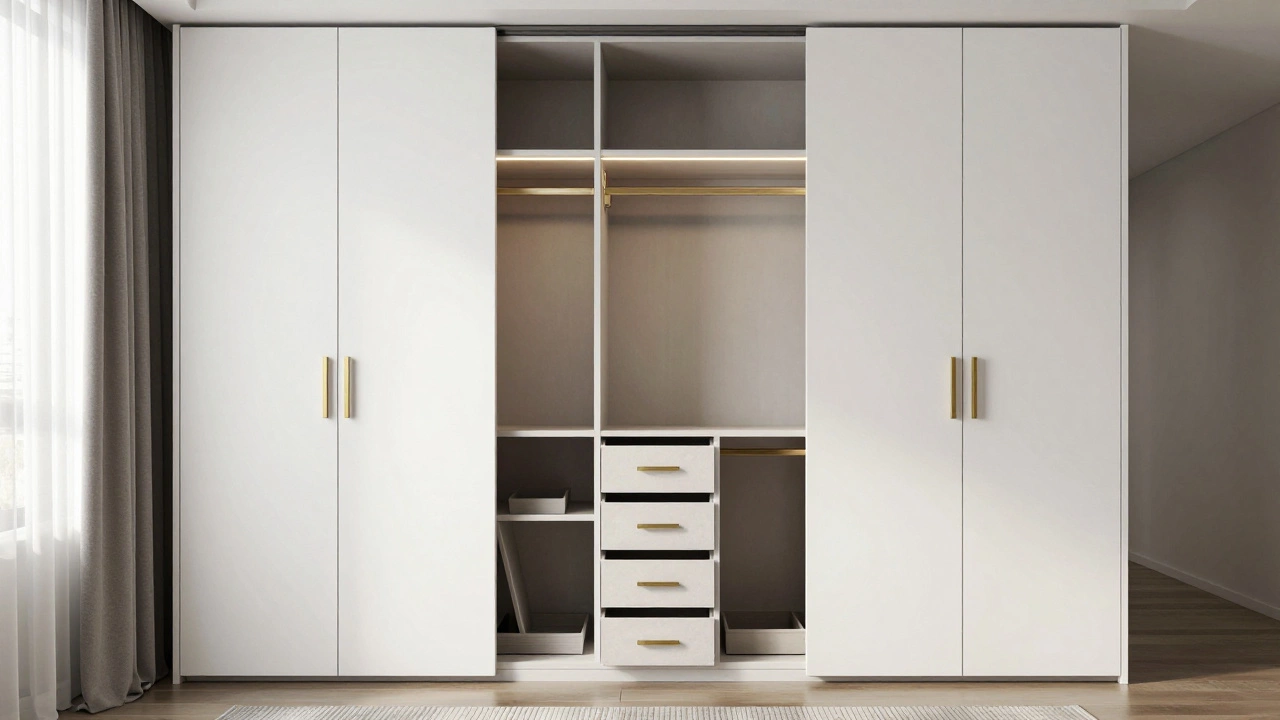
Think about it: when you say "closet," you’re thinking about storage. When you say "wardrobe," you’re thinking about organization, access, and even aesthetics. A wardrobe can have pull-out drawers, mirrored doors, LED lighting, adjustable shelves, and shoe racks built into the base. It’s not an afterthought. It’s part of the room’s design.
In Australia, where space is often limited and homes are built with smart storage in mind, the shift from "closet" to "wardrobe" happened years ago. Walk into any modern Melbourne apartment and you’ll likely find a custom wardrobe-floor-to-ceiling, sliding doors, internal dividers-instead of a basic closet tucked behind a door.
Why the Difference Matters
It’s not just semantics. The way we name things shapes how we build them. A clothes closet is something you cram into a leftover space. A wardrobe is something you plan for. You measure the room. You think about your morning routine. You consider how many pairs of shoes you own, whether you hang blazers or fold them, if you need space for seasonal coats.
Back in the 1990s, most Australian homes had what we called "reach-in" closets-three feet deep, maybe six feet wide, with a single rod. You could barely fit a hanger without knocking over a stack of sweaters. Today, the average built-in wardrobe in a new Melbourne home is 1.8 meters deep and stretches from floor to ceiling. It includes:
- Double hanging sections (one for long garments, one for shirts/blouses)
- Shoe drawers with angled fronts
- Accessory trays for belts, ties, and scarves
- Drawers lined with felt for delicate items
- Integrated lighting that turns on when you open the door
That’s not a closet. That’s a wardrobe system. And it’s not a luxury-it’s now standard in homes built after 2020.
Where the Term Comes From
The word "wardrobe" comes from the Old French "warderobe," meaning a place to keep clothes. It was first used in England in the 14th century to describe a room where clothing and valuables were stored. Over time, it evolved from a room into a piece of furniture.
By the 1800s, wealthy households had freestanding wardrobes made of walnut or mahogany, often with mirrors and drawers. These weren’t just storage-they were status symbols. Today, that legacy lives on. When a designer says "wardrobe," they’re not just talking about storage. They’re talking about craftsmanship, functionality, and personal style.
Compare that to "closet." The word comes from Middle English "closete," meaning a small private room. It was used for anything you locked away-books, documents, even liquor. It had a secretive, hidden connotation. That’s why "closet" still feels like something you hide behind. "Wardrobe" feels like something you show off.
Modern Wardrobes Are Built for Real Life
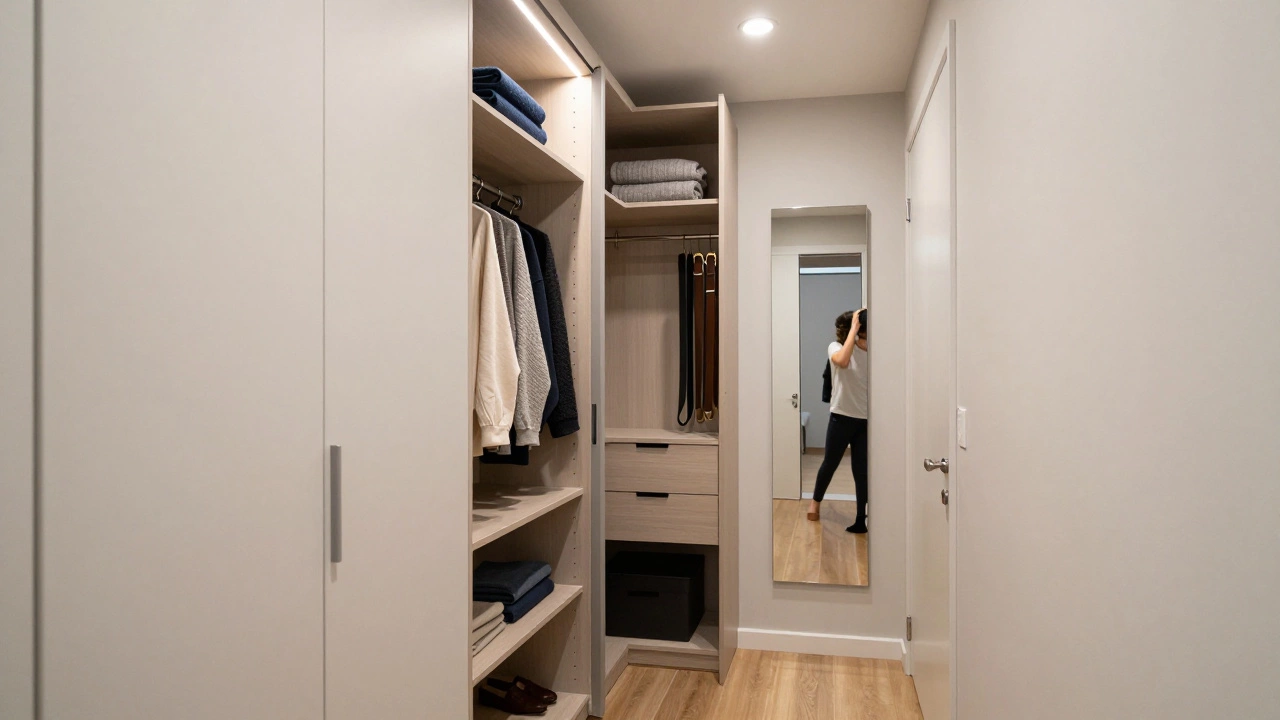
Let’s be honest: most people don’t have the luxury of a walk-in dressing room. But that doesn’t mean you can’t have a wardrobe. Custom modular systems now make it possible to turn even a narrow hallway into a fully functional storage zone.
Take the average Melbourne terrace house. The bedroom might be 3.5 meters wide. A traditional closet would take up half the wall. A smart wardrobe? It uses the same space but adds value. Sliding doors mean no swing clearance. Internal organizers mean you can find your black turtleneck in under five seconds. And because it’s built into the wall, it doesn’t feel bulky-it feels seamless.
Brands like Blum a leading Austrian hardware manufacturer known for high-quality drawer systems and hinges used in premium wardrobes and Häfele a German company that supplies precision fittings and lighting systems for custom wardrobe interiors have made it easier than ever to upgrade a basic closet into a true wardrobe. Their components are used in over 70% of new Australian custom wardrobe installations.
And it’s not just about the hardware. The design matters. A wardrobe with a matte white finish and brushed brass handles doesn’t just store clothes-it elevates the whole room. It becomes part of the decor.
What You’re Really Asking For
When you ask for a "fancy word" for clothes closet, you’re not just looking for a synonym. You’re looking for permission to think bigger. To stop seeing storage as a chore and start seeing it as a design opportunity.
That’s why the term "wardrobe" works. It shifts the mindset. It says: "This isn’t just a hole in the wall. This is where you start your day. This should feel good. This should work perfectly. This should look beautiful."
And if you’ve ever stood in front of a messy closet, digging through piles, trying to find your favorite pair of jeans-then you know. You don’t need a bigger closet. You need a better wardrobe.
How to Turn Your Closet Into a Wardrobe
You don’t need to rebuild your home to upgrade. Here’s how to make the shift:
- Measure your space. Know the width, depth, and height. Most standard closets are too shallow-aim for at least 60cm depth.
- Replace the single rod with dual hanging levels. Use the top for long items (coats, dresses), the bottom for shirts and pants.
- Add drawers or bins. Even if you don’t have built-ins, sliding drawers from IKEA or The Container Store work wonders.
- Install lighting. A simple motion-sensor LED strip costs under $50 and changes everything.
- Use vertical space. Add shelves above the hanging area for bags, hats, or folded sweaters.
- Choose a finish that matches your room. A white or oak finish blends in. A dark walnut or matte black makes a statement.
You don’t need a custom job to feel the difference. Just one change-like adding a drawer or better lighting-can make your closet feel like a wardrobe.
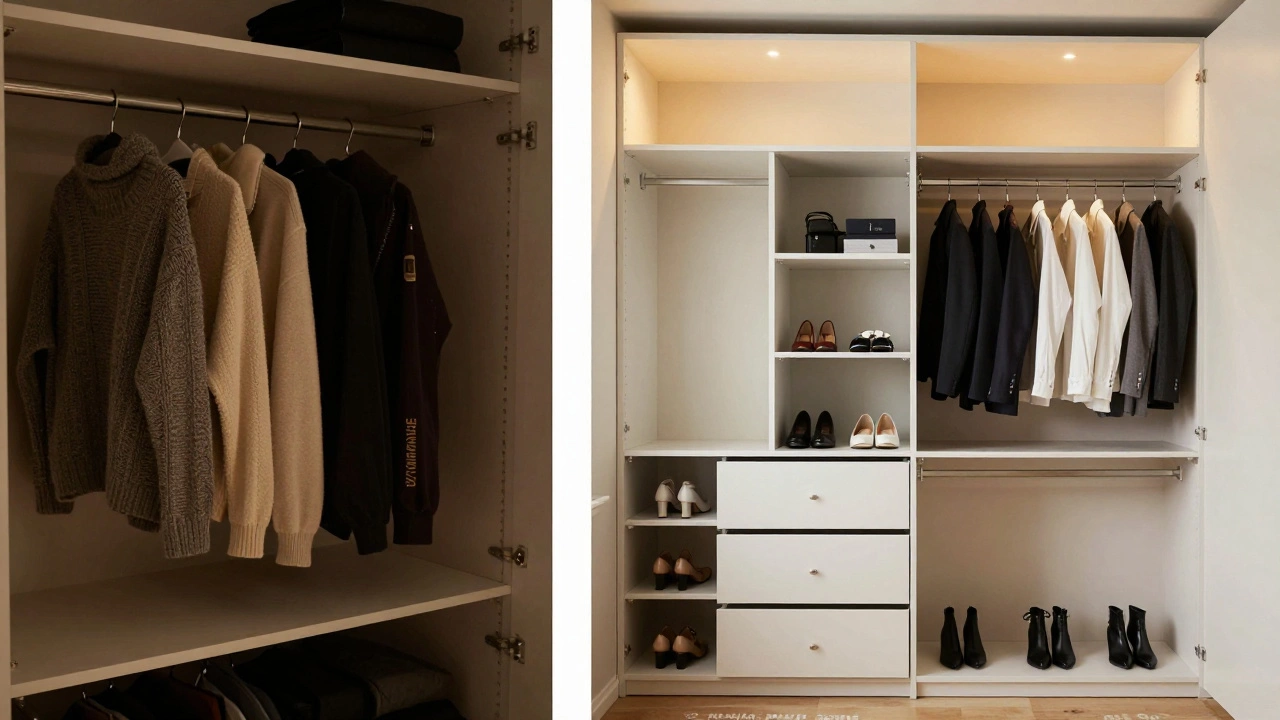
Wardrobe vs. Closet: The Key Differences
| Feature | Closet | Wardrobe |
|---|---|---|
| Design Philosophy | Storage afterthought | Integrated design element |
| Construction | Fixed wall cavity | Custom-built or freestanding unit |
| Depth | Typically 55-60cm | 60-70cm (optimized for access) |
| Organization | Basic rod + shelf | Drawers, trays, lighting, dividers |
| Aesthetics | Hidden behind door | Visible part of room design |
| Cost (Avg. in Australia) | $500-$1,200 (basic renovation) | $2,000-$8,000 (custom system) |
The numbers don’t lie. A wardrobe isn’t just a fancier word. It’s a better system. And if you’re tired of digging through clutter, it’s worth the upgrade.
What People Get Wrong
Many think upgrading to a wardrobe means spending thousands. But that’s not true. You can buy a pre-built wardrobe unit from a retailer like Harvey Norman a major Australian furniture retailer offering ready-to-assemble wardrobe systems or Freedom a popular Australian brand known for modern, affordable wardrobe solutions for under $1,000. They come with all the features: sliding doors, internal organizers, and clean lines.
Others think it’s only for big homes. But in Melbourne, where apartments are compact, wardrobes are essential. A well-designed wardrobe can make a small room feel larger by eliminating visual clutter. It turns chaos into calm.
And here’s the biggest myth: "I don’t need a wardrobe. I’m not rich." That’s not true. You don’t need to be rich to have a wardrobe. You just need to care about how you start your day.
Is "wardrobe" just a British word?
No. While "wardrobe" has British roots, it’s the standard term used in Australia, the U.S., Canada, and New Zealand when referring to built-in or custom clothing storage. "Closet" is still common in American homes, but even there, designers and architects use "wardrobe" to describe high-end systems. In Australia, "wardrobe" has been the dominant term for over a decade.
Can I call my walk-in closet a wardrobe?
Technically, yes-if it’s designed with organization in mind. A walk-in closet becomes a wardrobe when it includes features like lighting, drawers, and custom shelving. If it’s just a big room with clothes hanging everywhere, it’s still a closet. The difference is in the design, not the size.
Are wardrobes only for bedrooms?
No. Wardrobes are also common in home offices (for work attire), mudrooms (for outerwear), and even in bathrooms (for towels and robes). Any space where you store clothing or linens can benefit from a wardrobe system. The key is functionality, not location.
Do I need a mirror on my wardrobe?
Not always, but it’s one of the most practical additions. A mirror turns your wardrobe into a dressing station. It saves space and makes getting ready faster. Most modern wardrobe systems include mirrored doors as standard. If you don’t have one, consider adding a full-length mirror inside or opposite the wardrobe.
What’s the most common mistake people make with wardrobes?
They focus on looks over function. A beautiful wardrobe with no drawers or poor lighting is still frustrating to use. The best wardrobes balance aesthetics with smart organization. Prioritize internal layout before finish. You’ll thank yourself every morning.
Final Thought
There’s no magic word that turns a messy closet into a dream storage space. But there is a mindset shift. Stop thinking about storage as something hidden. Start thinking about it as something that shapes your daily life. That’s what a wardrobe is. Not a room. Not a box. A tool for living better.