
Small Wardrobe Size Calculator
Find the perfect small wardrobe solution for your space. Input your room dimensions and storage needs to get personalized recommendations based on the latest furniture standards.
Compact Wardrobe
Perfect for standard small spaces. Features two hanging rails and adjustable shelves for 20-30 hanging items.
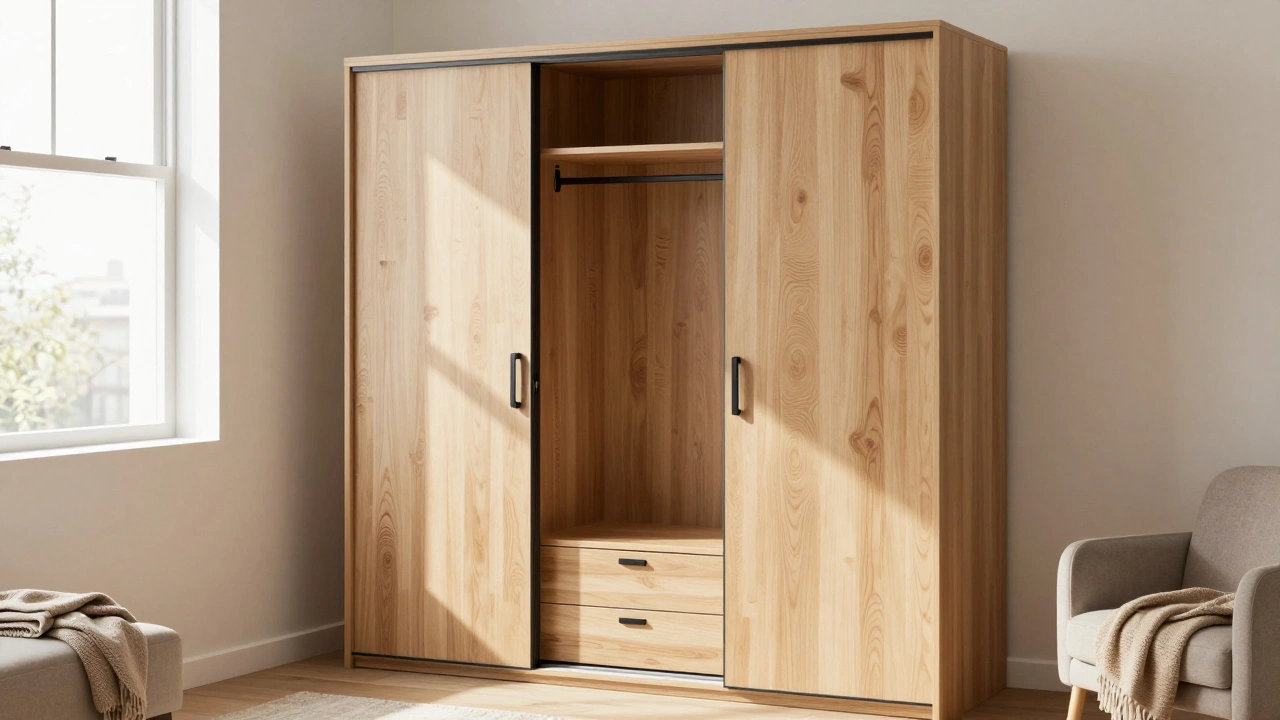
Sliding Door Wardrobe
Ideal for narrow rooms under 100cm wide. Saves 60cm of floor space and fits perfectly between walls.
Wardrobe Chest
Best for rooms needing both hanging and drawer storage. Combines a tall dresser with hanging rail.
Armoire
Stylish solution for rentals and shared rooms. Offers hidden storage with decorative appeal.
Ever looked at your cramped bedroom and thought, There’s got to be a better way to store clothes than this pile on the chair? You’re not alone. Many people living in apartments, tiny homes, or just tight spaces face the same problem: not enough room for a full-size wardrobe. That’s when you start wondering - what is a small wardrobe called? The answer isn’t as simple as you might think.
It’s Not Just a Mini Wardrobe
People often say "small wardrobe" like it’s one standard thing. But in reality, there are at least five different names for compact clothing storage, each with its own shape, function, and history. The term you hear most often - "closet" - is actually misleading. In Australia and the UK, a "closet" usually means a built-in wall cavity, not a freestanding unit. So if you’re shopping for something you can move, you’re looking for something else.Here’s what you’re actually searching for:
- Compact wardrobe - A freestanding unit under 120cm wide, often with two doors and one or two hanging rails.
- Closet wardrobe - A misnomer, but commonly used online. This usually refers to a narrow, tall unit that fits into a corner or between walls.
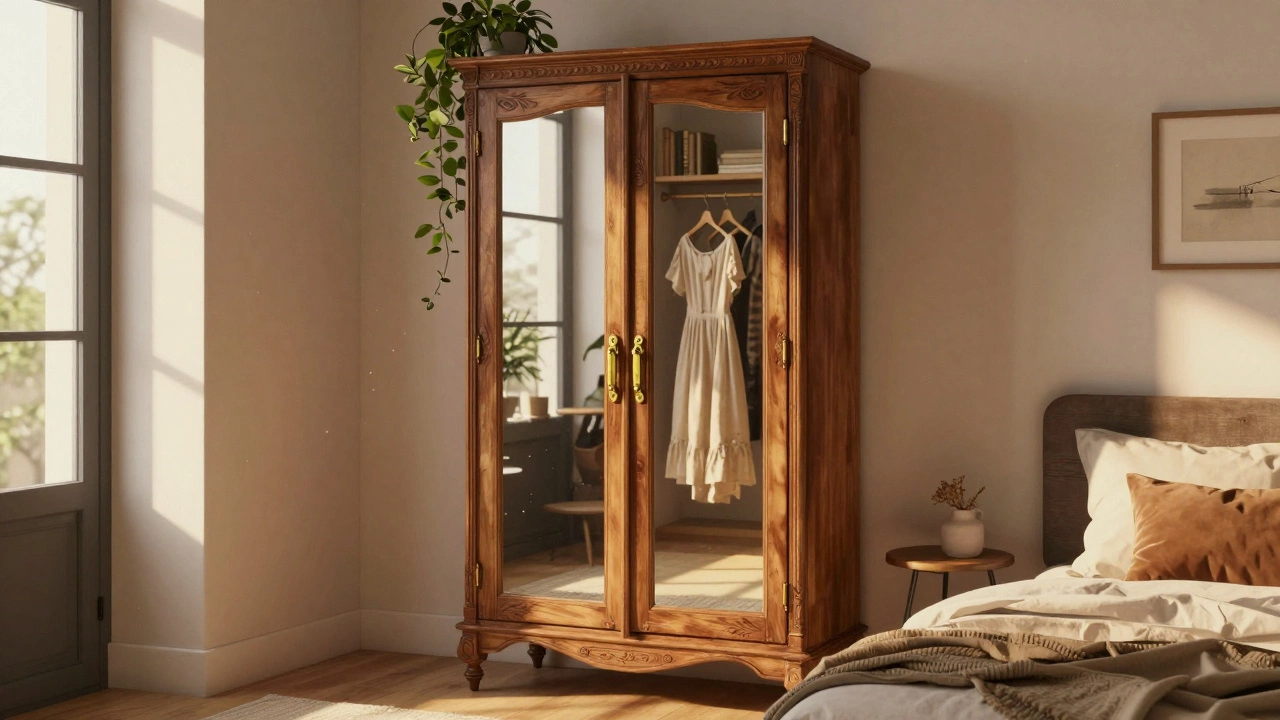
- Armoire - A decorative, often wooden cabinet with doors, originally from France. It’s not just storage - it’s furniture with style.
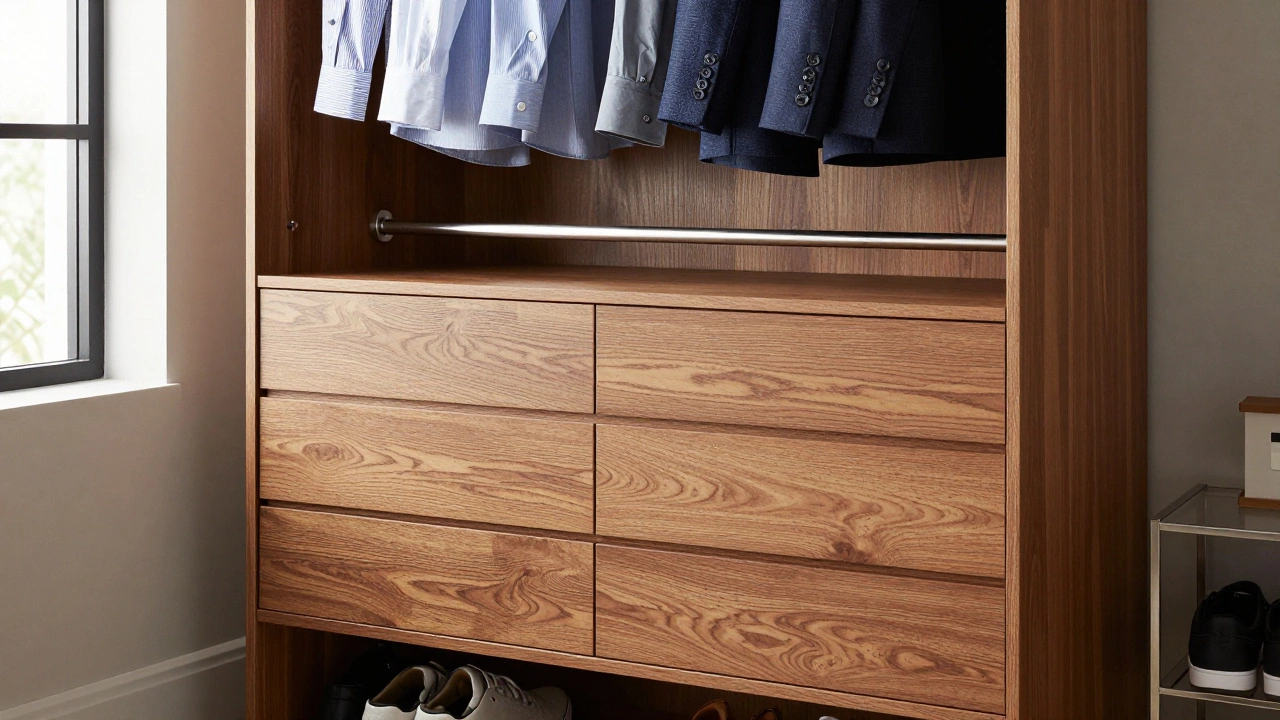
- Wardrobe chest - A hybrid: looks like a tall dresser on the bottom, with hanging space on top.
- Sliding door wardrobe - Not always small, but when under 100cm wide, it’s the go-to for tiny rooms.
So when someone asks, "What is a small wardrobe called?" - the real answer is: it depends on what you need. If you want to hang shirts and dresses, go for a compact wardrobe or armoire. If you need drawers too, a wardrobe chest might be your best bet.
Why Size Matters - And What "Small" Actually Means
"Small" is relative. In a Melbourne studio apartment, a 90cm-wide unit might feel huge. In a suburban house, it’s barely enough. But in furniture retail, "small wardrobe" usually means anything under 120cm wide. Anything wider than that? That’s a standard wardrobe.Here’s what you’ll typically find in a small wardrobe:
- Height: 180-200cm - tall enough to hang long coats or dresses without touching the floor.
- Width: 80-120cm - fits between walls, in corners, or against narrow walls.
- Depth: 55-65cm - just enough for clothes to hang without crumpling, but not so deep it eats up floor space.
- Capacity: 20-30 items of hanging clothing - enough for a minimalist wardrobe or a secondary storage spot.
Real-world example: A 100cm-wide compact wardrobe from IKEA’s KUNGSBACKA line holds 22 shirts, 12 pairs of pants, and 6 jackets - all hanging, no folding needed. That’s enough for one person living in a one-bedroom flat. Add a few drawers, and you’re good for seasonal clothes too.
Armiores: The Stylish Alternative
If you’ve ever seen a vintage wooden cabinet in a heritage home or a boho rental, you’ve probably seen an armoire. It’s not just a wardrobe - it’s a statement piece. Armoires often have carved details, brass handles, and glass or panelled doors. They’re heavier, pricier, and designed to last decades.Here’s the thing: armoires aren’t always small. But many modern versions are made specifically for tight spaces. Brands like BoConcept and Made.com now offer slim armoires under 90cm wide, with internal organisers and even mirrored doors. They work great in bedrooms, home offices, or even living rooms if you want to hide laundry or work clothes.
Why choose an armoire over a plain wardrobe? Because it doubles as decor. If you’re renting and can’t install built-ins, an armoire gives you storage without looking like a storage unit. Plus, they’re easier to move - perfect if you change flats often.
Wardrobe Chests: The Best of Both Worlds
What if you need to store jeans, sweaters, and socks - not just hang them? A wardrobe chest might be your secret weapon. It’s a tall dresser with a hanging rod on top. Think of it as a dresser that grew up and decided to hang clothes too.These are popular in Japan and Europe, where space is at a premium. In Australia, they’re catching on fast. A typical wardrobe chest is 100-110cm tall, 80cm wide, and 50cm deep. The bottom half has 3-4 drawers for folded items. The top half has a single hanging rail, perfect for blazers, dresses, or work uniforms.
One real-life example: A 28-year-old graphic designer in Collingwood uses a 95cm-wide wardrobe chest from Freedom. She hangs her 12 work shirts on top, stores her 20 sweaters and 15 pairs of jeans in the drawers below, and still has room for a shoe rack on the floor. No closet? No problem.
Sliding Doors: The Space-Saving Trick
Hinged doors swing out. That’s fine if you’ve got space. But in a narrow room? You’re constantly bumping into your wardrobe. Enter: sliding door wardrobes.These use a track system so the doors glide sideways instead of swinging open. They’re not always small - but when they’re under 100cm wide, they’re the most space-efficient option you can get. You lose a little depth to the track, but you gain back floor space.
Sliding door wardrobes are common in new Australian apartments. Developers install them because they’re cheap, easy to fit, and look clean. But you can buy them standalone too. Brands like Harvey Norman and Raymour & Flanigan offer freestanding sliding door units under 100cm wide, with adjustable shelves and pull-out hampers.
Pro tip: Look for ones with soft-close mechanisms. Nothing’s worse than a door slamming shut in the middle of the night.
What to Avoid
Not every "small wardrobe" is worth buying. Here’s what to skip:- Overly shallow units - Under 50cm deep? Your clothes will get crushed. Stick to 55cm minimum.
- Plastic or particleboard with no frame - These sag after six months. Look for solid wood edges or metal reinforcement.
- Units with only one hanging rail - If you need to store both long and short items, you need two levels. Check for adjustable rods.
- Wardrobes with no ventilation - Moisture builds up. Look for perforated backs or mesh panels.
One buyer in Footscray bought a cheap 80cm-wide wardrobe from a discount store. Six months later, the bottom shelf collapsed under a pile of winter coats. She replaced it with a 90cm unit from Adairs - solid pine frame, metal rails, and a breathable back panel. It’s still going strong two years later.
Choosing the Right One for Your Space
So how do you pick? Start with this simple checklist:- Measure your space - Width, height, depth. Leave 5cm clearance on each side for airflow.
- Count your clothes - How many hanging items? How many folded? Match your needs to the type.
- Think about movement - Do you need to open the door fully? Then avoid hinged doors in tight corners.
- Check the build - Solid wood or reinforced MDF? Metal rails? Avoid flimsy plastic.
- Think long-term - Will this still work if you move? Choose something easy to disassemble.
For a studio flat? Go with a 90-100cm sliding door wardrobe with two hanging levels and two drawers.
For a shared room? A wardrobe chest with separate sections keeps things tidy.
For a rental with style? An armoire adds character without permanent changes.
Final Thought: It’s Not About the Name - It’s About the Fit
"What is a small wardrobe called?" is a question people ask because they’re trying to find the right word to search online. But the real goal isn’t the label - it’s finding something that fits your life.There’s no single term that covers all small storage units. But now you know the options. You know what to look for. You know what to avoid.
Next time you walk into a furniture store, don’t ask, "Do you have a small wardrobe?" Ask, "Do you have a compact wardrobe with adjustable hanging rails?" Or, "Do you have a wardrobe chest with soft-close drawers?" That’s how you get the right piece - not the right name.
What is the smallest size for a wardrobe?
The smallest functional wardrobe is about 80cm wide, 55cm deep, and 180cm tall. Anything smaller than that won’t fit standard hangers or allow clothes to hang properly. Units under 70cm wide are usually just decorative or meant for accessories, not full clothing storage.
Is a closet the same as a small wardrobe?
No. A closet is a built-in space in a wall, usually permanent and part of the home’s structure. A small wardrobe is freestanding and portable. In Australia and the UK, "closet" isn’t used for freestanding units - that’s a wardrobe. In the US, the terms are often used interchangeably, which causes confusion when shopping internationally.
Can a small wardrobe hold enough clothes for one person?
Yes - if you’re minimalist. A 90-100cm compact wardrobe can hold 20-30 hanging items, plus 10-15 folded items in drawers. That’s enough for a full seasonal wardrobe if you rotate clothes and avoid overbuying. It won’t work if you collect 50 pairs of jeans or 30 winter coats.
Are armoires still popular today?
Yes - especially in rentals and modern interiors. Armoires are back because they’re stylish, portable, and don’t require renovation. Modern versions are slimmer, lighter, and come in matte finishes, black steel, or light oak. They’re popular in Melbourne’s inner-city apartments where landlords won’t allow built-ins.
What’s better: sliding doors or hinged doors on a small wardrobe?
Sliding doors are better for tight spaces because they don’t swing out. If your room is narrow or you have a bed or desk right next to the wardrobe, sliding doors save crucial floor space. Hinged doors are cheaper and easier to repair, but they need at least 60cm of clearance to open fully.