
American Closet Terminology Translator
Click a term on the left to see its American equivalent.
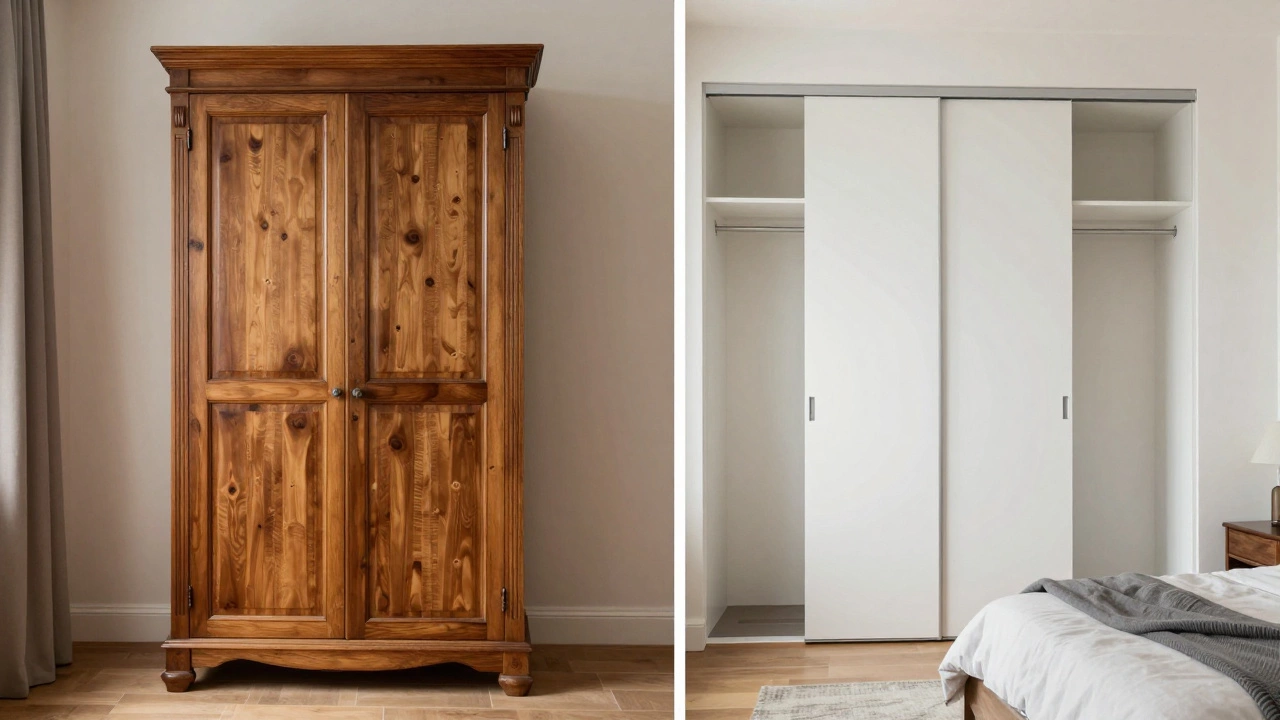
You pack your bags for a trip to New York or Los Angeles, and you hear your host say, "Hang your clothes in the closet is right down the hall." You look around for a tall wooden cabinet with doors-what you call a wardrobe back home-but see only an empty alcove in the wall. Confusion sets in. In the United States, the word "wardrobe" rarely refers to a piece of furniture. Instead, it usually means your collection of clothes. If you are looking for the place to store those clothes, you are looking for a closet a storage space built into the walls of a house.
This linguistic gap trips up travelers, expats, and anyone shopping for furniture online from an American retailer. Understanding the difference between a wardrobe a freestanding storage unit common in Europe and Asia and a closet an architectural feature standard in American homes is crucial for navigating real estate listings, buying furniture, and even just understanding daily conversations.
The Core Difference: Furniture vs. Architecture
In most of Europe, Asia, and parts of Australia, a wardrobe a large, tall chest of drawers or cupboard used to store clothes is a standalone piece of furniture. You buy it, move it into your room, and open its doors to hang shirts and pants. It has legs, a top, sides, and often mirrors on the front.
In the United States, this concept is largely replaced by the built-in closet a recessed storage area framed by drywall and finished with trim. This is not a product you buy from a store; it is part of the house’s structure. When Americans build homes, they frame out small rooms or alcoves specifically for storage. These spaces are enclosed by drywall (plasterboard) and fitted with a door, either sliding or hinged.
If you walk into a typical American bedroom, you will not see a giant wooden box taking up floor space. You will see a door that looks like any other interior door. Behind it lies the closet. This architectural approach saves floor space and allows for more flexible room layouts. However, it also means that if you rent an apartment without a built-in closet, you cannot simply "install" one easily. You would need to bring your own furniture solution.
What Do Americans Call the Freestanding Unit?
So, if you actually want to buy a tall cabinet to hold clothes because your rental lacks a built-in closet, what do you search for? Using the word "wardrobe" in an American online store might lead you to sections about clothing collections or organizational tips. To find the physical object, you need to use different terms.
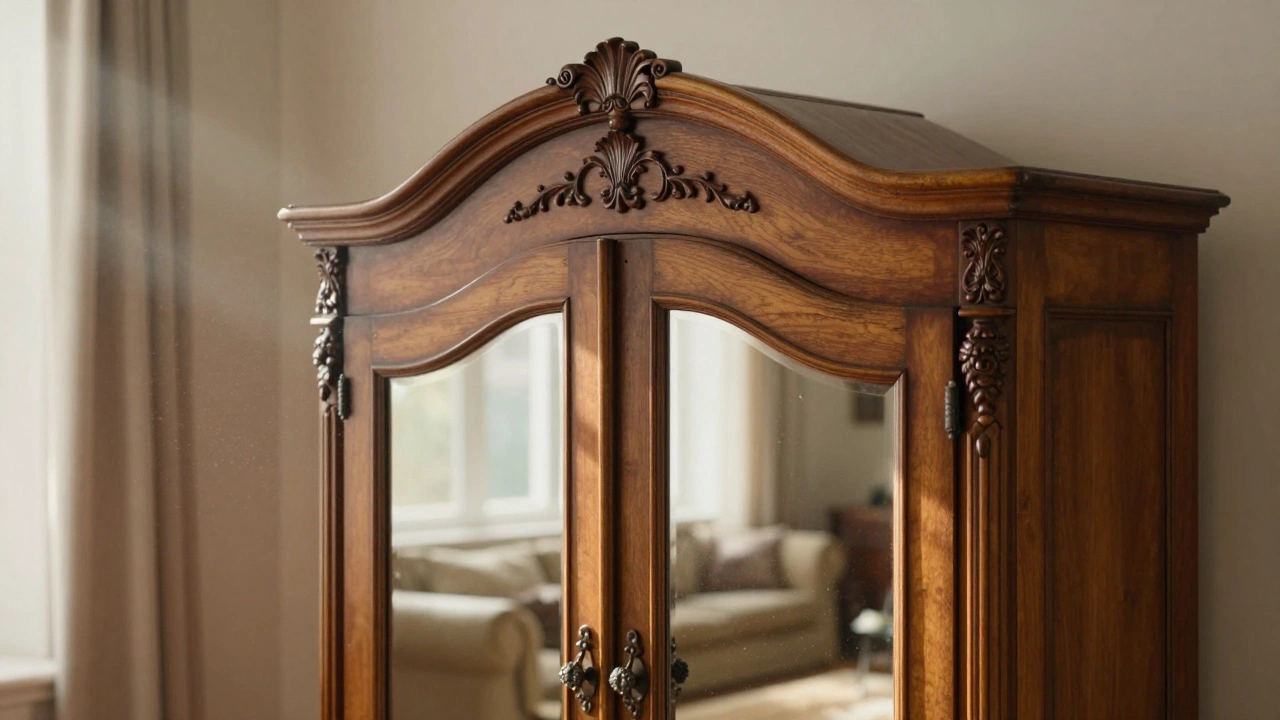
The most common term for a freestanding clothes storage unit in the US is an armoire a large, freestanding wardrobe, often made of wood, sometimes with a mirrored front. An armoire is essentially the American equivalent of the European wardrobe. It is a substantial piece of furniture, often heavy and decorative. Many older armories have a distinctive shape, sometimes featuring a peaked roof or ornate carvings. They are popular in vintage stores and antique shops.
Another common term is a closet organizer a modular shelving and hanging system designed to fit inside a closet or stand alone. These are less like traditional cabinets and more like metal or plastic frameworks. Brands like IKEA sell units such as the PAX system, which Americans refer to as "closets" or "closet systems," even though they are freestanding furniture. This blurs the line slightly, but the intent remains the same: creating a storage zone where none exists architecturally.
Less formally, people might call these units "dressers" if they primarily contain drawers, though a dresser is strictly for folded items. A "chest of drawers" is another term, but again, no hanging space. For a true wardrobe replacement, "armoire" or "freestanding closet" are your best bets.
| Concept | UK/Australian Term | US Term | Description |
|---|---|---|---|
| Storage Space | Wardrobe | Closet | A dedicated space for hanging and storing clothes. |
| Freestanding Unit | Wardrobe / Cupboard | Armoire / Dresser | A movable piece of furniture for storage. |
| Collection of Clothes | Wardrobe | Wardrobe / Closet | The total sum of clothing owned by a person. |
| Small Storage Nook | Alcove | Reach-in Closet | A shallow closet where you reach in rather than walk inside. |
| Large Storage Room | Linen Closet / Utility Room | Walk-in Closet | A large closet spacious enough to walk into. |
Types of Closets in American Homes
Understanding the vocabulary helps, but knowing the types of closets available in the US market is equally important for renters and buyers. American housing standards vary widely, but certain closet configurations are ubiquitous.
The reach-in closet a standard closet with a single door, requiring you to reach inside to access clothes is the baseline. Most bedrooms in apartments and smaller houses have at least one reach-in closet. These typically measure about 24 inches deep and 6 feet wide. They come with a simple rod for hanging clothes and sometimes a shelf above. Sliding doors are very common here to save swing space.
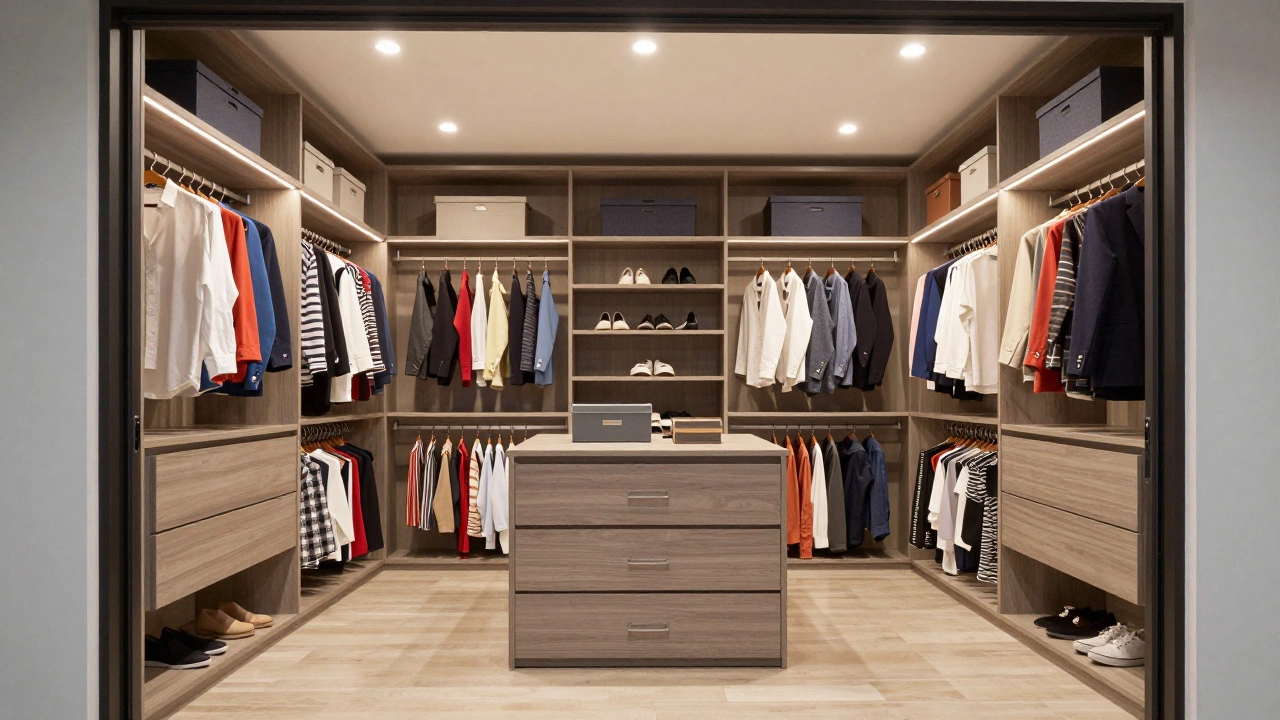
The walk-in closet a large closet space that functions as a small room, allowing you to walk inside is a significant status symbol and selling point in real estate. Unlike a reach-in, a walk-in closet is large enough for a person to enter fully. High-end homes may feature massive walk-ins with islands of drawers, double rows of hanging rods, and shoe racks. In luxury marketing, you might see terms like "dressing room" or "clothing boutique" used to describe elaborate walk-in closets.
Then there is the coat closet a narrow closet near the entrance of a home, designed for outerwear and shoes. Located near the front door, this is distinct from bedroom closets. It is often shallower and may lack shelves, focusing solely on hooks for jackets and hats.
Why the Difference Exists: Historical Context
Why do Americans have closets while Europeans have wardrobes? The answer lies in construction methods and history. In medieval Europe, clothes were stored in chests or trunks because heating was expensive, and keeping clothes close to body heat was practical. As homes evolved, large wooden cupboards became common. These were expensive, handcrafted items that served as both storage and display of wealth.
In North America, particularly during the rapid expansion of housing in the 19th and 20th centuries, efficiency was key. Framing a small room into the wall structure using lumber and drywall was cheaper and faster than crafting massive solid-wood wardrobes. Additionally, American homes tend to be larger, with more square footage allocated to private rooms. Integrating storage into the walls maximized usable floor space for living areas.
This divergence means that when you look at American interior design magazines, you will rarely see freestanding wardrobes unless they are being used as a specific stylistic choice, such as in rustic or farmhouse decor. The norm is hidden storage behind closed doors.
Navigating Real Estate Listings
If you are searching for housing in the US, the terminology in listings can be tricky. Always pay attention to the phrase "bedrooms/bathrooms the standard metric for housing size, e.g., 3 bed/2 bath." While this tells you the number of rooms, it does not explicitly guarantee closet space, although it is legally required in most states for a room to be classified as a bedroom if it has adequate storage.
However, "adequate" can mean different things. Some older apartments, particularly in cities like New York or Boston, may have "no closets" or "open closets" (which are just poles in the corner). If you rely on built-in storage, filter your search for "central air" and "hardwood floors" as proxies for newer or renovated buildings, which are more likely to have proper closets. Alternatively, look for keywords like "updated closets" or "custom shelving," which indicate well-maintained built-in storage.
For renters, always verify the presence of closets in photos. A photo showing a blank wall where a closet should be is a red flag. Ask the landlord directly: "Are there built-in closets in the bedrooms?" If the answer is no, budget for purchasing an armoire or a modular closet system immediately.
Buying Furniture: What to Search For
When you need to buy a freestanding unit in the US, avoid searching for "wardrobe" alone. Instead, use these specific terms:
- Armoire: Best for a traditional, wooden, full-height cabinet. Look for this on sites like Wayfair, Amazon, or at antique stores.
- Closet System: Best for modular, customizable solutions. IKEA’s PAX or ELVARLI series are popular examples. These are technically furniture but function like built-ins.
- Dresser with Hanging Rod: Some modern dressers include a section with a rod for shirts. This is a hybrid option for small spaces.
- Garment Rack: A temporary, lightweight solution for hanging clothes. Not ideal for long-term storage due to dust and lack of protection, but cheap and portable.
Be aware that shipping costs for large items like armories can be high. Measure your doorways and hallways carefully. American apartments often have narrower entryways than expected, and a large wooden armoire might not fit through the front door.
Summary of Key Terms
To recap, if you are in the US and someone asks where you keep your clothes, you say "in the closet." If you are buying a piece of furniture to store clothes because you don’t have a closet, you are buying an "armoire" or a "closet system." The word "wardrobe" is reserved for your collection of outfits or metaphorical discussions about style.
This distinction is more than just semantics; it affects how you plan your living space, what you pay for in rent, and what furniture you need to purchase. By adopting the local terminology, you’ll navigate the American housing market and retail landscape with much greater ease.
Is a wardrobe the same as a closet in the USA?
No. In the USA, a "closet" is a built-in architectural space in the wall. A "wardrobe" usually refers to a person's collection of clothes. If you mean the furniture, Americans call it an "armoire" or "freestanding closet."
What do you call a walk-in closet in American English?
It is called a "walk-in closet." Sometimes, in luxury real estate listings, it may be referred to as a "dressing room" or "clothing suite" if it is very large and includes seating or vanity areas.
Do all American homes have closets?
Most modern American homes and apartments have built-in closets in bedrooms. However, older buildings, particularly in major cities like New York City, may lack them. Studio apartments sometimes have only one small coat closet.
Where can I buy an armoire in the USA?
You can buy armories at major furniture retailers like Wayfair, Amazon, Ashley Furniture, and Target. For vintage options, check antique stores or Facebook Marketplace. IKEA offers modular closet systems that serve a similar purpose.
What is the difference between a dresser and a wardrobe?
A dresser is a low piece of furniture with drawers for folded clothes. A wardrobe (or armoire in the US) is a tall unit with hanging rods for shirts and pants. In the US, a "dresser" never implies hanging space.
Why don't Americans use the word wardrobe for furniture?
Historically, American homes were built with integrated storage (closets) to save cost and space. Since the furniture wasn't needed, the word "wardrobe" shifted to mean the contents (clothes) rather than the container.