
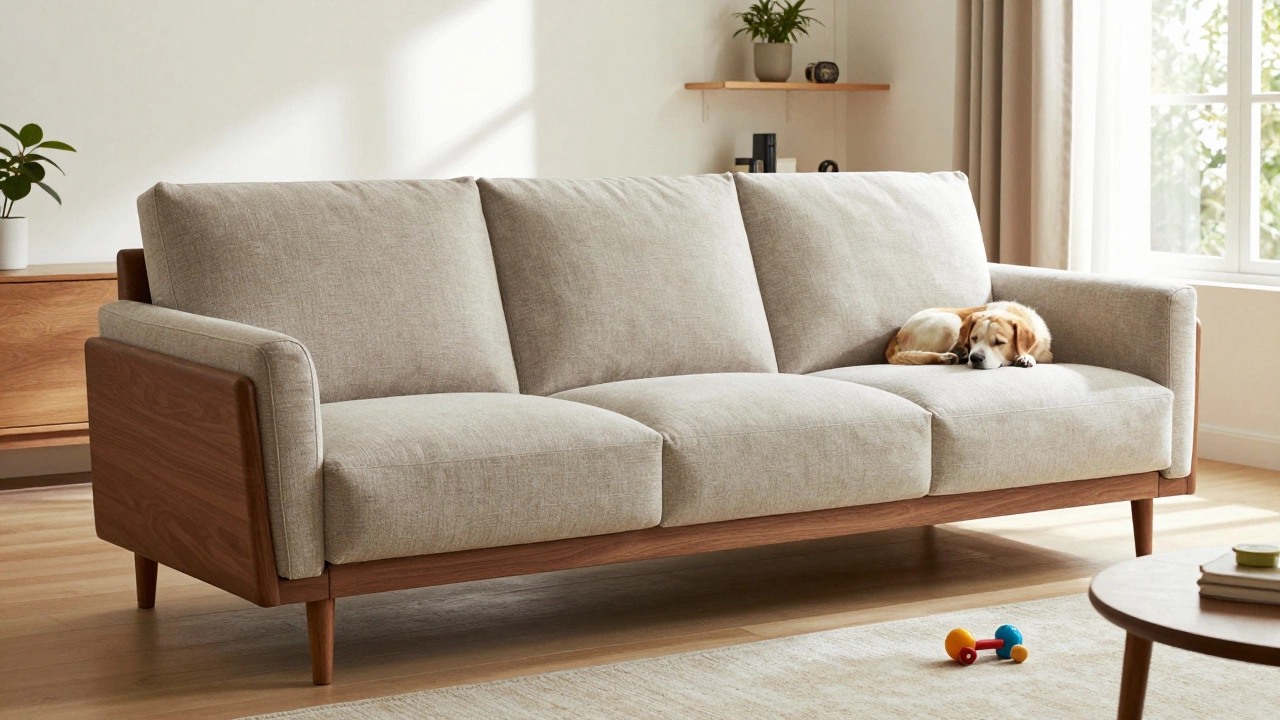
Couch Value Calculator
Is This Couch Worth the Price?
Enter the couch details from the article's quality criteria to see if the price matches its build quality.
Buying a good quality couch isn’t just about picking the color that matches your rug. It’s about spending your money wisely on something you’ll sit on every day for years. If you’re wondering what you should realistically expect to pay for a couch that won’t sag, fade, or fall apart in two years, you’re not alone. The average price of a good quality couch in Australia right now sits between $1,200 and $2,500. But that number can swing wildly depending on materials, construction, brand, and where you buy it.
What Makes a Couch "Good Quality"?
Not all couches labeled "premium" are built to last. A good quality couch has three core features: a solid frame, high-density foam or down-blend cushions, and durable upholstery.
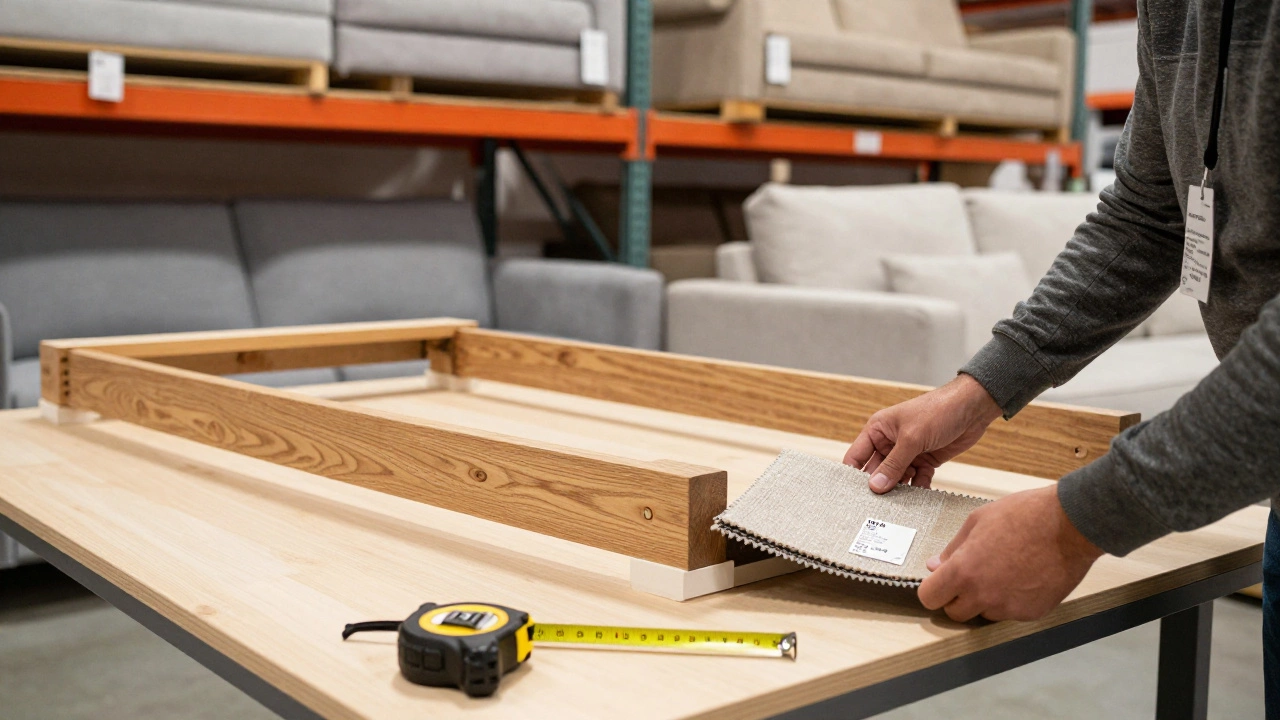
The frame should be made of kiln-dried hardwood like oak, beech, or maple. Avoid anything with particleboard or plastic joints-they crack under pressure. You can test this by lifting one end of the couch. If it creaks or flexes, walk away. A sturdy frame will feel solid, even when moved.
Cushions matter more than you think. Low-end sofas use thin polyfoam that flattens out in months. Good quality couches use high-density foam (at least 2.5 lbs per cubic foot) or a mix of foam and down. That combination holds its shape longer and feels comfortable without being too soft. If you press your hand into the cushion and it doesn’t spring back quickly, it’s not worth the price tag.
Upholstery is the third pillar. Look for fabrics with a rub count of 30,000 or higher on the Martindale test. That’s the industry standard for durability. Cotton blends, performance fabrics like Crypton or Sunbrella, and tightly woven microfiber are all good options. Avoid cheap polyester that pills after a few washes or velvet that shows every dent.
Price Ranges: What You Get at Each Level
There’s a clear difference between budget, mid-range, and premium couches-and it’s not just about branding.
- $500-$900: These are usually mass-produced with engineered wood frames and low-density foam. You might find a decent-looking couch here, but expect to replace it in 2-3 years. Common in big-box stores like IKEA or Kmart.
- $1,000-$1,800: This is where most people should aim. You’ll get solid hardwood frames, decent foam density (2.5-3.0 lbs), and durable fabrics. Brands like Freedom, Adairs, and local Australian makers like Dwell or B&B Italia’s entry lines fall here. This range gives you 7-10 years of reliable use.
- $1,900-$3,500: Handcrafted frames, custom cushion fills (down-wrapped foam), and premium fabrics like Italian linen or top-grain leather. These are made by artisans or heritage brands like Emu, Mitchell & Ness, or even imported European lines. Expect 15+ years of use if cared for.
One thing to watch: some brands inflate prices by adding "designer" labels or limited editions. A $2,800 couch from a boutique store might be identical to a $1,600 couch from a warehouse outlet-just with a different label. Always ask about materials, not just the brand name.
Where to Buy for the Best Value
Where you buy affects price more than you realize. Online retailers like The Iconic, Myer, or even Amazon Australia offer competitive pricing, but you can’t test comfort. Local furniture stores give you the chance to sit on it, but markups can be 50% higher.
Best value? Try warehouse sales, end-of-season clearances (April and October), or direct-from-maker brands. Companies like Boho Living or Local Crafted Co. cut out the middleman and sell directly from their Melbourne or Sydney workshops. You get the same quality as a high-end retailer but for 20-30% less.
Don’t ignore secondhand markets. A well-maintained couch from a reputable brand like Flax or Ligne Roset can be found on Gumtree or Facebook Marketplace for half the original price. Check the frame and cushions carefully-those are the parts that matter. A $600 couch with a solid frame and fresh cushions is better than a $1,500 one with a broken structure.
Hidden Costs You Might Overlook
The sticker price isn’t the full cost. Delivery can add $100-$250, especially if you live outside major cities. Some stores charge extra for assembly, removal of your old couch, or delivery to an upper floor.
Warranties are another trap. Many offer "lifetime" warranties, but those usually only cover the frame-not the cushions or fabric. Look for warranties that cover both. A 5-year warranty on all components is a good sign. Brands like Freedom and Adairs offer this. Cheaper brands often exclude cushions entirely.
And don’t forget cleaning. Performance fabrics are easier to maintain, but if you go with linen or cotton, you’ll need professional cleaning every 12-18 months. That costs $100-$150 per session. Factor that in.
Real-World Example: What One Family Paid
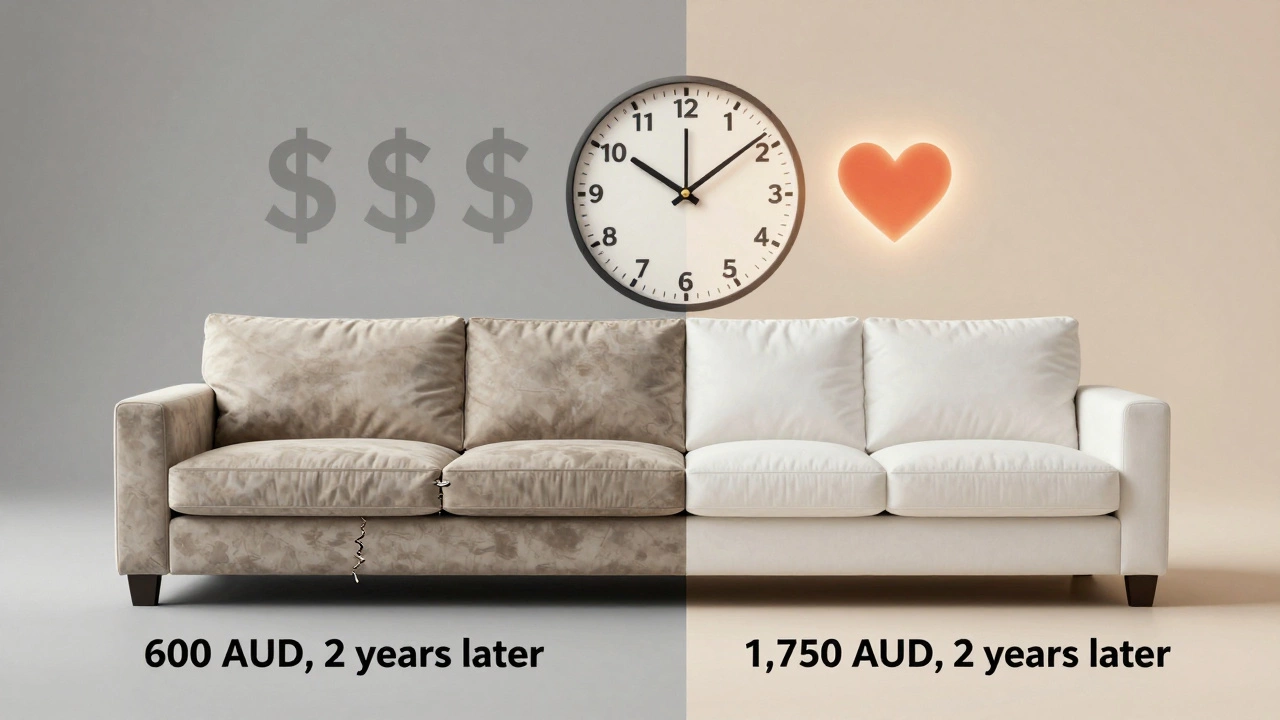
A couple in Footscray bought a 3-seater couch in March 2025. They wanted something durable for their two kids and a dog. They chose a 100% cotton blend with a hardwood frame and 3.0 lb foam cushions from a local maker called Sturdy & Co. Total cost: $1,750 including delivery and old couch removal. Two months later, the fabric still looks new. No sagging. No stains. No complaints.
Compare that to their neighbors who bought a $900 couch from a big retailer last year. The cushions are already flattened, and the seams are starting to split. They’re already looking at replacements.
How to Decide What’s Right for You
Ask yourself these three questions:
- How many people use it daily? (More users = need higher durability)
- Do you have pets or kids? (Choose performance fabric, avoid light colors)
- How long do you plan to keep it? (If you want 10+ years, spend $1,500+)
If you’re renting, a $1,200-$1,500 couch makes sense. You’re not investing long-term, but you still want something that doesn’t look cheap. If you own your home and plan to stay put, spend closer to $2,000. You’ll thank yourself in five years.
What to Avoid
Steer clear of these red flags:
- Couches with no listed frame material
- Claims like "luxury foam" without density numbers
- Very low prices on large sectionals-those are almost always low quality
- Stores that won’t let you sit on the couch before buying
- Warranties that exclude cushions or fabric
Also, avoid buying based on Instagram ads. A couch that looks perfect in a staged photo might be made of flimsy materials. Always check reviews that mention long-term use, not just "looks great!"
Final Thought: It’s an Investment, Not an Expense
A couch is one of the most used pieces of furniture in your home. Spending $1,800 on a good one means you’re paying about $180 a year for comfort. That’s less than a monthly gym membership. A $600 couch that lasts three years? That’s $200 a year.
Quality doesn’t mean expensive. It means lasting. And in the long run, the right couch saves you money, stress, and the hassle of constant replacements.
Is a $1,000 couch worth buying?
Yes, if it has a hardwood frame, high-density foam (2.5+ lbs), and a fabric with a 30,000+ rub count. Many good couches fall in this range, especially from Australian makers who skip big-brand markups. Avoid anything with particleboard or low-density foam, even if it’s labeled "premium."
What’s the best fabric for a couch with kids and pets?
Performance fabrics like Crypton, Sunbrella, or tightly woven microfiber are your best bets. They resist stains, don’t pill, and can be wiped clean. Avoid velvet, silk, or light-colored cotton. Darker colors and tight weaves hide dirt and claw marks better.
Should I buy a couch online or in-store?
If you can, test it in-store first. Comfort is personal. But if you’re confident in size and style, buying online from a brand with a generous return policy (like 100-day trials) is fine. Look for free delivery and easy returns. Many direct-to-consumer brands now offer this.
Do leather couches last longer than fabric ones?
Top-grain or full-grain leather can last 20+ years with care, but it’s not always better. Leather shows scratches and fades in sunlight. It’s also colder in winter and sticks to skin in summer. High-quality fabric with a high rub count can last just as long and is more comfortable for daily use. Leather is a style choice, not always a durability win.
Are expensive couches from big brands worth it?
Sometimes. Brands like Ligne Roset or B&B Italia offer excellent design and materials, but you’re paying for the name as much as the build. Many local Australian makers use the same factories and materials but charge 30-50% less. Always ask: What’s the frame made of? What’s the foam density? What’s the fabric rating? If the answers match a big-brand couch, you’re overpaying.