
Corner Sofa Styling Calculator
Room Details
Based on expert interior design ratios.
Coffee Table Recommendation
Ideal Rug Dimensions
Lighting & Layout Strategy
Enter your room details to generate a custom styling plan.
Buying a corner sofa is a large L-shaped seating arrangement that maximizes space in living rooms while providing ample seating for families and guests. It dominates the room. It’s the anchor. But if you leave it sitting there alone, your living room feels like a waiting area at a bus station. You’ve invested in comfort; now you need to invest in cohesion.
The hardest part isn’t buying the sofa. It’s figuring out what goes around it. Do you get a massive coffee table? A tiny one? What about the rug? If you get the scale wrong, the whole room feels off-balance. This guide cuts through the noise. We’ll look at specific pairings that work, based on how people actually live in Melbourne apartments and suburban homes alike.
Get the Coffee Table Scale Right
The biggest mistake people make with corner sofas is ignoring proportion. A standard rectangular coffee table often looks lost next to an L-shaped sofa. It creates awkward gaps where you can’t reach your drink from the chaise section.
You have three solid options here:
- Nested Tables: Two or three oval or round tables that fit together. This is my top recommendation. You can pull them apart when hosting friends, creating multiple surface areas. When it’s just you, they nest neatly into a compact shape. Look for materials like wood or marble that contrast with your sofa fabric.
- L-Shaped or Angled Tables: These mirror the sofa’s shape. They are functional but can feel bulky. Use this only if you have a very large open-plan space. In smaller rooms, an L-table blocks flow.
- A Single Large Round Table: Surprisingly effective. A round table softens the sharp angles of the corner sofa. It encourages conversation because everyone faces each other naturally. Just ensure the diameter is at least 80-100cm so it doesn’t look like a side table.
Avoid long, narrow rectangular tables unless your sofa is extremely wide. They create dead zones where no one can sit comfortably.
Rug Sizing: Don’t Skimp Here
I see this error constantly. People buy a rug that fits under the coffee table but leaves the front legs of the sofa hanging in the void. This makes the sofa look like it’s floating, which is rarely intentional or flattering.
For a corner sofa, you need a rug that anchors the entire seating group. Ideally, all legs of the sofa should rest on the rug. If your budget or room size prevents that, at least the front legs must be on it. A rug that is too small shrinks the perceived size of your room.
| Room Size | Sofa Type | Recommended Rug Size | Why It Works |
|---|---|---|---|
| Small (3m x 3m) | Compact Corner | 200x300 cm | Fits front legs, defines zone without overwhelming floor space |
| Medium (4m x 4m) | Standard L-Shape | 250x350 cm | Accommodates all legs, allows breathing room around edges |
| Large (5m+ x 5m+) | Oversized Modular | 300x400 cm or larger | Anchors heavy furniture, prevents 'island' effect |
If you can’t find a rug big enough, consider two runners placed perpendicular to each other, though this requires careful alignment to avoid looking messy.
Balance with Accent Chairs
A corner sofa provides plenty of seating, but it can feel monolithic. Breaking up that mass with one or two accent chairs adds visual interest and flexibility. Plus, not everyone wants to sink into deep cushions.
Choose chairs that differ in style or material from the sofa. If your sofa is a plush grey fabric, try a leather armchair or a woven rattan chair. This mix of textures keeps the room from feeling flat. Position the chair opposite the shorter end of the L-shape, angled slightly toward the center. This creates a conversational triangle.
Don’t match the chair to the sofa exactly. Matching sets feel dated and sterile. Aim for harmony, not uniformity. Think complementary colors or contrasting shapes.
Lighting Layers Matter
Corner sofas often sit against walls or in corners, which are naturally dark spots. Relying solely on a ceiling downlight creates harsh shadows and kills the cozy vibe you’re aiming for.
Layer your lighting:
- Ambient Light: Your main overhead source. Keep it dimmable.
- Task Light: A floor lamp near the reading spot on the sofa. An arc lamp works well here as it reaches over the backrest without needing a side table base.
- Accent Light: Small LED strips behind the sofa or a small table lamp on a nearby shelf. This adds depth and warmth.
Warm white bulbs (2700K-3000K) are essential. Cool white makes fabric look cheap and uninviting.
Storage Solutions That Don’t Clutter
Living rooms tend to collect clutter-remotes, magazines, blankets. With a large sofa, you need storage that integrates seamlessly.
A media unit opposite the sofa is standard, but don’t forget vertical space. Tall bookshelves or cabinets along the wall adjacent to the sofa can store items without eating up floor space. Choose closed storage for messy items and open shelving for books and decor. This balance prevents the room from looking either too stark or too chaotic.
If you lack wall space, consider a console table behind the sofa if there’s room. It serves as a drop zone and display area simultaneously.
Decor and Personal Touches
Finally, bring life to the setup. Throw pillows are obvious, but vary their sizes and patterns. Avoid matching pillow covers. Mix solids, stripes, and textures like velvet or linen.
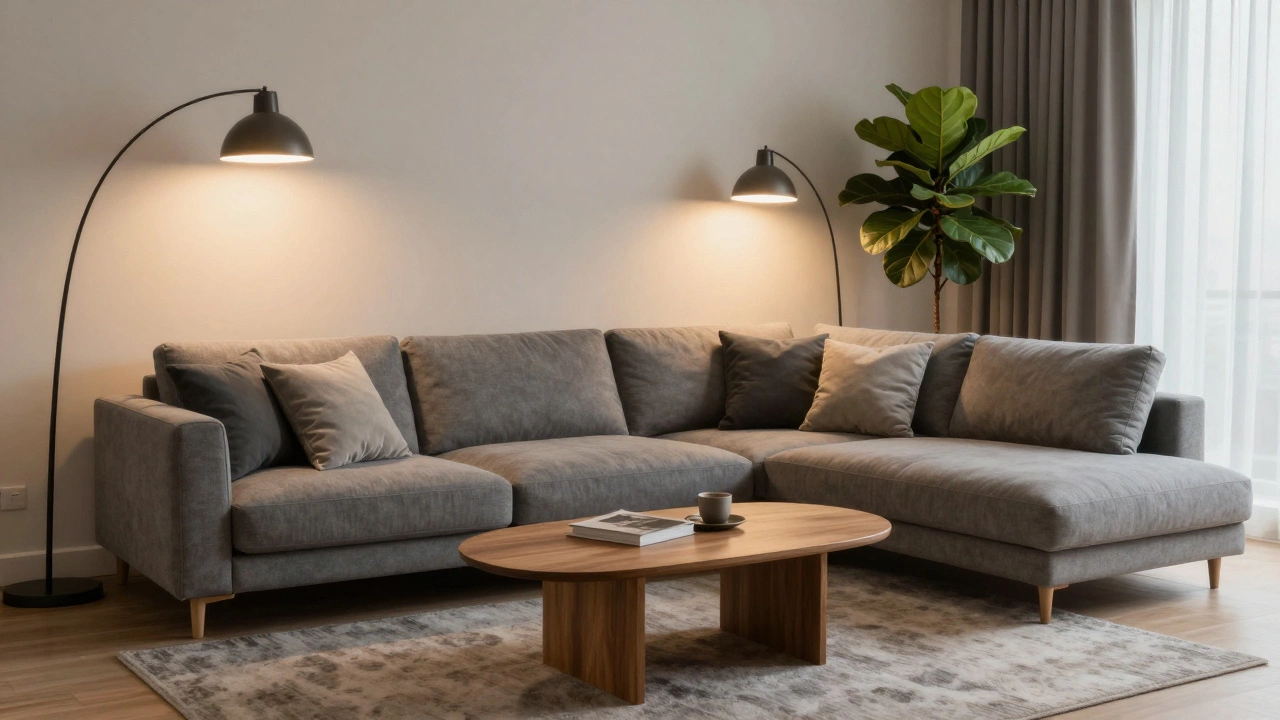
Add greenery. A tall fiddle leaf fig or snake plant in the corner opposite the sofa draws the eye upward and balances the horizontal weight of the furniture. Fresh flowers on the coffee table add a quick pop of color.
Artwork above the sofa should span roughly two-thirds of the sofa’s width. One large piece often looks more modern than a gallery wall, which can feel cluttered against a busy patterned sofa.
What color coffee table goes best with a grey corner sofa?
Wood tones like oak or walnut provide warmth against cool grey. Black metal or glass tables offer a sleek, modern contrast. Avoid grey tables as they blend in too much and reduce visual interest.
How far should the coffee table be from the corner sofa?
Maintain a gap of 14-18 centimeters between the sofa edge and the table. This allows easy access without bumping knees and ensures the table doesn't feel cramped against the seating.
Can I use a square rug with an L-shaped sofa?
Yes, but ensure the rug is large enough to accommodate both arms of the L-shape. Rectangular rugs aligned with the longer side of the sofa often work better for defining the seating area clearly.
Do I need a TV stand if I have a corner sofa?
Not necessarily. If the sofa faces a blank wall, a media unit helps organize electronics. However, if the room is small, floating shelves save floor space. Consider your viewing angle and cable management needs before deciding.
What is the best orientation for a corner sofa in a small room?
Place the longer side along the longest wall to maximize seating without blocking pathways. Ensure at least 60-90 centimeters of walking space remains between the sofa and other furniture or walls.