
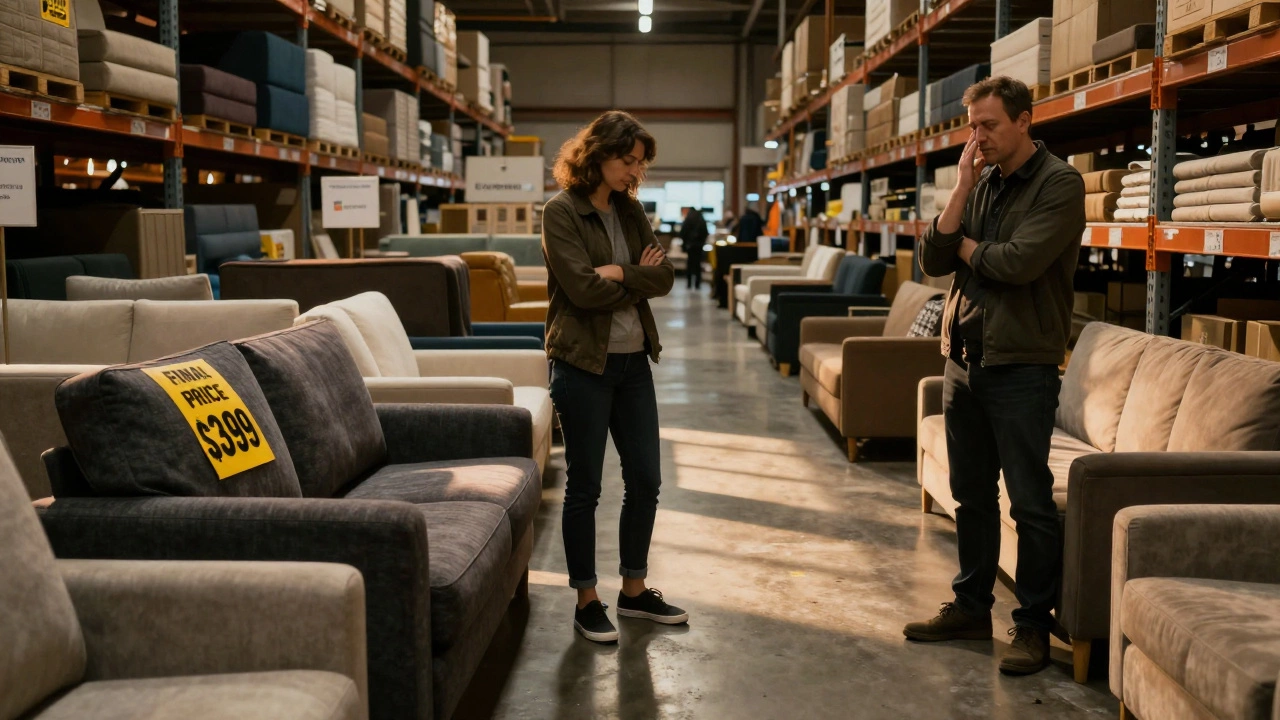
You walk into a furniture store during a big sale. Everything is marked down-sofas at 40% off, dining sets half price, even that fancy oak dresser you’ve been eyeing for months. The salesperson smiles and says, "Anything you like, we can work with on price." You feel the urge to haggle. But before you open your mouth, ask yourself: should you?
It’s Already at Clearance Price
Not every discount is created equal. Some items are already slashed to clear inventory. In Melbourne, stores like Freedom, Ikea, and local warehouse outlets often drop prices in stages. The first drop is 20%, then 30%, then 40%. By the time something hits 50% or more, it’s usually the final price. That’s not a starting point-it’s the bottom.One winter in 2024, a customer tried to haggle on a $799 sofa already marked at $399. The manager just shrugged and said, "We’ve had that piece for 11 weeks. We’re losing money keeping it here. That’s our last price." The sofa sold the next day.
Stores track how long items sit on the floor. If it’s been there past the clearance window, they won’t budge. Haggling here isn’t smart-it’s pointless. You’re not getting a better deal. You’re just annoying someone who’s already giving you the best one.
The Item Is a Floor Model or Damaged
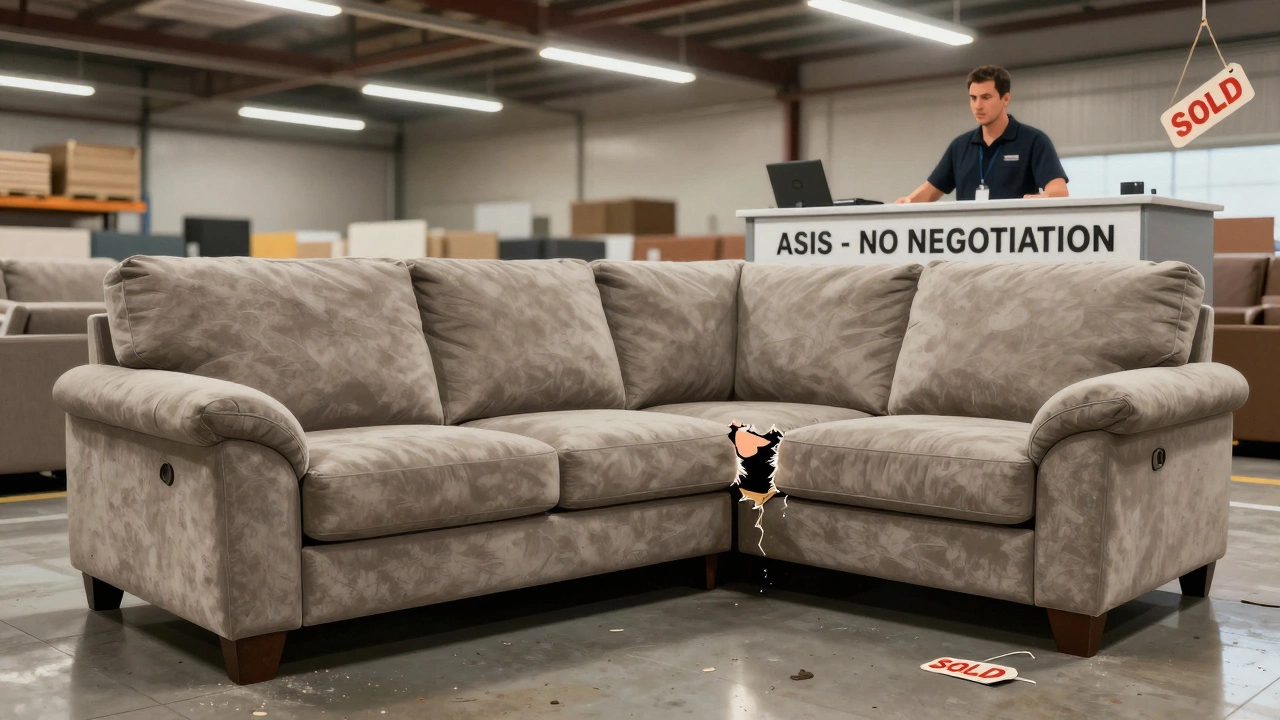
Floor models get walked on, kids sit on them, pets scratch them. Sometimes they’re missing a leg, or the fabric has a tiny tear. These items are sold as-is. That’s why they’re priced so low.At a warehouse clearance in Footscray last year, a $1,200 sectional went for $450 because one armrest had a seam split. A buyer tried to knock it down another $100, saying, "It’s already broken." The store said no. Why? Because they didn’t have a replacement. They couldn’t afford to lose that sale. They were already selling it for less than the cost of shipping it back.
If you buy a damaged item, you’re accepting the flaw. That’s the deal. Asking for more discount after you’ve seen the damage is like buying a used car with a cracked windshield and then asking for $500 off because the glass isn’t perfect. It doesn’t work that way.
You’re Buying a Brand That Doesn’t Negotiate
Not all furniture brands play the haggling game. IKEA, for example, has fixed pricing across Australia. Their entire model is built on low, transparent costs. No discounts. No haggling. No exceptions.Same goes for high-end brands like Kartell, Poltrona Frau, or even local Australian makers like Emu or Smead. These companies price based on materials, craftsmanship, and brand value. They don’t have sales staff trained to negotiate. Their prices are set by corporate policy, not by the person behind the counter.
Trying to haggle with these brands doesn’t get you a better deal. It gets you a confused look, maybe a polite "I’m sorry, that’s our final price." And you lose the chance to build rapport with the staff-who might otherwise help you find a better fit or alert you to upcoming restocks.
The Sale Is a One-Day Event
Flash sales-especially those advertised on Facebook or Instagram as "24-Hour Blowout!"-are designed to create urgency. They’re not about negotiation. They’re about volume.On Black Friday 2025, a store in Collingwood ran a 72-hour sale on bedroom sets. By hour 68, they were down to three sets. A buyer walked in at 10:45 p.m. and tried to ask for 10% off the already 60% discounted price. The manager said, "We’ve sold 87 sets today. We’re closing in 15 minutes. If you want it, take it. If not, someone else will."
When time is the only variable, haggling doesn’t help. You’re competing with other buyers, not negotiating with the seller. If you wait to haggle, you’ll lose the item-and the chance to get it at all.
You’re Paying for Delivery or Assembly
Many furniture stores bundle delivery, assembly, or removal of old pieces into the price. That’s not just a perk-it’s part of the cost.At a store in Doncaster, a customer tried to haggle on a $1,100 bed frame that included free delivery and assembly. He said, "I’ll pick it up myself, so take off the delivery fee." The store said no. Why? Because their pricing system doesn’t separate those costs. The delivery fee is baked into the price to keep the sticker price clean. Removing it would mean recalculating the entire discount structure.
Some stores even charge extra for delivery if you don’t buy the full set. If you try to haggle on the item alone and remove the service, you’re breaking their pricing logic. They won’t adjust. They’ll just say no.
You’re Buying Something That’s Rare or High-Demand
Not all furniture is mass-produced. Some pieces are limited runs, handcrafted, or imported in small batches. These aren’t meant to be bargained on.Last year, a local artisan in Brunswick released a run of 12 walnut dining tables made from reclaimed timber. Each was numbered. One sold for $2,800. A buyer offered $2,200, saying, "It’s just wood and nails." The maker didn’t respond. He didn’t need to. The next day, all 12 were gone. The buyer was left with nothing.
Handmade, limited, or heritage pieces carry value beyond cost. Their price reflects skill, time, and scarcity. Haggling here doesn’t show savvy-it shows disrespect. You’re not negotiating a price. You’re trying to undervalue someone’s craft.
You’re Already Getting a Good Deal
This is the quietest reason not to haggle. Sometimes, you’re already winning.Let’s say you’re looking at a $1,500 leather armchair. It’s marked at $900. That’s 40% off. You know from checking online that the same model sold for $1,200 just three months ago. You’re already saving $600. That’s more than most people save on a whole bedroom set.
Chasing another $50 off that chair doesn’t make you a smart shopper. It makes you greedy. And it risks souring the relationship with the salesperson. They might remember you next time you come in-and not offer you the first look at new stock, or the free coffee and cushions they gave someone else.
Good deals are rare. Don’t ruin one by pushing too hard.
What to Do Instead
If you’re not haggling, what should you do?- Ask if they have any upcoming restocks or upcoming sales.
- Join their email list-many stores send exclusive discounts to subscribers.
- Ask for a free accessory: a throw pillow, a rug, or extended warranty.
- Buy multiple items. Many stores offer bundle discounts you can’t get by haggling one piece.
- Be polite. A smile and a thank-you go further than a demand.
Furniture shopping isn’t a war. It’s a transaction. And sometimes, the best deal isn’t the lowest price-it’s the one where you walk out happy, without burning bridges.
Is it ever okay to haggle at a furniture sale?
Yes-but only when the price isn’t already at its lowest. If an item has been marked down once or twice but still sits on the floor for weeks, it’s fair to ask. Stores often have hidden discounts for slow-moving stock. But if it’s already at clearance, or from a brand with fixed pricing, don’t push it.
What if the salesperson says I can haggle, but I’m not sure?
Trust your gut. If the item is a floor model, part of a flash sale, or from a brand like IKEA, they’re probably just being polite. A good test: ask if the price is the final one. If they say yes without hesitation, accept it. If they pause and say, "I can check with my manager," then you’ve got room.
Can I haggle on online furniture sales?
Almost never. Online retailers like Amazon, Kogan, or even Australian sites like Furniture Village use automated pricing. Their discounts are algorithm-driven. You won’t find a live person to negotiate with. If you see a deal, buy it-or wait for the next one.
Why do some stores encourage haggling while others don’t?
It’s about their business model. Independent stores and warehouse outlets often rely on volume and margins. They build flexibility into their pricing to close sales. Big chains and premium brands use fixed pricing to maintain brand value and simplify operations. It’s not personal-it’s strategy.
What’s the worst thing that happens if I haggle at the wrong time?
You might lose the item. Or worse-you might get labeled as a difficult customer. Staff remember who’s reasonable and who’s pushy. If you haggle on a floor model or during a flash sale, you might get ignored next time you walk in-even if they have something you really want.