
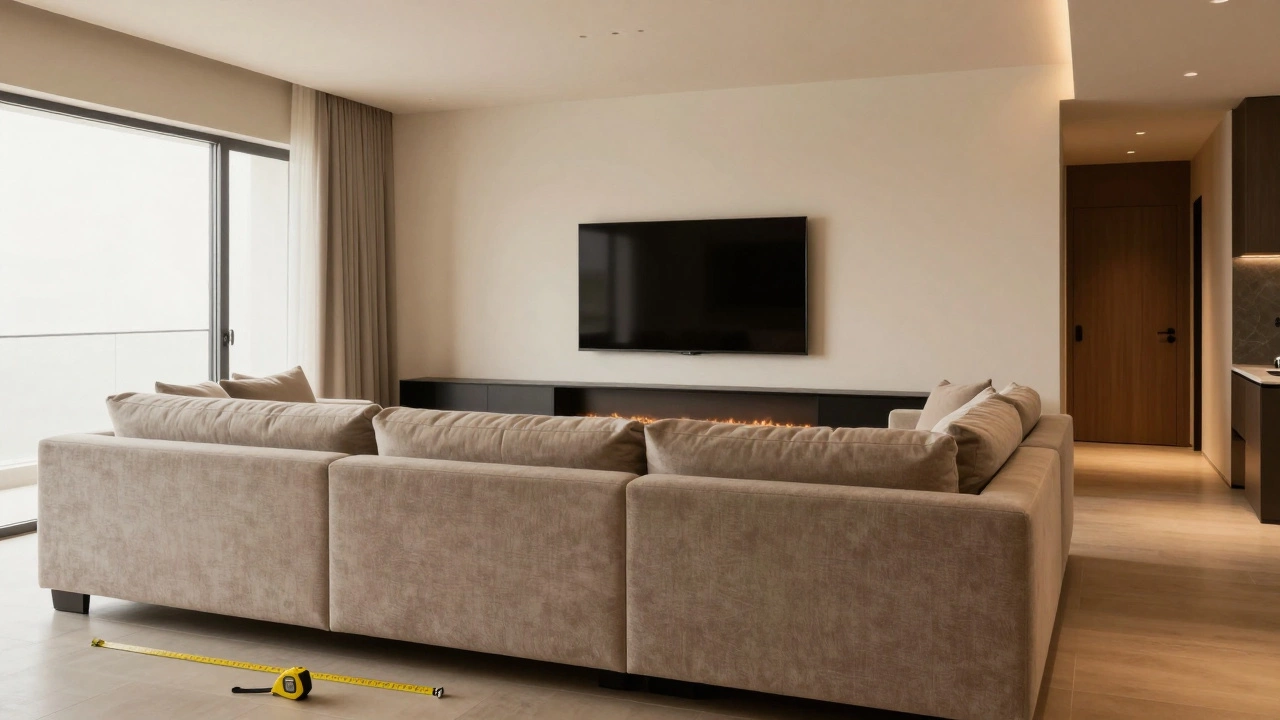
Corner Sofa Placement Calculator
Enter your room and TV dimensions to get recommended placement guidelines for your corner sofa based on interior design best practices.
Buying a corner sofa is a large L-shaped seating unit designed to maximize seating capacity while utilizing the corner of a room feels like a commitment. It’s bulky, it dominates the visual weight of your living space, and if you place it wrong, your entire room can feel cramped or awkwardly balanced. You’ve probably stood in the middle of your empty living room with a tape measure, wondering which wall gets the honor of hosting this giant piece of furniture.
The truth is, there is no single "correct" spot for every home. However, interior designers follow specific rules of thumb regarding traffic flow, focal points, and room proportions. Getting the placement right transforms a corner sofa from an obstacle into the anchor of your social space. Let’s look at exactly where these sofas belong and how to avoid the most common layout mistakes.
Identify Your Room’s Focal Point First
Before you even think about moving heavy furniture, look around your room. What do people naturally look at when they walk in? Is it a fireplace? A large window with a great view? Or is it the TV mounted on the wall? This feature is your focal point, the primary visual center of interest in a room that dictates furniture arrangement.
Your corner sofa should face this focal point. If your TV is on the north wall, the open side of the "L" should generally face south towards it. Placing a massive sofa with its back to the main attraction creates a disconnect. You want everyone sitting comfortably with their attention directed toward the shared experience, whether that’s watching a movie or chatting by the fire.
If your room has two competing focal points-like a fireplace on one wall and a TV on another-you have a design challenge. In this case, choose the one used most frequently. If you watch TV more than you use the fireplace, orient the sofa for the screen. You can then add a secondary seating element, like an armchair, to balance the fireplace area without overcrowding the main zone.
Consider Traffic Flow and Clearances
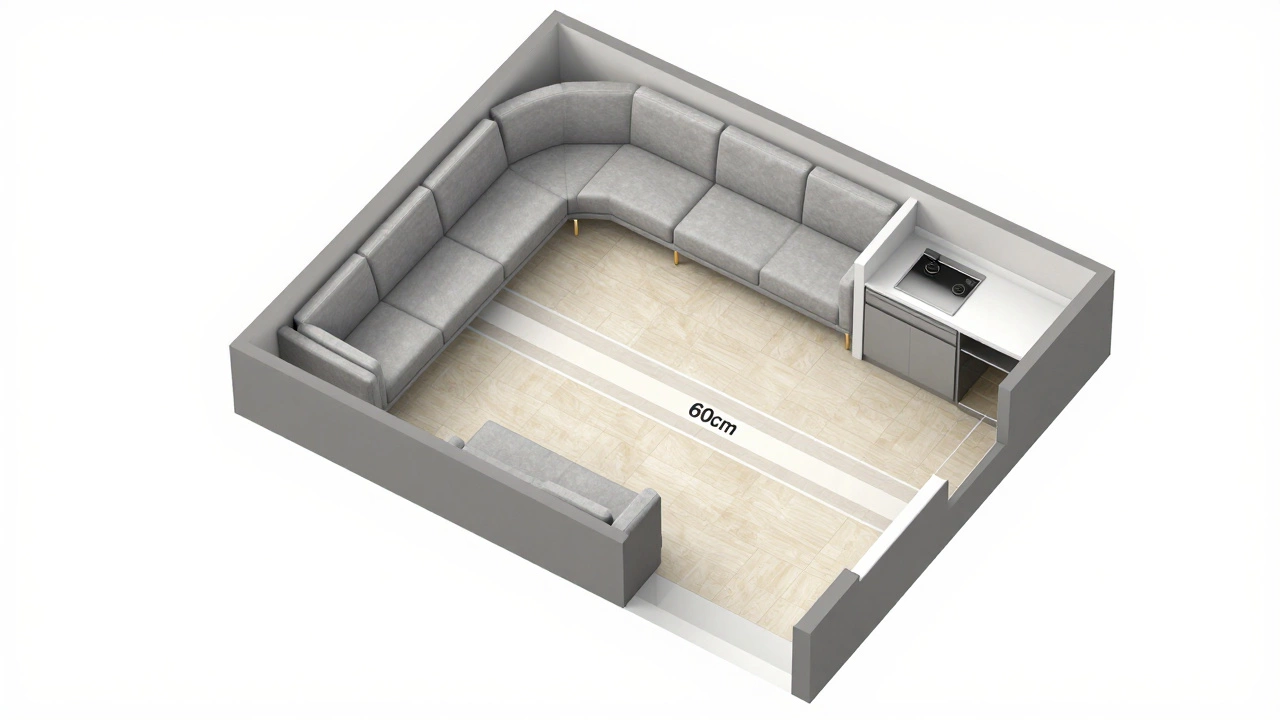
A common mistake is pushing the corner sofa flush against the walls. While this saves floor space, it often blocks pathways. Think about how you move through your house. Do you walk from the kitchen to the hallway directly past the sofa? If so, you need a clear path.
Interior designers recommend keeping at least 60 centimeters (about 24 inches) the minimum width required for comfortable pedestrian passage in residential spaces between the sofa and any walkway. For main thoroughfares where multiple people might pass, aim for 90 centimeters. If you squeeze this gap too tight, people will constantly bump into the sofa arms, and the room will feel claustrophobic.
Also, consider the "chaise" side-the extended part of the L-shape. If you place the chaise facing a high-traffic area, it acts as a barrier. Try to position the chaise along a quieter wall or near a window where fewer people need to walk past. This keeps the main flow of movement smooth and unobstructed.
Small Rooms vs. Large Open Plans
The size of your room drastically changes where the sofa goes. In a smaller living room, placing a large corner sofa in the center of the floor is a disaster waiting to happen. It isolates the seating area and makes the room feel tiny.
For compact spaces, tuck the corner sofa into an actual physical corner of the room. This defines the seating zone without eating up valuable walking space. Make sure the legs of the sofa are visible underneath; raised legs create an illusion of more floor space, making the room feel airier. Avoid base-heavy designs that touch the floor completely, as they visually weigh down the room.
In contrast, large open-plan living areas offer more flexibility. Here, you don’t necessarily need to pin the sofa against a wall. You can float the sofa in the middle of the room to define a distinct "living zone" separate from the dining or kitchen area. Just ensure there is enough rug space under all four legs (or at least the front two) to anchor the piece. Floating a sofa works best when the room is wider than 5 meters, allowing for ample circulation around all sides.
The Coffee Table Relationship
Once the sofa is placed, the coffee table becomes critical. The distance between the edge of the sofa seat and the coffee table should be between 35 and 45 centimeters. This allows you to easily reach for a drink or remote without stretching, but provides enough legroom so your knees don’t hit the table.
If you place the corner sofa too far from the table, the conversation area feels disconnected. If it’s too close, you’ll find yourself kicking the table every time you sit down. Measure this carefully before finalizing the sofa’s position. A good trick is to lay out pieces of cardboard on the floor representing the sofa and table to test the spacing before moving heavy items.
Natural Light and Window Placement
Windows introduce another variable. Ideally, you want to avoid blocking natural light with a tall backrest. If your corner sofa faces a window, make sure the window isn’t directly behind the heads of the people sitting there, causing glare on screens or discomfort during conversations.
If you must place the sofa near a window, opt for a lower-profile model. Alternatively, use sheer curtains to diffuse harsh sunlight. Never place a fabric corner sofa directly under a skylight or in a spot prone to direct, intense sun exposure for hours a day, as UV rays will fade the upholstery rapidly. Leather handles sun better but can get uncomfortably hot.
Visual Balance and Symmetry
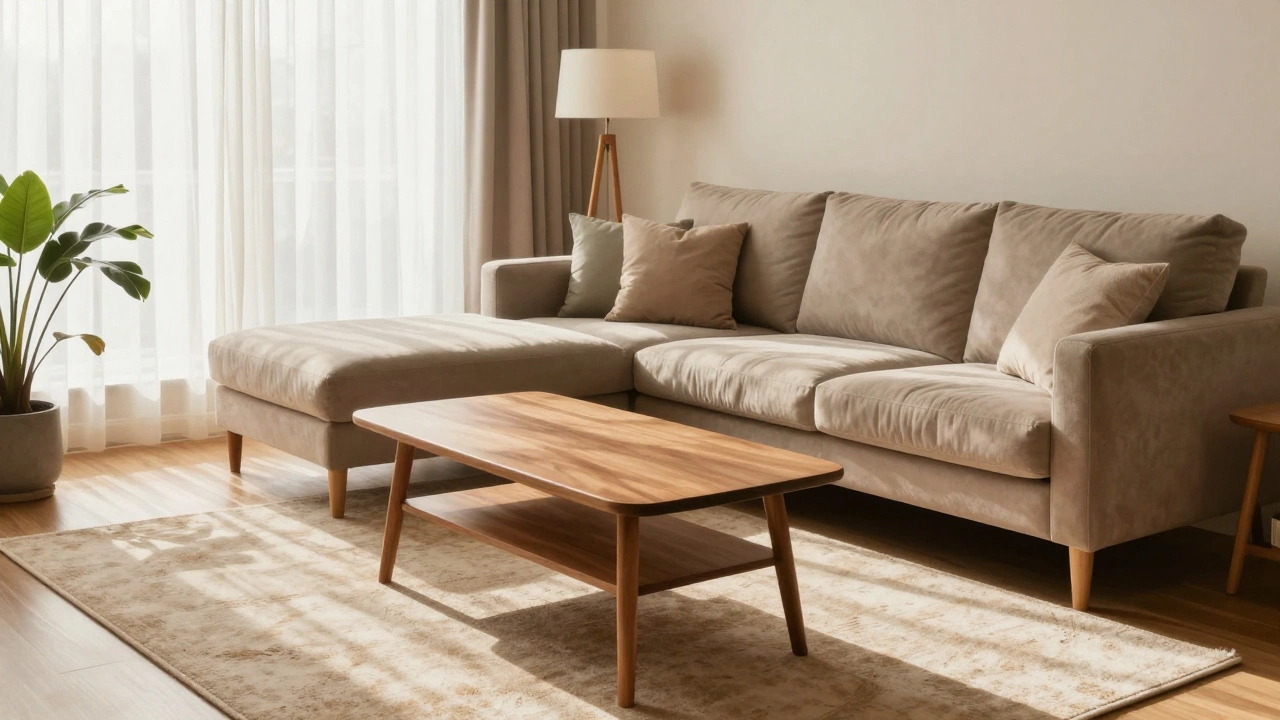
Even though a corner sofa is asymmetrical by nature, you can balance the room visually. If the sofa occupies the left corner, consider adding a bookshelf, a floor lamp, or a potted plant on the opposite right side. This prevents the room from feeling "heavy" on one side.
Rugs play a huge role here too. Ensure the front legs of the corner sofa rest on the rug. This ties the furniture together and creates a cohesive island of comfort. If the rug is too small, the sofa looks like it’s floating in a sea of bare floor, which breaks the visual connection. Aim for a rug that is large enough to fit under the sofa and the coffee table, leaving about 15-20 centimeters of flooring visible around the edges.
Common Mistakes to Avoid
- Blocking doorways: Never let the chaise extend into a doorway path. It forces people to step over or squeeze by, creating friction daily.
- Igoring scale: A massive sectional in a narrow rectangular room will choke the space. Measure the length of the longest wall; the sofa should not exceed 75% of that wall’s length.
- Ignoring power outlets: Check where your charging ports are. If the sofa covers the only outlet near the TV, you’ll end up with tangled cables across the floor. Plan for extension cords or relocate outlets if possible.
- Forgetting maintenance access: If you have blinds or curtains, ensure the sofa doesn’t prevent you from cleaning the windows or operating the blinds easily.
| Factor | Recommended Action | Why It Matters |
|---|---|---|
| Focal Point | Face the TV or fireplace | Ensures comfortable viewing and social interaction |
| Traffic Flow | Keep 60-90cm clearance | Prevents bumping and maintains easy movement |
| Coffee Table Gap | 35-45cm from seat edge | Optimal reach distance without knee collisions |
| Rug Size | Front legs on rug | Anchors the furniture and defines the zone |
| Wall Proportion | Sofa < 75% of wall length | Prevents the room from feeling overcrowded |
Final Thoughts on Layout
Placing a corner sofa is less about following rigid rules and more about understanding how you live in your space. If you entertain often, prioritize conversation circles. If you love reading, angle the chaise toward a quiet corner with good light. Use painter’s tape on the floor to map out the footprint before you lift a finger. It takes ten minutes to tape and hours to move furniture, so test your ideas first. Once you find the sweet spot where flow, function, and aesthetics meet, your living room will feel intentional and inviting.
Should a corner sofa go against the wall?
In most standard-sized rooms, yes, placing the corner sofa against the walls helps define the space and maximizes floor area for movement. However, in very large open-plan rooms, floating the sofa in the center can help divide the space into distinct zones, such as separating the living area from the dining area.
Which way should the chaise of a sectional face?
The chaise should ideally face away from high-traffic areas and towards a focal point or a quieter part of the room. Avoid pointing the chaise directly at a doorway or a main walkway, as this creates a visual and physical barrier. If you have a TV, orienting the chaise towards it can provide extra lounging space for viewers.
How much space should I leave between the sofa and the TV?
A good rule of thumb is to sit at a distance equal to 1.5 to 2.5 times the diagonal size of your TV screen. For example, if you have a 55-inch TV, sit about 7 to 12 feet away. This ensures comfortable viewing without straining your eyes. Adjust based on personal preference and room dimensions.
Can I put a corner sofa in a small living room?
Yes, but choose a compact or "apartment-sized" corner sofa with exposed legs to maintain a sense of space. Tuck it tightly into a corner to free up the rest of the floor. Avoid oversized sectionals that block pathways. Measure your room carefully to ensure the sofa fits without obstructing doors or windows.
How do I arrange furniture around a corner sofa?
Balance the asymmetry of the corner sofa by adding elements on the opposite side, such as a floor lamp, a bookshelf, or a single armchair. Use a large area rug to anchor the sofa and coffee table together. Ensure there is adequate clearance for walking paths and that the arrangement encourages conversation by facing seats towards each other.