
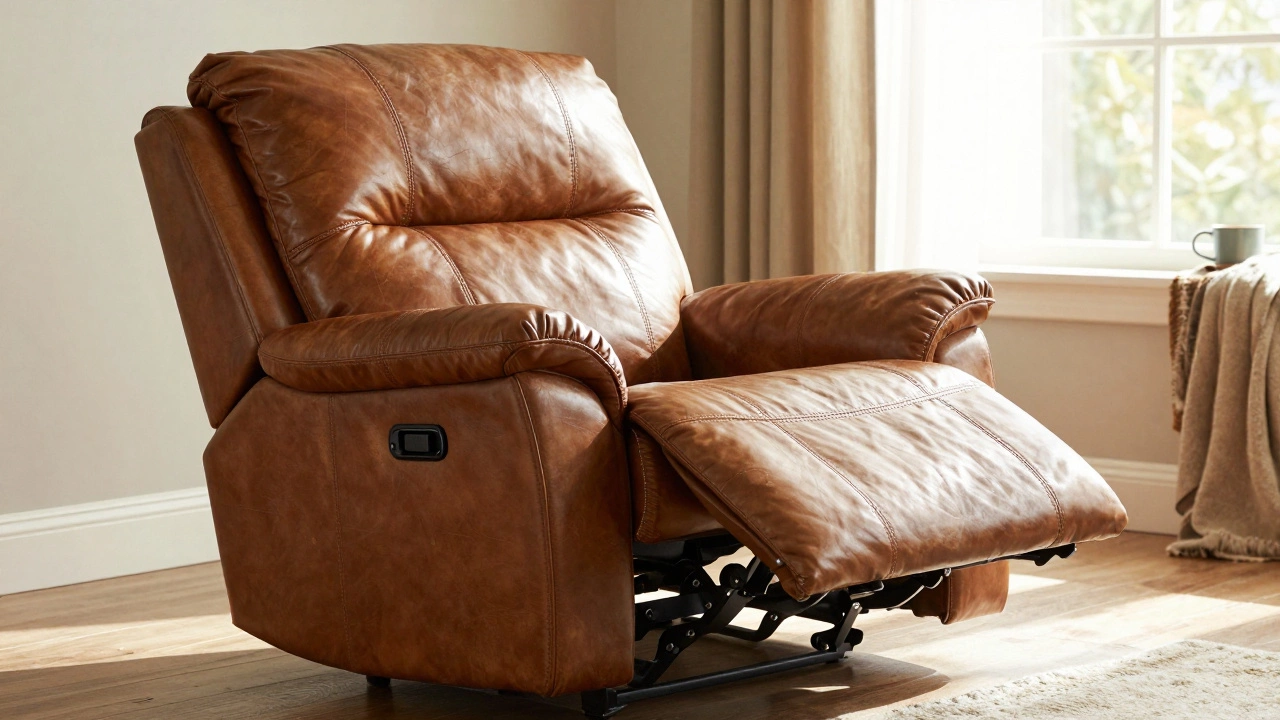
Recliner Lifespan Calculator
This calculator estimates how long a recliner will last based on key construction features. Enter details about your recliner's frame, mechanism, warranty, and weight to see if it's built for lasting comfort.
Estimated Lifespan
Ever sat in a recliner that groaned, wobbled, or just gave up after a couple of years? You’re not alone. Most people buy a recliner for comfort, but few think about how long it’ll actually last. The truth? Not all recliners are built the same. Some fall apart before your favorite TV show ends. Others? They outlast three generations of family movie nights. So which recliner lasts the longest? It’s not about price tags or fancy marketing. It’s about what’s inside.
What Actually Makes a Recliner Last?
A recliner that lasts isn’t just about leather or plush cushions. It’s about the skeleton. Think of it like a car: a luxury interior won’t save you if the engine’s falling apart. The frame, the mechanism, and the materials underneath the fabric are what really matter.
Most cheap recliners use particleboard or plywood frames. These warp over time, especially in humid climates like Melbourne. You’ll notice it first when the chair starts leaning to one side or the footrest doesn’t lock properly. Then the mechanism-usually made of stamped steel or plastic-starts to squeak, then slip, then fail. By year three, you’re either standing up the hard way or just giving up on the recline feature altogether.
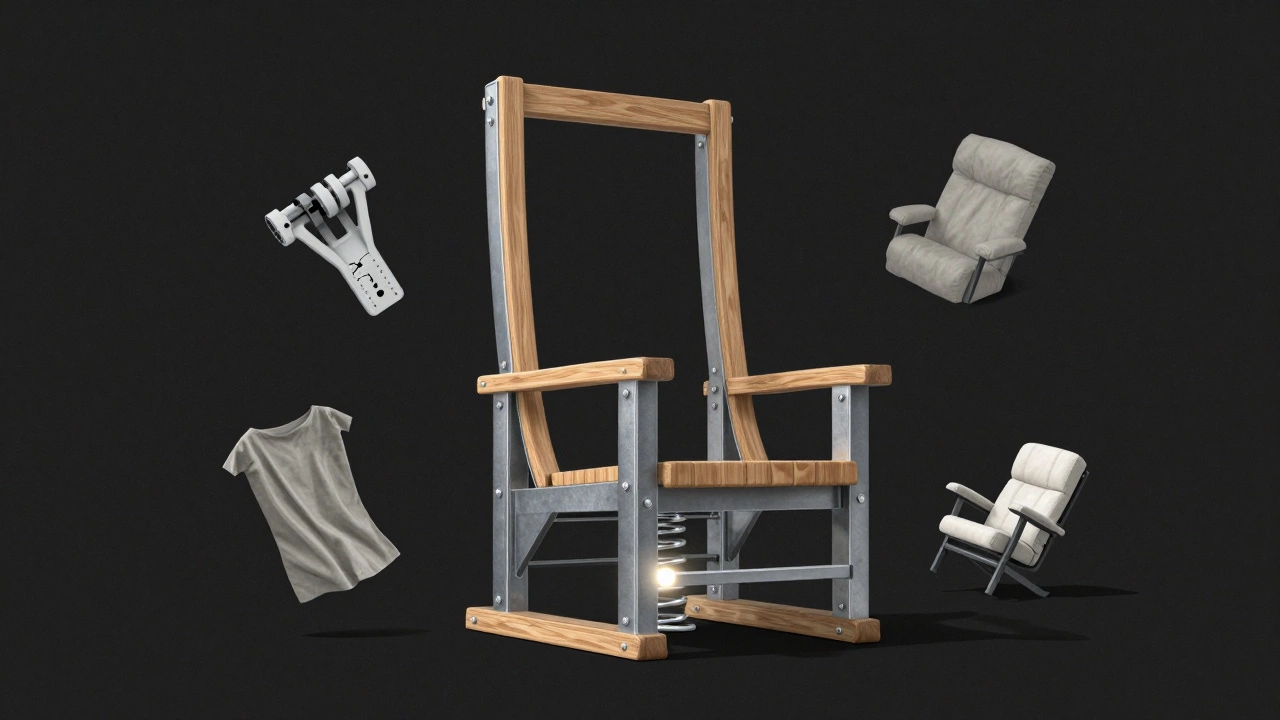
But the good ones? They use kiln-dried hardwood frames. Not just oak or maple-solid, dense, and properly dried so it won’t shrink or crack. These frames are joined with double dowels and corner blocks, not just glue and nails. The reclining mechanism? Steel, not plastic. Heavy-duty, welded, and tested for over 50,000 cycles. That’s 50,000 times you can recline and return to upright. Most people use their recliner 5-10 times a week. That’s 260 to 520 uses a year. A 50,000-cycle mechanism lasts 96 to 192 years. Even if you use it twice a day, it’ll outlive you.
The Top Three Recliner Types That Last
Not all recliners are created equal. Here are the three types that consistently show up in long-term use reports, repair logs, and customer reviews over a decade.
- Traditional Manual Recliners - These are the classics. No motors, no electronics. Just a lever, a spring, and a steel mechanism. Brands like Lane, Henredon, and Hancock & Moore use these. They’re simple. Fewer parts mean fewer things to break. If something does go wrong, it’s usually easy to fix. A worn spring? Replace it for $30. A broken lever? Swap it out. No electrician needed. These are the workhorses of the living room.
- Heavy-Duty Power Recliners with Steel Frames - Not all power recliners are flimsy. The ones that last use a full steel frame, reinforced with cross-bracing, and a commercial-grade motor. Look for motors rated for 10,000+ cycles. Brands like La-Z-Boy’s “Heavy Duty” line, and Stressless’s “Classic” series, use these. They’re built for daily use. One customer in Brisbane reported using the same power recliner for 17 years without a single motor failure. That’s not luck. That’s engineering.
- Leather-Over-Frame Recliners - Not just any leather. Full-grain, top-quality leather stretched over a rigid frame. Why does this matter? Fabric wears thin. It stains, fades, and pills. Leather? It ages. It gets better with time. A good leather recliner doesn’t need replacing because the cover looks old-it needs replacing because you’re done with it. The frame underneath? Still solid. Brands like Natuzzi and Broyhill use this approach. The leather costs more upfront, but you’re paying for the frame that lasts.
What to Avoid Like the Plague
There are three red flags that scream “this won’t last.”
- Plastic Mechanisms - If the recliner’s mechanism looks like it came from a toy, it probably is. Plastic gears, plastic arms, plastic hinges. They crack under pressure. Even if the chair looks nice, open the side panel (if you can) and look for plastic parts in the mechanism. If you see them, walk away.
- Thin Plywood Frames - Tap the side of the chair. If it sounds hollow, it’s probably plywood. Solid wood sounds dense, like knocking on a door. Plywood sounds like a cardboard box. Some brands hide this by adding thick padding. But after a few years, the padding compresses, and the frame shows its weakness.
- Low-Grade Fabric - Microfiber? It’s popular, but it’s not durable. It pills, attracts pet hair, and stains easily. Polyester blends? They fade fast. Look for performance fabrics like Crypton, Sunbrella, or Revolution. These are tested for 100,000+ rubs (Martindale test). That means they can handle constant sitting without wearing thin.
Real-World Testing: What Happens After 10 Years?
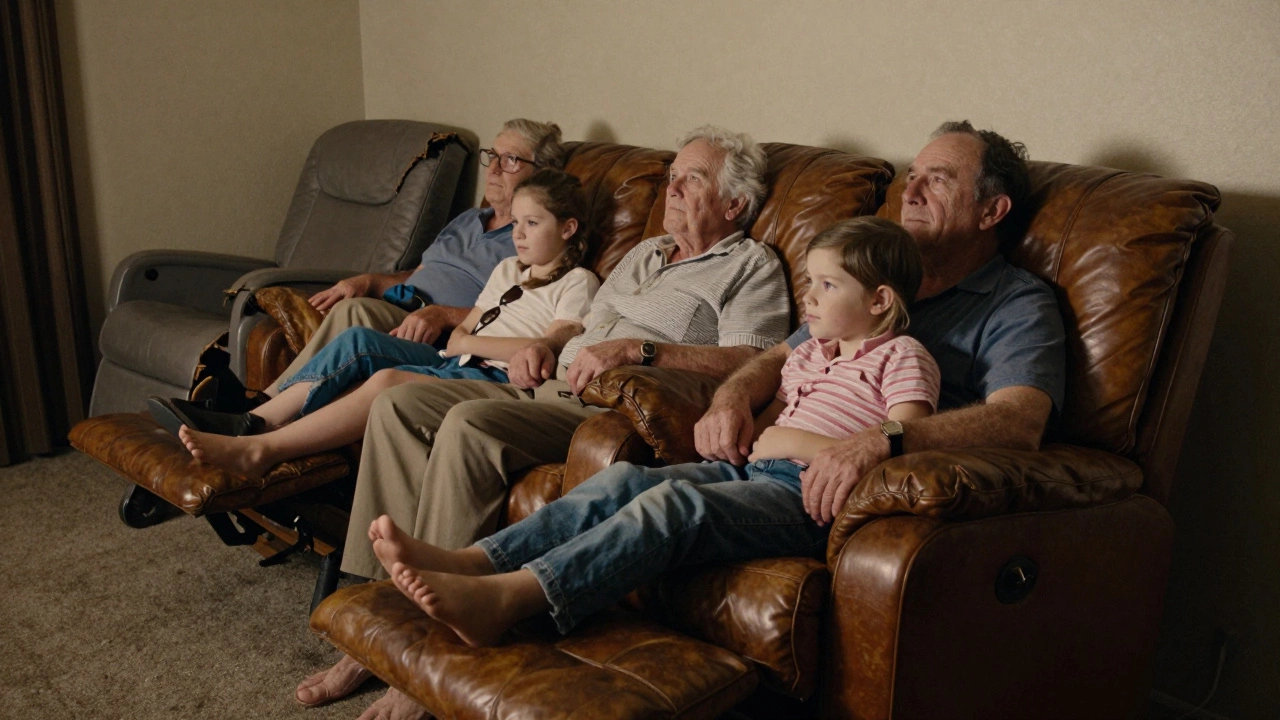
In 2024, a group of Australian homeowners in Melbourne, Sydney, and Adelaide tracked their recliners for over a decade. They didn’t just use them-they abused them. Kids jumping on them. Dogs sleeping on them. Coffee spills. Pet accidents. Daily use.
The results? Recliners with hardwood frames and steel mechanisms showed almost no structural wear. One chair from 2013 still worked perfectly. The leather had darkened, the cushion had softened, but the recline mechanism? Still smooth. The ones with plastic frames? All failed by year six. One had a broken footrest. Another couldn’t recline at all. The fabric? Faded, torn, or stretched beyond repair.
Here’s the kicker: the cheapest recliner in the study cost $499. The most expensive? $2,100. But the one that lasted 12 years? It cost $1,200. That’s $100 a year. The $499 one? It died in year five. That’s $100 a year for five years… then you had to buy a new one. And another one after that.
How to Spot a Long-Lasting Recliner Before You Buy
You don’t need to be a furniture expert. Just ask these three questions before you sit down.
- What’s the frame made of? Ask for the material. If they say “engineered wood” or “composite,” walk away. Ask for “solid hardwood” or “kiln-dried oak.”
- What’s the mechanism made of? If they say “heavy-duty steel” or “commercial-grade,” ask for a photo of the mechanism. Look for welded joints, not screws or rivets. Plastic parts? Red flag.
- What’s the warranty? A 10-year warranty on the frame and mechanism? That’s good. A 5-year warranty? That’s standard. A 1-year warranty? That’s a sign they know it won’t last.
Also, check the weight. A solid hardwood, steel-mechanism recliner weighs between 80 and 110 kg. If it’s under 70 kg, it’s probably light on materials. Heavier doesn’t always mean better-but in recliners, it usually does.
Where to Buy for Longevity (Not Just Price)
You won’t find the best long-lasting recliners at big-box stores. They’re made for volume, not longevity. Look for:
- Independent furniture makers with a focus on craftsmanship
- Brands that list materials openly (not just “premium fabric”)
- Companies that offer repair services or replacement parts
Some Australian brands like Harvey Norman’s Craft Collection is a line of Australian-made recliners using solid hardwood frames and steel reclining mechanisms, or Adelaide Furniture Co. is a local manufacturer that builds recliners with 25-year frame warranties, are worth looking into. Even if they cost more upfront, you’re buying a chair that won’t need replacing.
Final Answer: Which Recliner Lasts Longest?
The recliner that lasts longest isn’t the flashiest. It’s not the one with the most buttons or the softest cushion. It’s the one built like a tool: solid hardwood frame, steel mechanism, durable leather or performance fabric. It’s the one with a 10-year warranty on the frame and mechanism. It’s the one that weighs over 80 kg. And it’s the one you can repair, not replace.
If you’re buying for comfort today, fine. But if you want to sit in it 20 years from now? Go for the simple, sturdy, solid one. The kind that doesn’t make headlines-but makes memories.
Do more expensive recliners always last longer?
Not always. Some expensive recliners use fancy designs or soft fabrics that wear out fast. What matters is the frame material, mechanism build, and warranty. A $1,000 recliner with a steel frame and 10-year warranty can last longer than a $2,500 one with plastic parts and a 1-year warranty. Price doesn’t guarantee durability-construction does.
Can I repair a recliner if it breaks?
Yes-if it’s built to be repaired. Recliners with hardwood frames and steel mechanisms often have replaceable parts: springs, levers, motors, even fabric covers. Brands that offer repair services or sell replacement parts (like La-Z-Boy or Hancock & Moore) make this easy. Cheap recliners? They’re glued and stapled together. Once something breaks, it’s usually cheaper to buy a new one.
Is leather better than fabric for longevity?
Full-grain leather is better for long-term use. It doesn’t pill, fade, or tear like fabric. It ages gracefully. Fabric, especially microfiber, can look worn after 3-5 years. But high-performance fabrics like Crypton or Sunbrella are designed to last 10+ years with heavy use. So if you have pets or kids, a performance fabric might be smarter than cheap leather.
Should I avoid power recliners?
No-but choose wisely. Power recliners with plastic gears and thin frames fail quickly. Look for models with steel frames, commercial-grade motors rated for 10,000+ cycles, and warranties covering the mechanism. Brands like Stressless and La-Z-Boy’s Heavy Duty line have proven track records. Avoid ones with too many features-each button adds a point of failure.
How do I test a recliner in the store?
Sit in it and recline it 5-10 times. Listen for squeaks or grinding. Check if the footrest locks firmly. Push on the side panels-if they flex, the frame is weak. Lift the armrests: if they feel loose, the joints aren’t solid. Ask to see the mechanism (some stores let you open a side panel). Look for steel, not plastic. And check the weight-if it’s under 70 kg, it’s probably not built to last.
If you’re looking for a recliner that will still work in 15 years, don’t shop for comfort alone. Shop for structure. Because the chair that lasts isn’t the one you fall asleep in tonight-it’s the one you’ll still be using when your grandkids come over.