
ADHD Chair Assessment Tool
How Do You Move to Focus?
Select your preferred movement patterns. Your choices will help determine chairs that work best with your ADHD brain.
Your ADHD-Friendly Recommendations
Recommended Chair Types
Avoid These Chair Types
Why This Matters
Your brain uses movement to regulate dopamine and norepinephrine. Traditional chairs that restrict movement actively hurt your ability to focus. These recommendations help align your workspace with how your ADHD brain naturally works.
Have you ever noticed someone with ADHD sitting in a chair like they’re trying to balance on a yoga ball-legs tucked under, leaning forward, rocking back and forth, or even standing while working? It’s not laziness. It’s not disrespect. It’s biology.
ADHD Isn’t About Being Restless-It’s About Needing Movement
People with ADHD don’t sit strangely because they’re odd. They sit that way because their brains need movement to focus. It’s not a quirk-it’s a survival tool. Research from the University of Central Florida found that children with ADHD performed 30% better on attention tasks when allowed to move during learning. The same applies to adults. Sitting still isn’t just uncomfortable-it actively hurts their ability to think clearly.
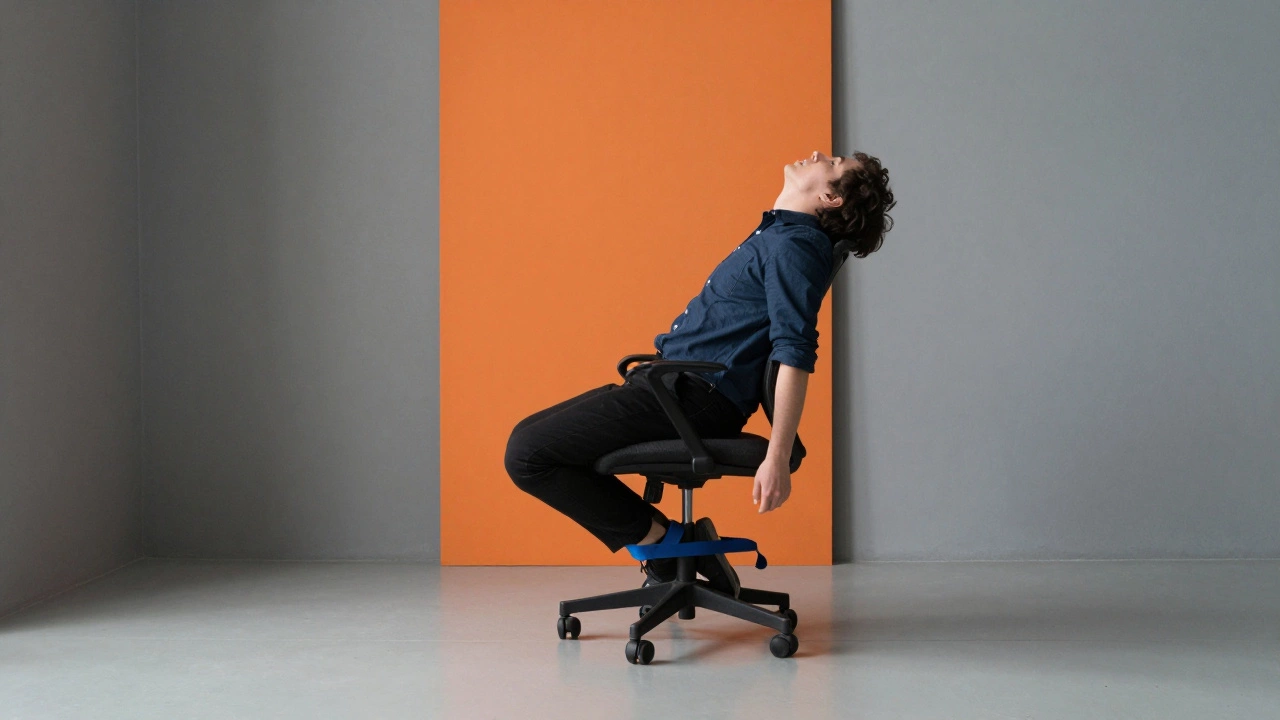
Your brain uses movement to regulate dopamine and norepinephrine, two chemicals that are already low in ADHD. When you fidget, tap your foot, or shift positions, you’re giving your brain the stimulation it craves. That’s why someone with ADHD might sit on their feet, hang their legs off the side of a chair, or lean far back with their arms stretched out. These aren’t bad habits. They’re self-regulating behaviors.
Traditional Office Chairs Are Designed Against ADHD
Most office chairs are built for stillness. High backs, rigid lumbar support, armrests that lock you in place, and fixed seat depths. They’re made for people who sit for hours without moving. That’s the opposite of what someone with ADHD needs.
Think about it: if your chair holds you perfectly still, your body rebels. Your legs start bouncing. Your fingers drum the desk. Your eyes dart around. That’s not distraction-it’s your nervous system screaming for input. The more your chair fights movement, the harder your brain works to get it, which leads to exhaustion, frustration, and worse focus.
Studies from the Journal of Attention Disorders show that people with ADHD report significantly higher levels of discomfort and mental fatigue when using standard ergonomic chairs. The irony? The very tools meant to help you sit comfortably end up making focus harder.
What Does ‘Strange’ Sitting Actually Look Like?
It’s not one thing. It’s a mix of behaviors that serve the same purpose: keep the brain engaged.
- Legs tucked under - Creates pressure on the thighs, stimulating sensory nerves that help ground the nervous system.
- Rocking back and forth - Rhythmic motion boosts alertness and reduces mental fog.
- Sitting on the edge of the chair - Keeps the body ready to move, preventing the feeling of being trapped.
- Standing while working - Turns the desk into a dynamic workspace, allowing constant small shifts in posture.
- Wrapping arms around the chair - Provides deep pressure input, which has a calming effect similar to a weighted blanket.
These aren’t signs of poor discipline. They’re neurologically driven adaptations. If you’ve ever watched someone with ADHD sit like they’re preparing for a martial arts match, now you know why.
The Best Office Chairs for ADHD Are the Ones That Move
Not all chairs are created equal. The best options for ADHD aren’t the most expensive or the most ergonomic in the traditional sense-they’re the ones that let you move.
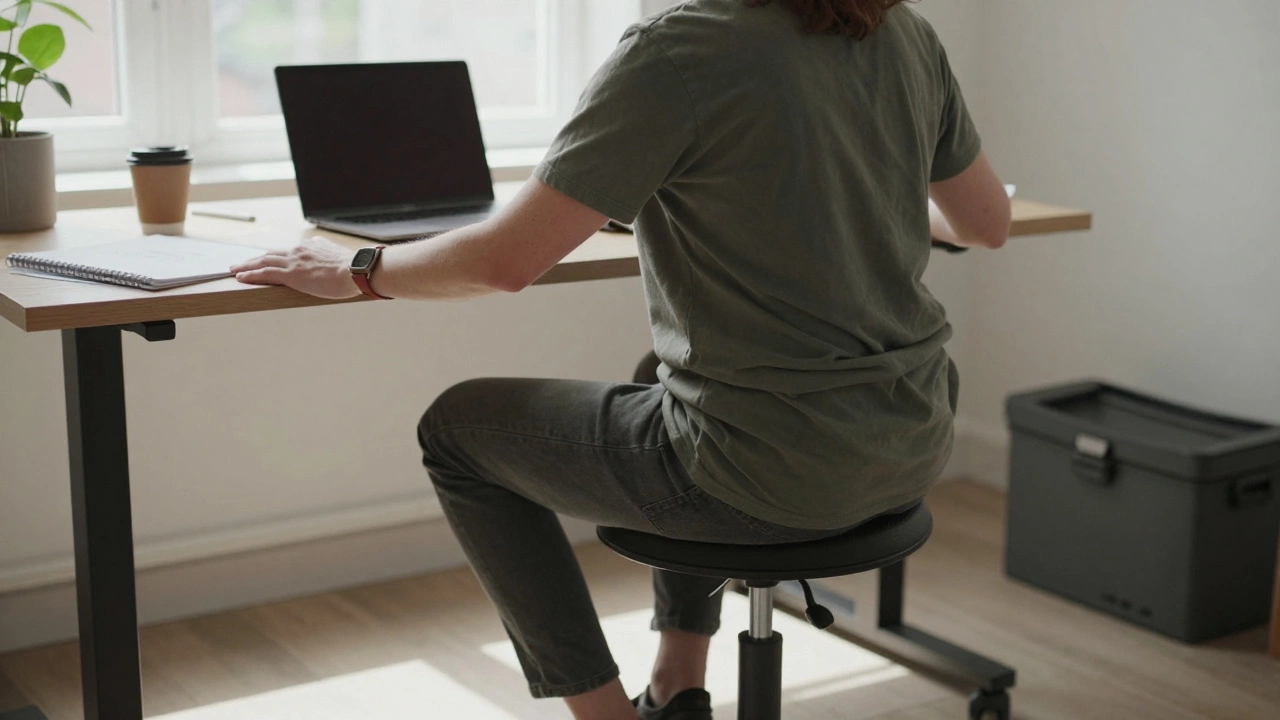
Swivel chairs with no armrests - Let you twist, turn, and shift without resistance. Armrests that lock you in place feel like a cage.
Stools without backs - Force you to engage your core, which naturally leads to small, constant movements that help focus. Many people with ADHD swear by balance stools or wobble stools.
Exercise balls as chairs - Yes, they’re still used for a reason. The instability forces micro-movements that keep the brain alert. A 2023 study in the Journal of Occupational Therapy found that participants with ADHD who used stability balls showed 22% improved task completion rates.
Adjustable-height desks with standing options - The ability to switch between sitting and standing gives the body freedom to regulate itself. Many people with ADHD work best when they can pace, stretch, or shift positions every 10-15 minutes.
Even simple additions like a foot rocker or a resistance band tied to the chair legs can make a huge difference. These tools let you move without disrupting your work.
Why ‘Good Posture’ Doesn’t Work for ADHD
Everyone says: sit up straight. Shoulders back. Feet flat. But for someone with ADHD, that’s like asking them to hold their breath while running a marathon.
Forcing stillness doesn’t improve focus-it drains energy. The goal isn’t perfect posture. It’s functional movement. A person with ADHD who’s leaning forward with one leg crossed and the other tapping might look messy, but they’re probably the most focused person in the room.
Neuroscientists call this dynamic sitting. It’s not about how you sit-it’s about how your body moves while sitting. The brain doesn’t care about alignment. It cares about stimulation.
Try this: next time you see someone with ADHD sitting ‘strangely,’ don’t assume they’re distracted. Ask yourself: are they actually working harder than everyone else who’s sitting perfectly still?

What to Avoid
Not all ‘ADHD-friendly’ furniture is helpful. Some products are marketed as solutions but actually make things worse.
- Chairs with excessive lumbar support - They lock your spine in place. Movement becomes painful or impossible.
- Deep, cushioned seats - They encourage sinking in, which leads to sluggishness and mental shutdown.
- Chairs with headrests - They invite leaning back, which reduces alertness and increases zoning out.
- Heavy, non-swiveling chairs - They feel like anchors. Movement restriction = mental resistance.
Also avoid products that claim to ‘correct’ ADHD behavior. There’s no such thing as fixing how someone with ADHD sits. The goal isn’t to make them sit like neurotypical people. It’s to make the chair work for their brain.
Real-Life Examples
Emma, a graphic designer in Melbourne, switched from a high-backed office chair to a wobble stool. Within a week, her project turnaround time dropped by 40%. She didn’t change her workflow-she just stopped fighting her body’s need to move.
James, a software developer, started using a standing desk with a foot rocker. He says, ‘I used to get headaches by 2 p.m. Now I’m sharper at 5 p.m. than I was at 9 a.m.’
These aren’t outliers. They’re people who stopped trying to fit into a system that wasn’t built for them-and found a way to thrive.
It’s Not About Behavior. It’s About Design.
The problem isn’t that people with ADHD sit strangely. The problem is that most workplaces still assume everyone should sit the same way. That’s like expecting left-handed people to write with their right hand and then blaming them for being clumsy.
ADHD isn’t a flaw in the person. It’s a mismatch between the person and the environment. The right chair doesn’t fix ADHD. It removes the barrier that makes focus harder.
If you or someone you know struggles to sit still at work, don’t try to suppress it. Adapt the space. Let movement be part of the solution. Your brain isn’t broken-it’s just wired differently. And that’s okay.