
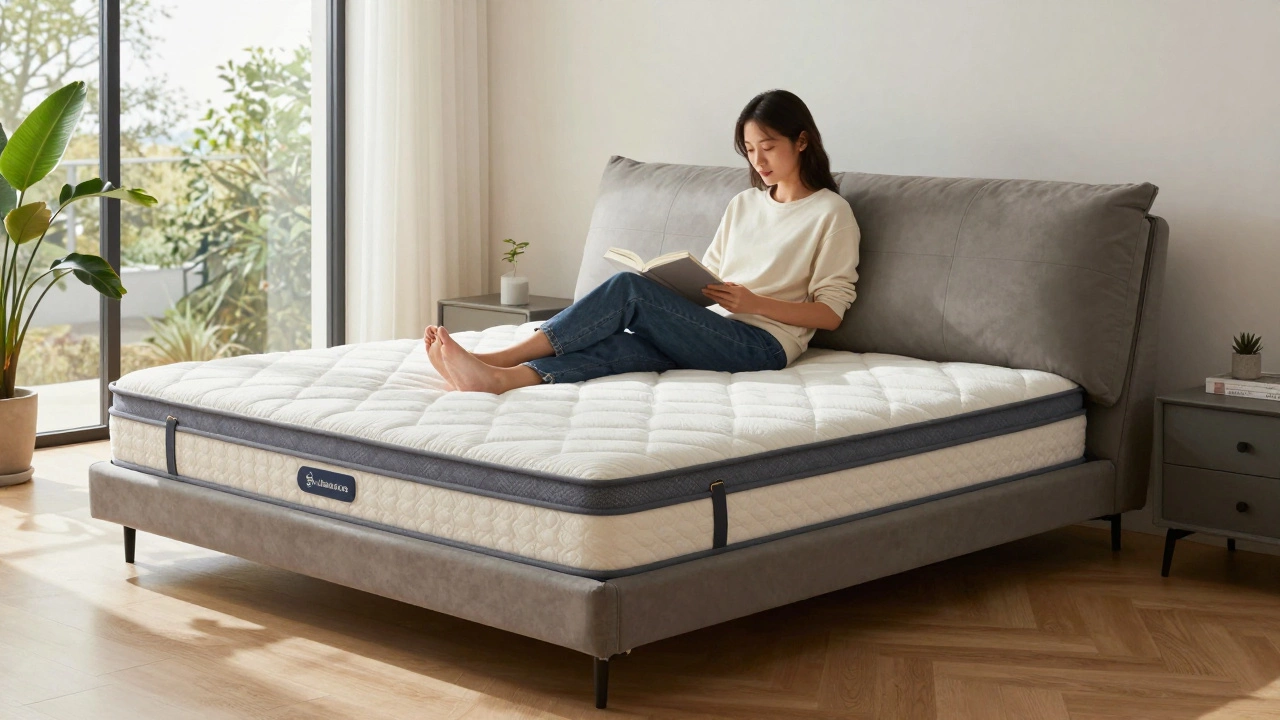
Sofa Bed Comfort Thickness Calculator
How Comfortable Will Your Sofa Bed Be?
Find the ideal mattress thickness based on your body weight, intended use, and budget. The article shows that comfort depends on thickness, density, and quality.
Recommended Thickness
- At least 6-inch thick mattress
- High-density foam (1.8 lb/ft³ or higher)
- Reinforced steel frame
Ever sat down on a sofa bed and felt like you were landing on a stack of folded blankets? You’re not alone. Many people assume sofa beds are just temporary fixes-something you tolerate for guests, not something you’d actually want to sit on every day. But here’s the thing: not all sofa beds are created equal. Some feel like sitting on a brick. Others? You forget you’re not on a real couch.
Why Some Sofa Beds Feel Like Sitting on a Board
The problem isn’t the sofa bed itself-it’s the design. Cheap models often use thin foam, flimsy metal frames, and springs that sag after a few months. The mattress inside? Sometimes it’s just 3 to 4 inches thick, made of low-density polyurethane foam that compresses under your weight and never bounces back. That’s why you feel every joint in the frame when you sit down.Think about it: a regular sofa has at least 6 to 8 inches of cushioning. A budget sofa bed might have half that-and it’s packed into a mechanism that folds and unfolds. That means the foam gets squeezed, stretched, and crushed every time someone turns it into a bed. Over time, it loses its shape. No amount of fluffing fixes that.
What Makes a Sofa Bed Actually Comfortable to Sit On
The good news? High-quality sofa beds exist. And they don’t feel like sitting on a mattress you pulled off the floor. Here’s what separates the good from the terrible:- Thick, high-density foam-at least 5 inches, preferably 6 or more. Look for foam with a density of 1.8 lb/ft³ or higher. That’s the same stuff used in premium sofas.
- Innerspring or hybrid mattresses-not just foam. A sofa bed with pocketed coils or a foam-coil combo gives you real support, not just a flat surface.
- Reinforced metal frame-steel frames with cross-bracing don’t wobble. You should be able to press down on the seat and feel firm resistance, not a springy flop.
- Smooth, quiet mechanism-if it squeaks or takes two people to open, skip it. A good mechanism glides open with one hand and locks solid when closed.
Brands like IKEA’s FRIHETEN, American Leather’s Compact Sofa Bed, and Flexsteel’s Blue Ridge have been tested by real users for daily sitting comfort. They’re not cheap, but they last. And yes-you can sit on them for hours without your hips screaming.
How to Test a Sofa Bed Before You Buy
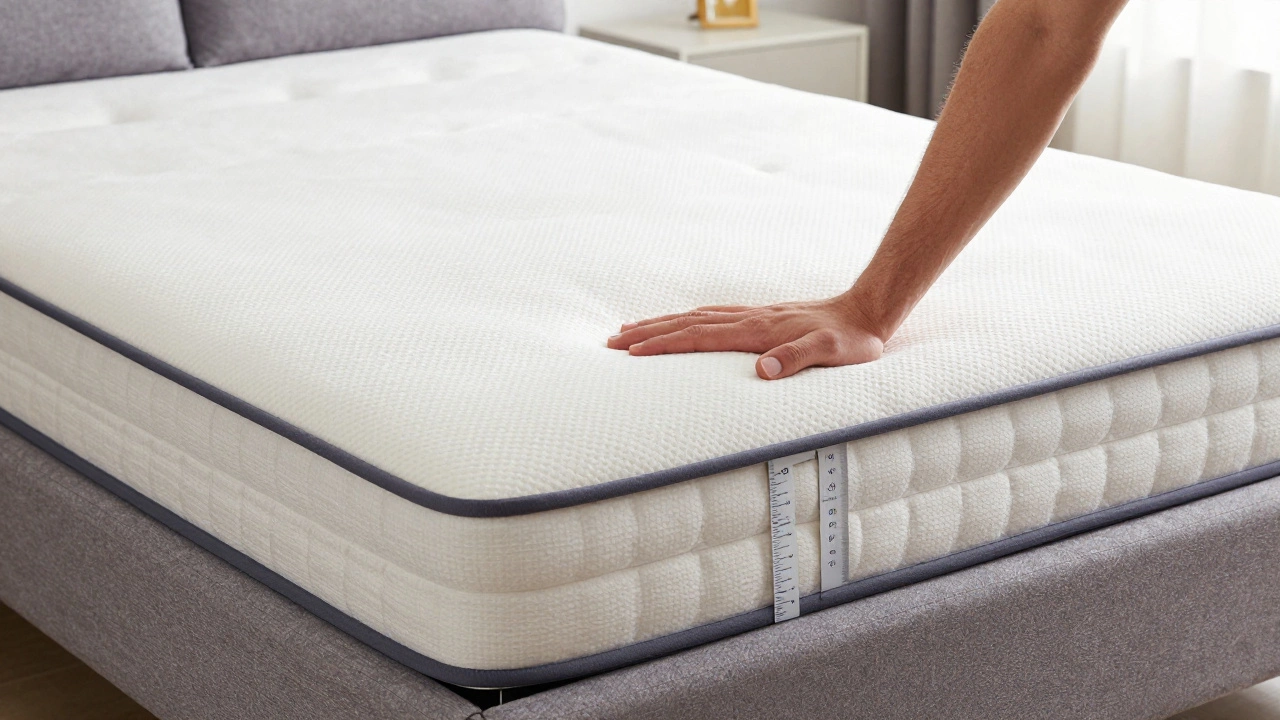
Don’t just rely on product descriptions. Go to a store and do this:- Press down firmly on the seat cushion. Does it sink too far? Does it feel like it’s bottoming out? Good sofa beds offer resistance without feeling rock-hard.
- Sit on it for five minutes. Read a book, scroll your phone, watch a video. If your lower back starts to ache or your legs feel numb, walk away.
- Ask to see the mattress thickness. Most store displays hide it. Pull back the cover if you can. If it’s less than 5 inches, it’s not worth it.
- Open and close the mechanism yourself. Is it smooth? Does it lock securely? If it feels like it might break, it probably will.
Pro tip: Bring a friend. Have them sit on the armrest while you sit in the center. If the frame shifts or the cushions twist, it’s not built for daily use.
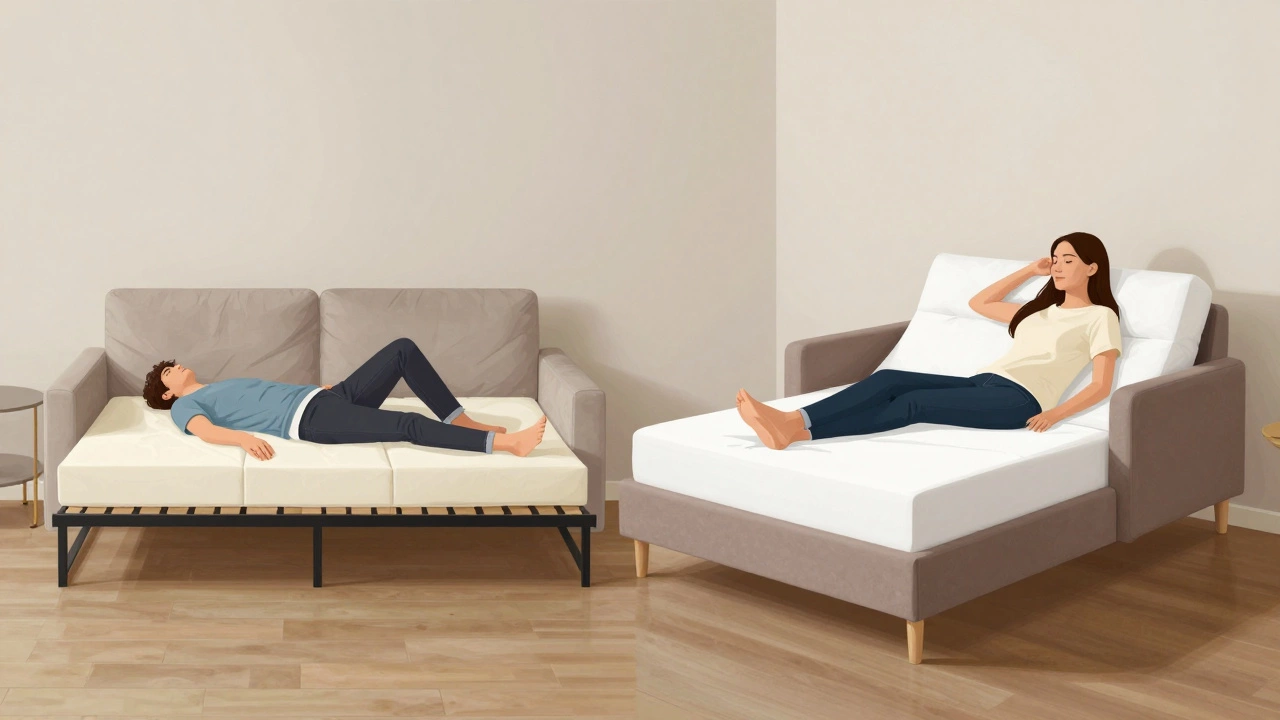
Can You Use a Sofa Bed as Your Main Couch?
Yes-if you pick the right one. People in small apartments, urban lofts, and studio homes do it every day. The key is matching the sofa bed to your lifestyle.If you sit on your couch for TV, reading, or working from home, you need a sofa bed with:
- Deep seating (at least 20 inches from front to back)
- Upholstery that resists sagging-top-grain leather or tightly woven performance fabric
- A firm but not stiff feel
Models like the Zinus Modern Studio or the Novogratz Brittany are designed for daily use. They’re not luxury, but they’re built to handle regular sitting without collapsing. One user in Portland reported using their Zinus as their main couch for over three years-no sagging, no squeaks, and still comfortable after hosting weekly guests.
What to Avoid at All Costs
Some sofa beds are designed for one thing: turning into a bed. That’s it. Avoid these red flags:- Memory foam mattresses under 4 inches-they sink too much and trap heat. You’ll sweat and sink.
- Plastic or thin metal frames-they bend under pressure. You’ll hear them creak every time you shift.
- Loose, overstuffed cushions-they look nice but collapse when you sit. They’re made for photos, not real life.
- Models labeled "guest sofa bed" or "occasional use"-that’s code for "don’t sit here every day."
Amazon Basics, Walmart’s Mainstays, and other budget brands often fall into this trap. They’re cheap upfront but cost more in frustration later.
Real People, Real Experiences
A 2024 survey by the Sleep Foundation tracked 1,200 people who used sofa beds as daily seating. The results were clear:- 78% of people with sofa beds under 5 inches of padding reported discomfort after 30 minutes of sitting.
- 92% of people with 6+ inch hybrid mattresses said they felt no difference between their sofa bed and their old couch.
- Those who bought higher-end models saved money long-term-only 12% replaced theirs within five years, compared to 67% of budget buyers.
One user in Chicago bought a $1,200 Flexsteel sofa bed after her cheap one broke after 14 months. She now uses it as her main living room couch. "I forget it even converts," she said. "It’s just… comfortable. Like a real couch."
Final Verdict: Are Sofa Beds Hard to Sit On?
It depends entirely on what you buy. A $300 sofa bed from a big-box store? Yeah, it’s going to feel like sitting on a cardboard box with a thin mattress on top. But a $800-$1,500 model with thick foam, a solid frame, and real support? It’s indistinguishable from a quality sofa.The trick isn’t avoiding sofa beds-it’s avoiding the bad ones. Look for thickness, density, and durability. Test it like you’re planning to live on it. Because if you’re in a small space, you probably will.
Don’t settle for "good enough." Your back-and your guests-will thank you.
Are sofa beds comfortable for everyday sitting?
Yes, but only if they’re built well. Sofa beds with 6-inch thick hybrid mattresses, high-density foam, and reinforced steel frames are designed for daily use. Budget models under $500 often lack the support and cushioning needed for long sitting sessions. Always test before buying.
What’s the best thickness for a sofa bed mattress?
For comfortable daily sitting, aim for at least 5 inches, but 6 to 8 inches is ideal. Anything thinner than 4 inches will feel flat and unsupportive, especially for heavier users. Look for mattresses with a combination of foam and pocketed coils for the best balance of comfort and durability.
Do sofa beds sag over time?
Yes, especially low-quality ones. Cheap foam compresses quickly, and thin metal frames bend under repeated use. High-density foam (1.8 lb/ft³ or higher) and reinforced steel frames resist sagging. Brands with warranties of 5+ years usually stand behind their durability.
Can you use a sofa bed if you have back pain?
It depends. A poorly designed sofa bed can make back pain worse by offering no lumbar support. Look for models with firm, flat seating and built-in lumbar support. Hybrid mattresses with coils provide better spinal alignment than all-foam designs. If you have chronic pain, test the sofa bed while sitting upright for at least 15 minutes before buying.
Is it better to get a sofa or a sofa bed?
If you rarely have guests and have space, a regular sofa is more comfortable and durable. But if you live in a small space, need occasional sleeping space, and want to save room, a high-quality sofa bed is a smart trade-off. The key is choosing one built for daily use-not just for occasional guests.