
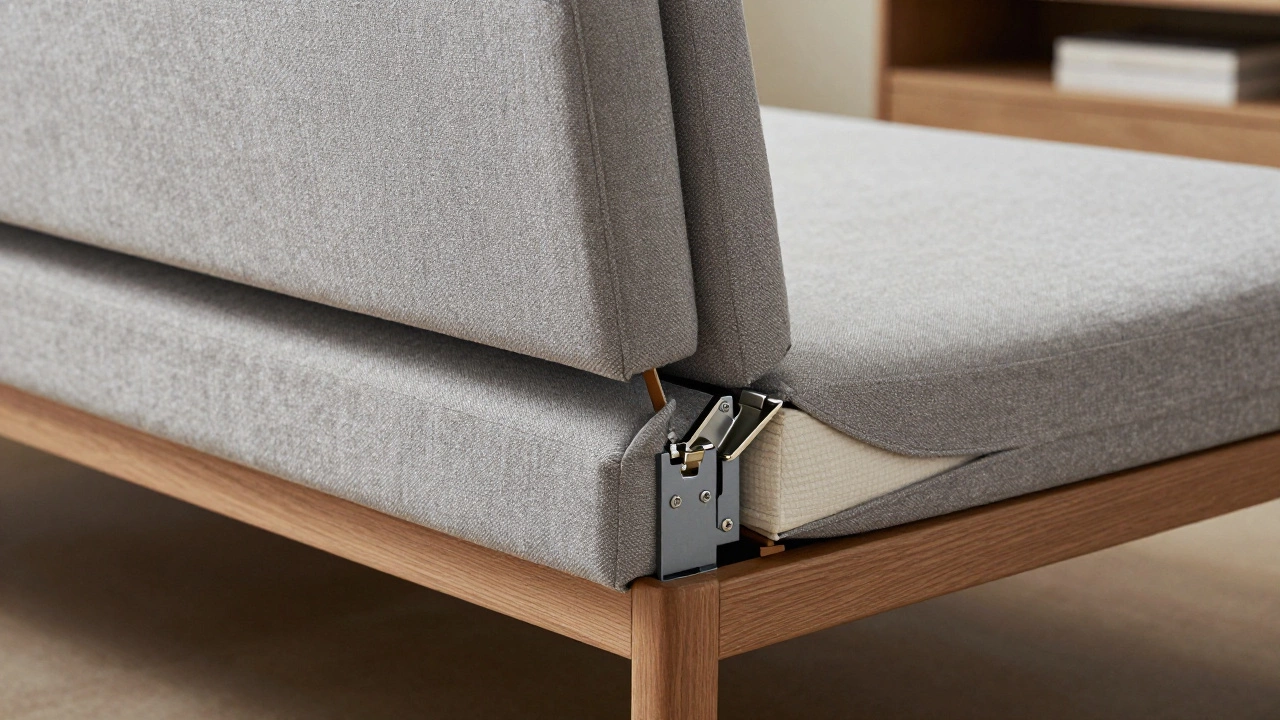
Most people make the mistake of assuming any extra-cushy mattress will work on their sofa bed, only to find it won’t fold back into the couch shape when they try to store it away. The hard truth is that you usually cannot exceed 10 centimetres of total height for standard folding mechanisms, though modern designs allow for significantly more. If you ignore this limit, your sofa might jam permanently open, strain the metal hinges until they snap, or simply leave a massive gap between the seat cushion and the sleeping surface.
The exact maximum thickness depends entirely on the internal mechanics of your Sofa Bed is a piece of furniture that transforms from a seating arrangement into a flat sleeping surface, typically using a folding frame mechanism. While a standard living room mattress sits around 30 to 40cm tall, sofa beds operate under much stricter constraints because they must physically compress inside the wooden or metal frame.
The Critical Role of Your Folding Mechanism
To determine safe limits, you first need to understand how your furniture moves. A generic "sofa bed" label covers two very different systems, each with distinct engineering tolerances for mattress bulk. If you mix them up, you risk ruining the conversion action forever.
Click-Clack Mechanisms
This type, often called a trundle or drop-down system in Europe, keeps the mattress permanently folded inside the sofa cushions. When you push down, the backrest folds flat to meet the seat. Because the mattress acts like an accordion here, there is absolutely no tolerance for excessive bulk. If the material is too thick, the frame cannot close tight enough to support the next layer of wood panels.
A Click-Clack Sofa Drop-Down Sofa relies on a hinged backrest that folds forward; this mechanism requires thin padding to avoid buckling during transformation. Manufacturers typically design these specifically for 5cm to 8cm mattresses. Exceeding 10cm usually prevents the frame from locking securely, meaning the whole unit feels wobbly when set up as a bed.
Pull-Out (Murphy-style or Standard) Mechanisms
If you pull a frame out from underneath the seating area, you have more breathing room. These sofas treat the mattress almost like a standard guest bed. You slide the metal rails out, unfold the legs, and place the mattress on top. Since the mattress isn't being squeezed inside the fabric cushions, the restriction comes from the height of the floor relative to the sofa frame.
Pull-Out Sleeper Sofa features a sliding metal frame hidden beneath the seat cushions that extends outward for sleeping allows for thicker mattresses, generally accommodating up to 20cm or even 25cm depending on the leg height. This setup is much friendlier to comfort seekers who demand the luxury of memory foam layers without the sacrifice of usability.
Sleep Quality vs. Frame Integrity
You might wonder why you can't just wedge a standard king-size hotel mattress onto a sleeper. The issue isn't just that the cover won't zip; it's physics. Every time you fold the frame, you are applying immense pressure to the core material of the mattress. Cheap fibre-fill layers can crush instantly under the weight of the closing lid, leaving you with a permanent dent right where the fold happened.
Furthermore, heavy innerspring units add significant weight. If your sofa frame is rated for light loads and you load it with a 30kg dense latex block, the plastic sliders might strip. Over years of daily folding, that stress concentration weakens the weld points on the steel tubing. This mechanical failure is rarely covered by warranties if you used non-approved bedding components.
| Type | Max Height | Risk of Failure | |
|---|---|---|---|
| Standard Click-Clack Backrest folds directly onto seat cushions | Fabric Upholstery | 5-8 cm | Jammed Latch |
| Leather Upholstery | 6-10 cm | Cushion Sagging | |
| Futon Style Wooden slat frame exposed when opened | Traditional Slat | 10-15 cm | Frame Overload |
| Murphy / Pull-Out | 20-30 cm | Ceiling Height Issues | |
Selecting Materials That Fit the Budget
When shopping for a replacement pad, you aren't limited to the original factory insert that came with the furniture. The market offers better density foams, but you must prioritize low-profile options. High-density Memory Foam a viscoelastic material that conforms to body shape under heat and pressure, popular for pressure relief is the go-to choice because manufacturers can produce sheets as thin as 4cm that still provide superior ergonomics compared to fluffy fibre fill.
However, do not overlook the benefits of Latex. Natural Latex Foam derived from rubber tree sap, offering high resilience and breathability compared to synthetic foams is denser than memory foam, so 5cm of latex often feels supportive enough for a 7cm pillow-top mattress. This density holds up better against the friction of repeated folding.
Beware of pocket springs. While excellent for standalone beds, these bouncy coils usually require deep quilting to prevent them from poking through the casing. Most sofa-specific innerspring models come pre-made to exact specifications, making customization nearly impossible unless you know exactly how to cut and stitch the ticking yourself.
Troubleshooting Compatibility Issues
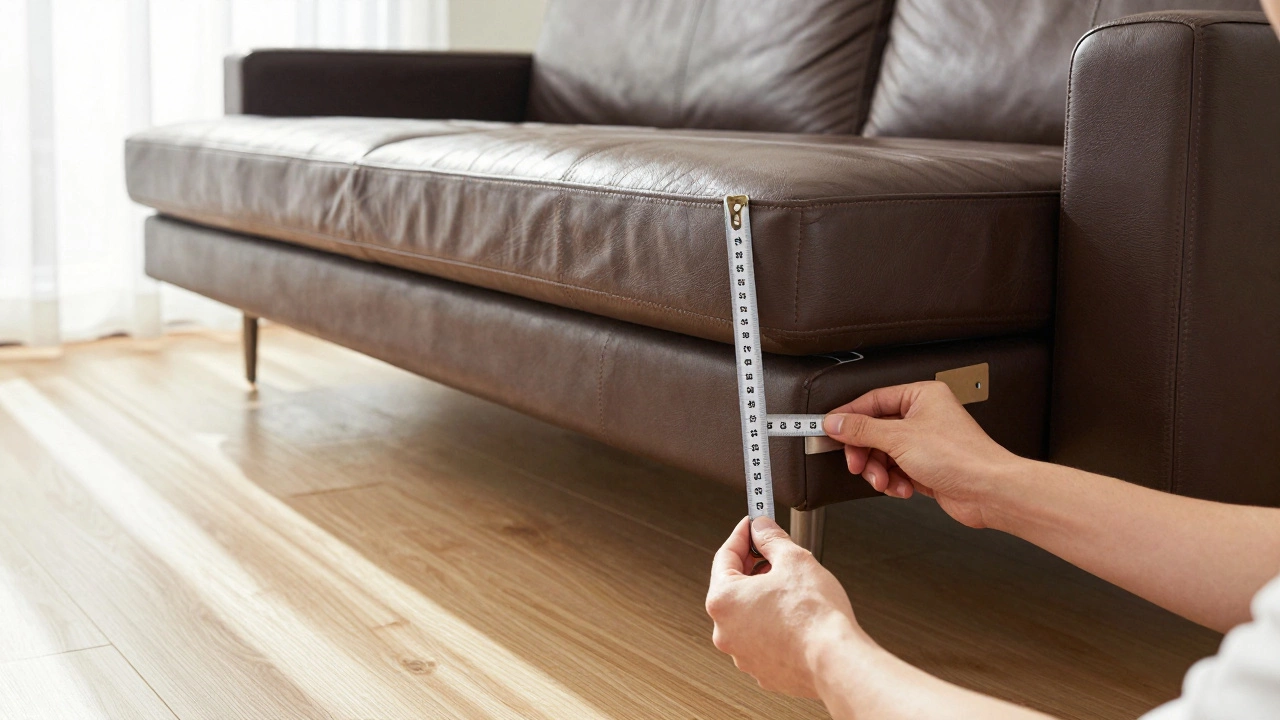
Before you buy online, measure your own unit precisely. Don't rely on the sticker in the drawer; wear and tear changes the available space over five or ten years. First, flatten the sofa bed completely. Place a ruler from the base platform up to the bottom of the folded-back cushion or lid.
If you are replacing an existing mattress, remove the old one first. Sometimes the original has compressed significantly over a decade, creating false clearance measurements. To test a new purchase, lay it on the bed frame and attempt to close the lid manually. If it meets resistance before fully shutting, stop immediately. Forcing it damages the locking tabs. Instead, opt for a removable cover design or slightly thinner gauge.
A simple workaround involves using a Mattress Topper an additional soft layer placed over a mattress to increase comfort without changing the overall profile dimensions rather than replacing the main base. A 3cm gel-infused layer adds plushness without altering the height constraint. It slides easily under fitted sheets and doesn't interfere with the folding mechanics.

Long-Term Durability Considerations
Your choice of thickness affects longevity beyond just functionality. Thinner mattresses tend to age faster because the material is less substantial. A 5cm foam block loses its bounce quicker than a 15cm one would in a normal environment. However, since sofa beds suffer more mechanical stress than regular beds, choosing the thickest allowable option often reduces lifespan.
You need to balance the two extremes. Going too thin compromises comfort and health. Spine alignment fails without adequate depth to absorb shock. Conversely, going too thick compromises the furniture hardware. The sweet spot for most households-where guests sleep once or twice a month-is roughly 10cm to 12cm of firm polyurethane foam. It offers the right blend of support and mechanical safety for the average apartment setup.
Alternative Comfort Solutions
If you find yourself stuck with an impossibly thin mattress due to a cramped mechanism, consider upgrading the entire unit. Modern modular designs from leading brands in Australia and globally now include hybrid frames that accommodate Euro-standard boxesprings. These eliminate the folding compromise entirely, effectively giving you a proper bed that tucks away neatly.
If replacing the whole sofa isn't an option, invest in high-thread-count bedding. Cotton sateen or linen duvet sets soften the feel of a compact sleep surface significantly. Guests notice the quality of linens far more than they notice whether the mattress is 8cm versus 10cm, especially if the mattress itself supports the spine correctly.
Can I cut a larger mattress to fit my sofa bed?
You technically can, but it destroys the internal support. Cutting foam ruins the edge guards and exposes insulation fibres. If you must resize, order a custom-cut foam sheet specifically designed for your sofa's width and length to ensure structural integrity remains intact.
Does the mattress depth affect the warranty?
Yes, manufacturers void the warranty on the frame mechanism if non-compliant bedding causes damage. Always check your manual for 'maximum allowable bedding height' before installing a third-party mattress.
Is it okay to flip the mattress every night?
Flipping is unnecessary for one-sided mattresses like memory foam. However, rotating it 180 degrees helps distribute wear from the folding crease evenly across the surface over time.
Why does my sofa bed mattress smell when opened?
Odours often accumulate because the trapped air inside the folded state gets warm and stagnant. Ensuring the mattress is fully unrolled and aired out for an hour before use helps mitigate mildew risks.
Should I put a topper on top of my mattress?
Only if the topper is removable. If it is bulky, it might get caught in the folding crease. Opt for thin quilted pads (under 3cm) that do not alter the folding radius of the mechanism.