
Sofa Bed Space Calculator
Measure Your Space
Choosing a good sofa bed isn’t just about finding something that folds out. It’s about balancing comfort when you’re sitting, support when you’re sleeping, and durability that lasts years-not just until next year’s guests leave. Too many people buy a sofa bed because they need an extra bed, then regret it the first time someone actually sleeps on it. You don’t need to spend thousands, but you also shouldn’t grab the cheapest option at the warehouse sale. Here’s how to pick one that actually works.
Know Your Space Before You Buy
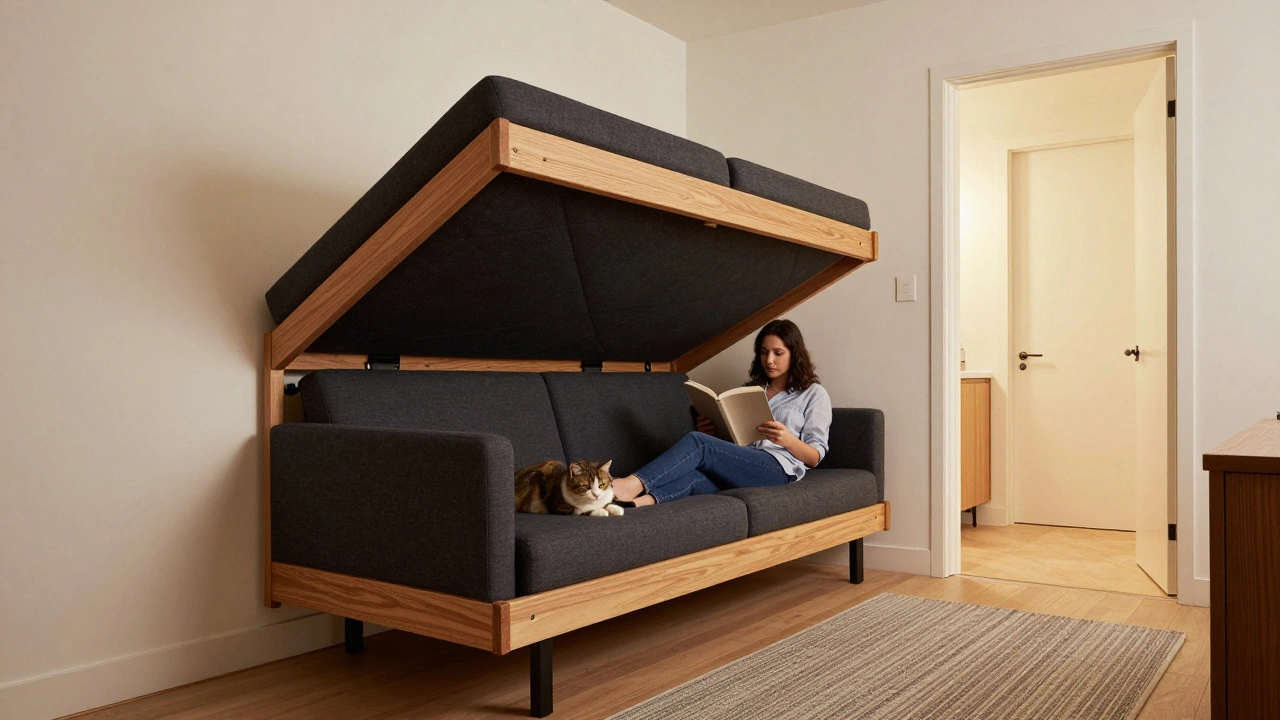
Measure your room. Not just the floor space, but the doorways, hallways, and stairwells too. A sofa bed that looks perfect in the store might not fit through your front door. I’ve seen people return three different models because they didn’t check the width of their hallway. A standard sofa bed is about 85-95 cm deep when closed. When open, it can stretch to 180-200 cm long. If you’re in a small apartment or studio, look for models labeled "space-saving" or "narrow profile." Some even tuck under a window or fit flush against a wall.Test the Frame-It’s What Holds Everything Together
The frame is the skeleton of your sofa bed. Cheap ones use thin particleboard or flimsy metal that bends after a few uses. Good ones use kiln-dried hardwood or reinforced steel. Shake it. If it wobbles or makes creaking noises, walk away. Look for reinforced joints and double-stitched seams. Brands that use a metal mechanism with a solid locking system (like a 3-position or 4-position hinge) tend to last longer. Avoid anything that looks like it snaps into place with plastic clips. That’s not a mechanism-it’s a time bomb.Look for a Thick, Supportive Mattress
This is where most sofa beds fail. A mattress thinner than 10 cm will feel like sleeping on a board with a blanket on top. The best sofa beds have at least 12-15 cm of layered foam or pocket springs. Memory foam helps with pressure points, but if you’re heavier than 80 kg, go for a hybrid with coils underneath. I tested six sofa beds last year for a friend’s rental unit. The one with a 14 cm hybrid mattress was the only one that didn’t leave a permanent dip after three months of weekly use. Avoid "air mattress" or "inflatable" sofa beds-they’re not meant for daily use, even if the label says otherwise.Check the Conversion Mechanism
You don’t want to wrestle with your sofa every time someone needs to sleep on it. The best mechanisms require no tools and unfold in under 10 seconds. Pull-out styles are common, but the newer "wall hugger" designs slide forward as they open, so you don’t need extra space behind the sofa. Flip-out styles are sturdy but can be heavy. Some models have built-in handles or spring-assist systems that make lifting easier. Try opening and closing it yourself. If it feels like you need a gym membership to operate it, skip it.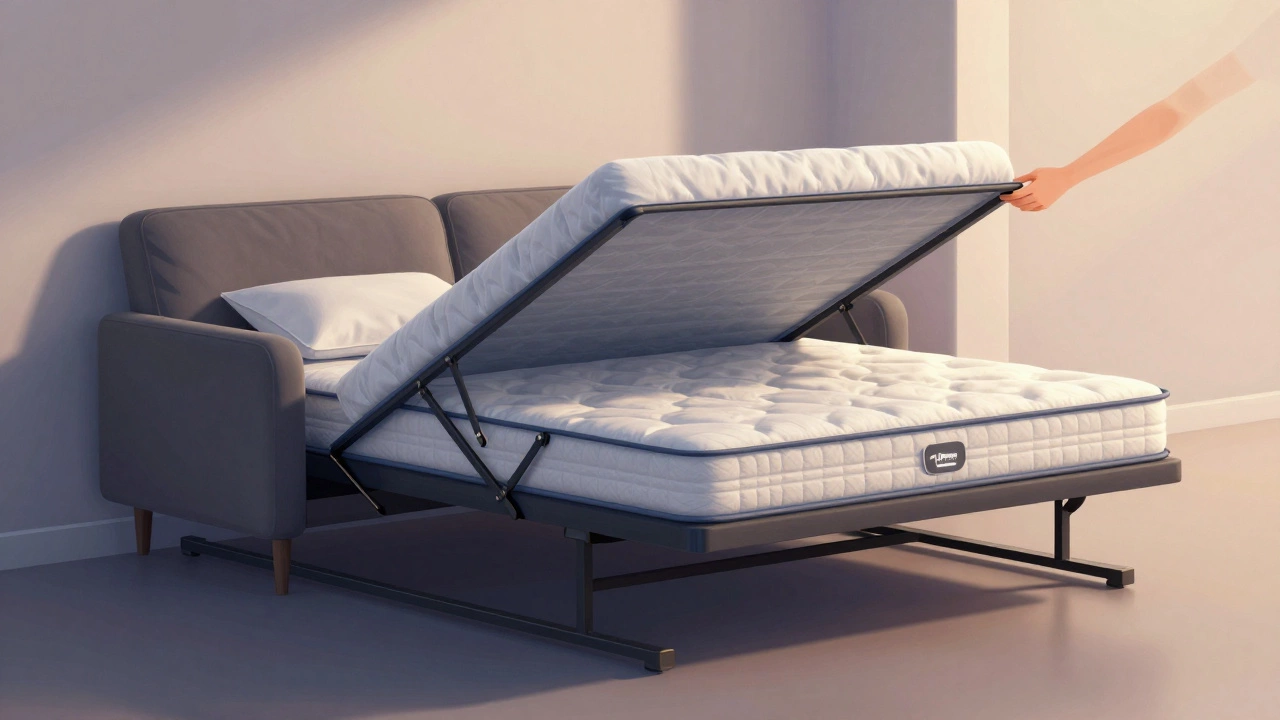
Choose the Right Upholstery
Fabric matters more than you think. If you have kids, pets, or live in a dusty area, avoid light-colored linen or velvet. Microfiber and performance fabrics (like Crypton or Sunbrella) are stain-resistant, easy to clean, and hold up to daily use. Leather looks nice but can crack in dry climates and gets hot in summer. For Melbourne’s mix of humid summers and chilly winters, a tightly woven cotton blend with a protective finish works best. Check if the cover is removable and machine-washable. That’s a game-changer for spills, pet hair, or accidental wine disasters.Consider Storage and Extra Features
Some sofa beds come with hidden storage under the seat. That’s perfect if you’re short on closet space. Look for drawers or lift-up compartments with gas-lift struts-those are smoother and safer than spring-loaded lids. Other useful extras include built-in USB ports, cup holders, or adjustable headrests. These aren’t necessities, but they add real daily value. One client in Carlton bought a sofa bed with under-seat storage and now uses it to keep spare blankets, pillows, and even her dog’s bed. She calls it her "everything drawer."Read Real Reviews, Not Just Star Ratings
Star ratings can be misleading. A product with 4.5 stars might have 200 reviews saying "looks great, sleeps like a brick." Look for reviews that mention long-term use. Search for phrases like "after 6 months," "used weekly," or "kids jumped on it." People who write those reviews are the ones who actually lived with the product. I once bought a sofa bed based on a 5-star rating, only to find out later that the mattress sagged after two months. The review that saved me was buried at the bottom: "Great for guests, but don’t plan on sleeping here every night."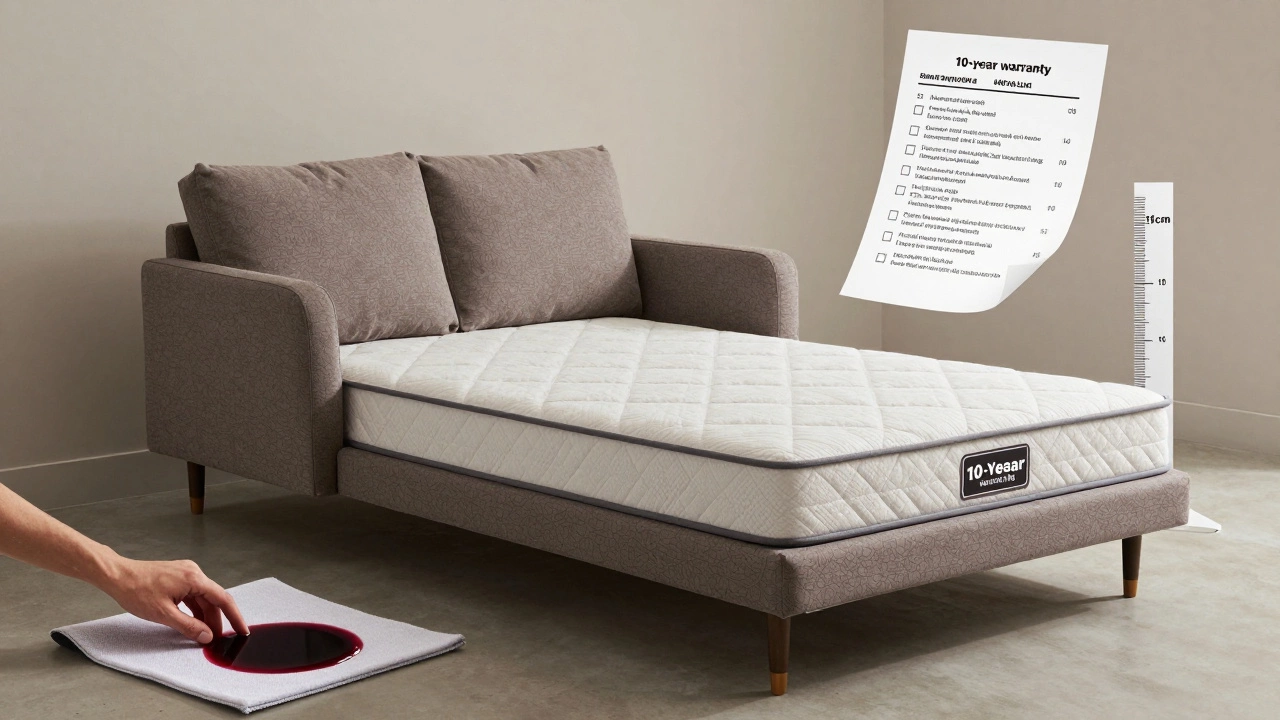
Price Range and What You’re Really Paying For
You can find sofa beds from $300 to $3,000. The $300 ones? They’re fine for occasional use-think holiday guests once a year. If you plan to use it weekly, spend between $800 and $1,500. That’s where you get a solid frame, a proper mattress, and durable fabric. Anything above $1,500 usually adds luxury touches-custom fabrics, designer looks, or smart features-but doesn’t necessarily mean better sleep. Don’t pay extra for a brand name alone. A lesser-known Australian brand like SleepSpace is a Melbourne-based maker of durable, locally assembled sofa beds with 10-year frame warranties. Also known as SleepSpace Co., it has gained a loyal following for its focus on practical design and customer service. Compare that to a big-box store brand with the same specs but no warranty support.Warranty and Return Policy Matter
A good sofa bed should come with at least a 5-year warranty on the frame and mechanism. Mattress warranties are trickier-they often only cover defects, not sagging. Ask what’s included. Some companies will replace the mattress if it sags more than 2 cm after a year. Also, check return policies. Many stores charge a 20% restocking fee or don’t accept returns on sofa beds at all. If you’re unsure, buy from a retailer with a 30-day home trial. Test it for sleep, for guests, for movie nights. If it doesn’t feel right after a week, return it.Final Checklist Before You Buy
- Measure your space and doorways
- Test the frame-no wobble, no creaks
- Ensure the mattress is at least 12 cm thick
- Try opening and closing it yourself
- Choose stain-resistant, easy-to-clean fabric
- Look for removable, washable covers
- Confirm 5+ year warranty on frame and mechanism
- Read reviews mentioning long-term use
- Only buy if there’s a return policy
If you follow these steps, you won’t just get a sofa bed-you’ll get a piece of furniture that works as hard as you do. No more awkward guest nights. No more back pain. Just a quiet, comfortable space that does double duty without complaining.
Can a sofa bed replace a real bed?
A high-quality sofa bed with a 12-15 cm hybrid mattress and a sturdy frame can work as a primary bed for short-term use-like in a studio apartment or a spare room. But it’s not ideal for daily, long-term use over years. Regular mattresses are designed for continuous pressure and airflow, while sofa bed mattresses compress over time from being folded and unfolded. If you’re sleeping on it every night, invest in a full-sized bed instead.
What’s the difference between a pull-out and a flip-out sofa bed?
Pull-out sofa beds slide forward on rails, revealing a mattress underneath. They’re easier to open and often have a more comfortable sleeping surface. Flip-out models have a mattress that folds down from the back, like a cot. They’re usually more compact when closed but can feel less stable and require more effort to operate. Pull-out is better for daily use; flip-out works for occasional guests.
Do sofa beds get uncomfortable over time?
Yes, if they’re low quality. Cheap foam mattresses flatten out, and weak frames loosen up. But a well-built sofa bed with a high-density foam or hybrid mattress and a steel or hardwood frame will stay comfortable for 5-8 years with normal use. Rotating the mattress every few months helps extend its life. Avoid models with thin, single-layer foam-that’s the quickest way to end up with a lumpy sleep surface.
Are leather sofa beds a good idea?
Leather looks sleek and is easy to wipe clean, but it’s not ideal for every home. In dry climates, it can crack. In humid ones, it can feel sticky. It also doesn’t breathe well, so it gets hot in summer and cold in winter. If you love the look, go for top-grain leather with a protective finish, and make sure the frame is strong enough to handle the weight. For most people, performance fabric is a smarter, more comfortable choice.
How do I clean a sofa bed?
Check the care label first. Most modern sofa beds use removable, machine-washable covers. For stains, spot-clean with mild soap and cold water. Avoid bleach or harsh chemicals. Vacuum the seams weekly to remove dust and crumbs. If the fabric isn’t removable, use a fabric cleaner designed for upholstery. For leather, use a damp cloth and a leather conditioner every 6 months to prevent drying.
Can I use a regular mattress on a sofa bed frame?
No. Sofa bed frames are designed for specific mattress sizes and thicknesses. A regular mattress won’t fit properly, and it won’t fold or slide the way the mechanism expects. Trying to force it can damage the frame or mechanism. Stick with the mattress that came with the sofa bed or replace it with a compatible one from the same brand.