
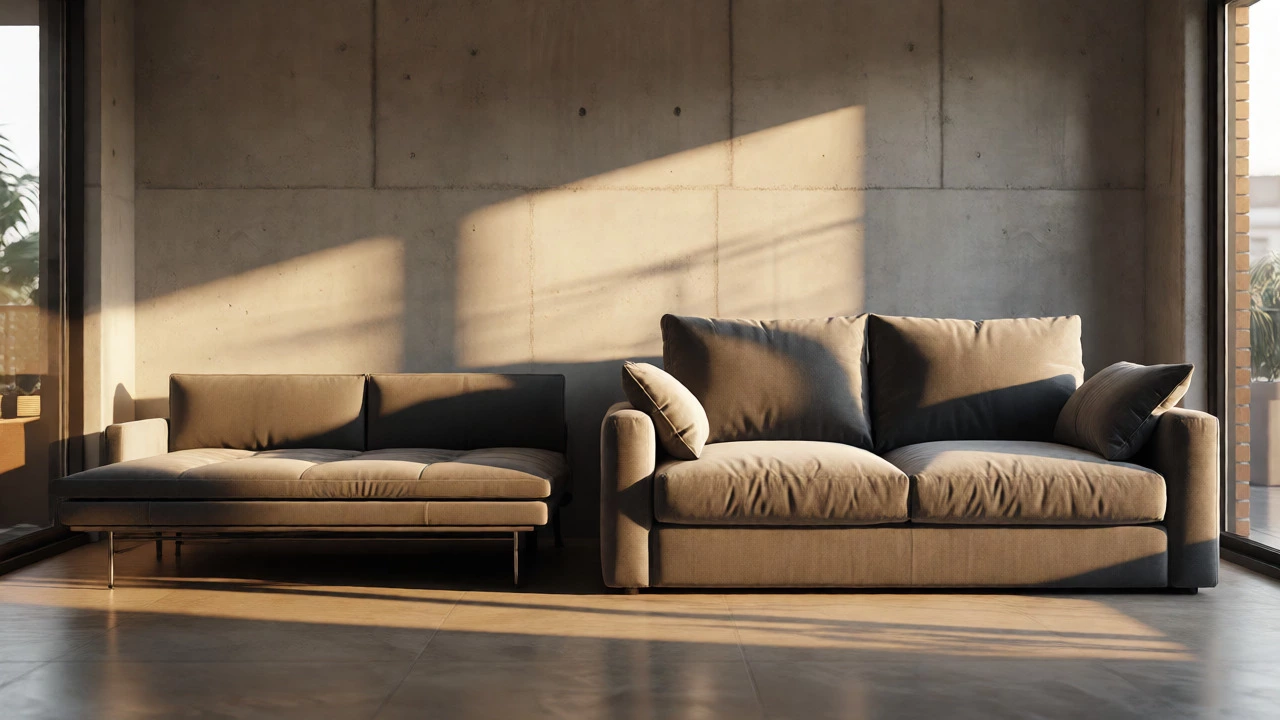
Sofa Bed vs. Sofa Sleeper Decision Tool
Answer these questions to find out which convertible furniture piece fits your lifestyle best.
You’re standing in a furniture showroom, staring at two identical-looking couches. One tag says "Sofa Bed is a piece of furniture that converts into a sleeping surface." The other says "Sofa Sleeper is a sofa with a hidden mattress mechanism." Your brain short-circuits. Aren’t they the same thing? If you buy the wrong one, you might end up with a lumpy night on the floor or a couch that won’t fold back up.
Here’s the truth: while people use these terms interchangeably, manufacturers and interior designers know there are distinct differences. It’s not just about semantics; it’s about mechanics, comfort, and how often you plan to sleep on your living room furniture. Getting this right saves you from buyer’s remorse and ensures your space works as hard as you do.
The Core Mechanical Difference
The biggest distinction lies in what actually happens when you pull the handle. A sofa bed typically refers to a piece where the seat cushions themselves become part of the sleeping surface, or where a thin mattress is stored within the frame. Think of the classic futon style or older folding designs. When you open it, you’re essentially unfolding a platform. The structural integrity relies heavily on the frame and the fabric covering the cushions.
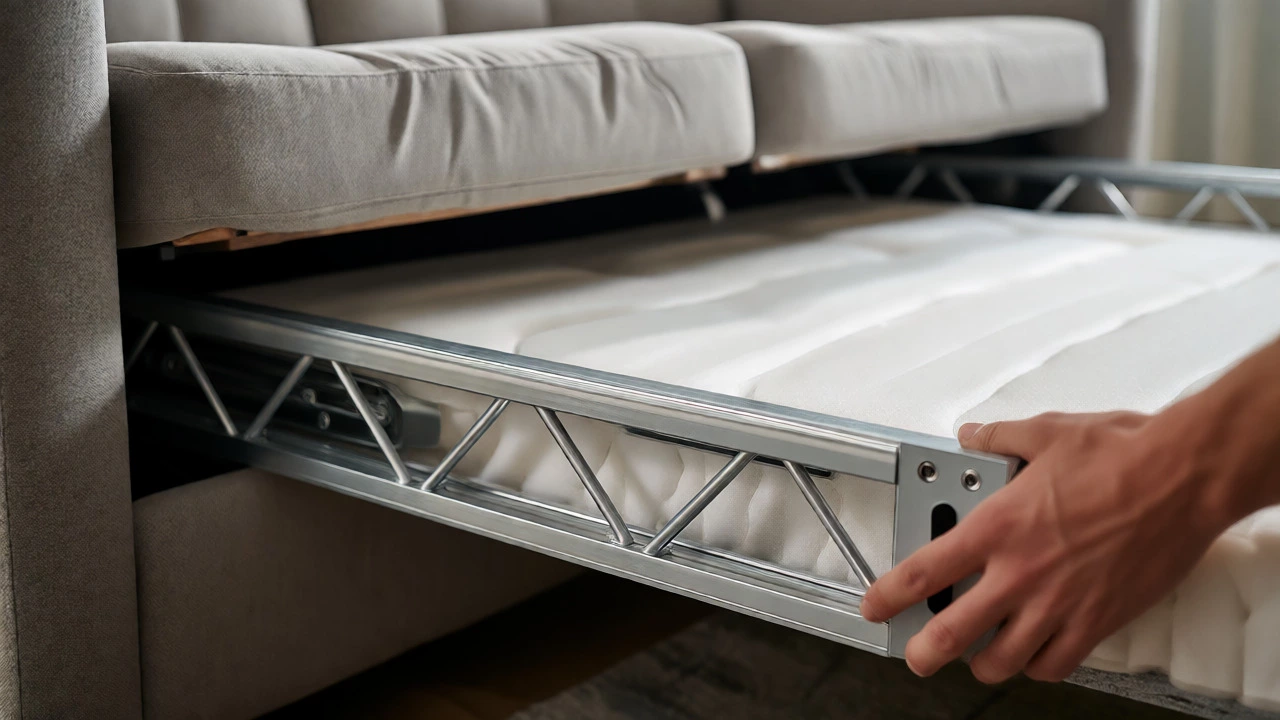
A sofa sleeper is defined by its internal pull-out mechanism that reveals a dedicated mattress. This is usually a metal truss system that slides out from under the seat cushions. The key here is the separation between day use and night use. During the day, you sit on thick, comfortable foam cushions. At night, you pull out a real mattress-often memory foam or innerspring-that sits on top of the truss. The seat cushions stay put (or get removed) so you aren’t sleeping on them.
| Feature | Sofa Bed | Sofa Sleeper |
|---|---|---|
| Mechanism | Folding frame or drop-down seat | Pull-out truss system |
| Mattress Type | Thin pad or cushion-based | Dedicated innerspring or foam |
| Daytime Comfort | Can be firm or uneven | High-quality standard seating |
| Nighttime Comfort | Often less supportive | Comparable to a spare bedroom bed |
| Setup Time | Seconds (fold/unfold) | Minutes (pull out + remove pillows) |
Comfort: Where You Sit vs. Where You Sleep
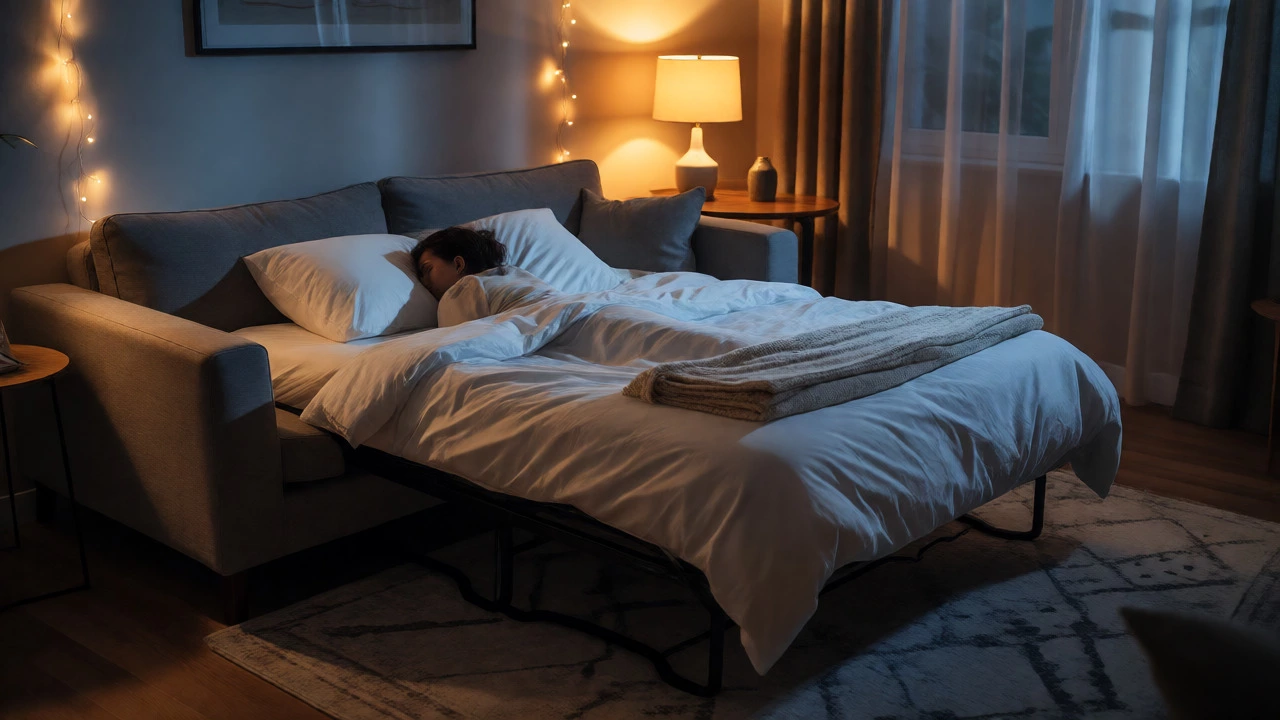
If you have guests staying for more than one night, comfort isn’t optional-it’s mandatory. This is where the two categories diverge sharply. A high-end sofa sleeper is engineered to mimic a standalone bed. Modern versions, like those using Queen-size mechanisms with pocketed coil support, offer proper spinal alignment. You don’t feel the metal bars digging into your back because the mattress is thick enough (usually 4-6 inches) to buffer the frame.
In contrast, traditional sofa beds often compromise. Because the mattress has to fit inside the sofa’s footprint, it’s frequently thinner. If you choose a model where the seat cushions form the bed, you’ll likely feel the seams where the cushions meet. For someone with back issues, this can be a dealbreaker. However, newer hybrid models are blurring this line, offering "lift-up" mechanisms that raise the entire seat base to reveal a thicker mattress, bridging the gap between easy setup and good sleep.
Frequency of Use: Daily vs. Occasional
Ask yourself: How often will I convert this furniture? If you live in a studio apartment and your sofa is your bed every single night, a heavy-duty sofa sleeper is worth the investment. Why? Because daily wear and tear on a cheap mechanism leads to squeaks and broken hinges quickly. Look for steel frames over wooden ones if you’re converting it 300+ times a year.
On the flip side, if you only host guests twice a year, a simpler sofa bed might suffice. These are often lighter and easier to move. You don’t need a luxury hotel-grade mattress if it’s only used for emergency naps during a power outage or a friend crashing after a late night out. In these cases, the ease of conversion matters more than orthopedic support.
Size and Space Constraints
Both options require clearance, but different kinds. A sofa sleeper needs significant linear space in front of it to fully extend. If you place it against a wall, ensure you have at least 15-20 cm of clearance behind it for the backrest to tilt, plus the full length of the mattress extended forward. Measure your room before buying. A Queen sleeper extends nearly 2 meters, which can block pathways in smaller Melbourne apartments.
Sofa beds, particularly the folding variety, often have a smaller footprint when closed. Some corner sofa beds rotate rather than slide, making them ideal for L-shaped rooms. They maximize floor space when not in use, acting purely as seating. But remember: when opened, some sofa beds create a "dead zone" where coffee tables must be moved entirely, whereas sleepers usually just require clearing the area directly in front.
Style and Aesthetics
Gone are the days when all convertible furniture looked institutional. Today, you can find sleek, mid-century modern sofas that hide their secrets well. Sofa sleepers tend to look bulkier because they house the mechanical parts. You might notice a slightly higher armrest or a deeper seat to accommodate the folded mattress underneath.
Sofa beds can sometimes look more streamlined because they lack the complex internal hardware. However, the trade-off is often visible stitching or zippers on the upholstery. If aesthetics are your priority, test the mechanism in-store. Does the fabric bunch up awkwardly when opened? Does the exposed frame look ugly? A beautiful sofa that looks terrible when converted defeats the purpose of dual-function furniture.
Price and Longevity
Expect to pay a premium for quality sofa sleepers. The complex metal mechanisms, high-density foam mattresses, and durable fabrics drive costs up. A decent queen sleeper can range from $800 to $2,500 AUD depending on the brand and materials. Cheap sleepers often fail within three years-the springs lose tension, or the wheels break off the truss.
Sofa beds vary widely. Simple futons are affordable ($200-$500), but they wear out fast. High-end leather sofa beds with robust folding mechanisms can also hit the $1,500 mark. Check the warranty. A reputable manufacturer will cover the mechanism for at least 5-10 years. If they don’t, walk away. Repairing a broken sleeper mechanism is often more expensive than buying a new unit.
Which One Should You Buy?
Choose a sofa sleeper if you prioritize sleep quality and have regular overnight guests. It’s the best choice for dedicated guest rooms or small homes where the sofa doubles as a primary bed. Look for memory foam mattresses and steel mechanisms.
Opt for a sofa bed if you need flexible seating that occasionally transforms. It’s perfect for home offices, kids’ playrooms, or occasional hosting. Prioritize ease of conversion and compact storage over luxurious sleep surfaces.
Is a sofa sleeper more comfortable than a sofa bed?
Generally, yes. Sofa sleepers feature dedicated mattresses that provide better support and separation from the frame's structure. Sofa beds often rely on the seat cushions or thinner pads, which can lead to discomfort and seam awareness during sleep.
Can I use a sofa bed as my main bed?
You can, but it depends on the quality. Low-end sofa beds may sag or cause back pain over time due to thinner support layers. High-end convertible sofas with reinforced frames and thick foam can serve as long-term primary beds, though they rarely match the comfort of a standalone bed.
How much space do I need for a sofa sleeper?
Measure the extended length of the mattress plus 10-15cm for clearance. Also, ensure there is space behind the sofa for the backrest to recline slightly. For a Queen sleeper, you typically need about 2.1 meters of clear floor space in front of the sofa.
Are sofa beds hard to clean?
It varies. Removable covers make cleaning easy, but many mechanisms trap dust and crumbs in the folds. Vacuuming the crevices regularly is essential. Leather options are easier to wipe down but show scratches more easily.
What is the lifespan of a sofa sleeper mechanism?
A high-quality steel mechanism can last 7-10 years with regular use. Cheaper plastic or wood components may degrade in 2-3 years, especially if converted daily. Regular lubrication of moving parts can extend this lifespan.