
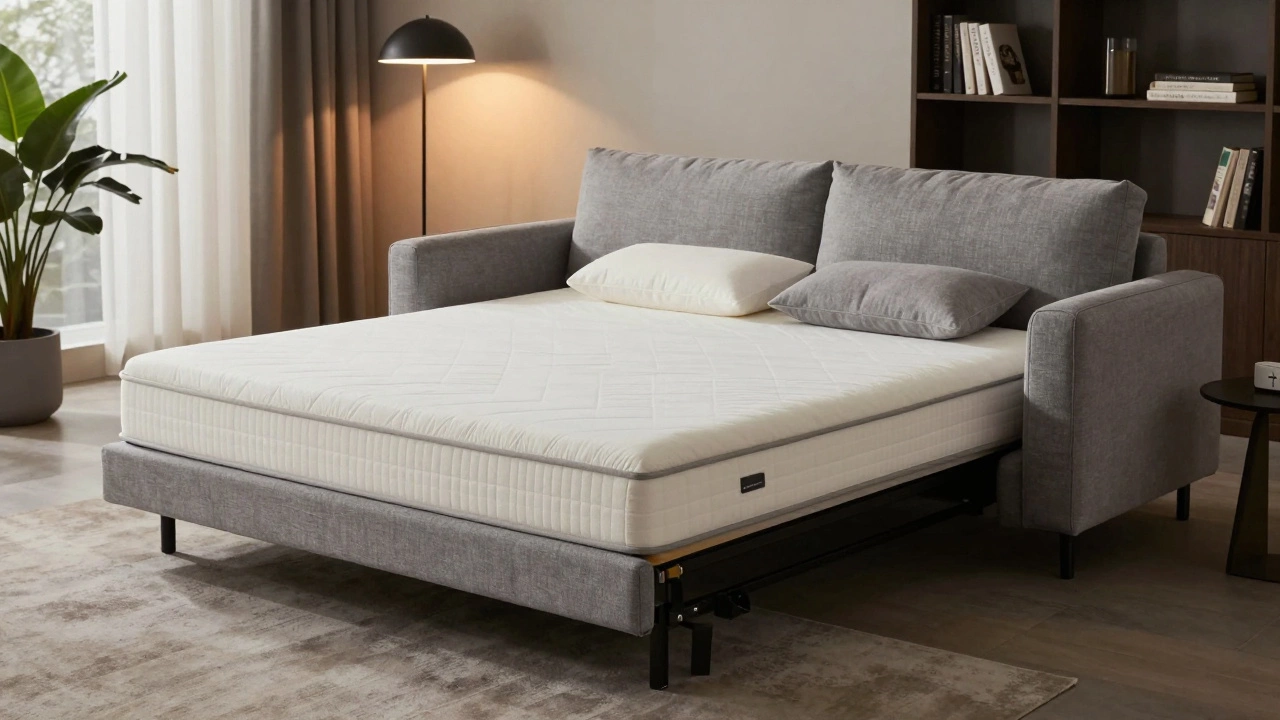
People often use the terms sleeper sofa and sofa bed like they mean the same thing. But if you’ve ever tried to pull one out and ended up tangled in springs or stuck with a lumpy mattress, you know they’re not interchangeable. There’s a real difference - not just in name, but in how they’re built, how they work, and what kind of sleep you’ll actually get on them.
It’s All About the Mechanism
The biggest difference between a sleeper sofa and a sofa bed comes down to how the sleeping surface is created. A sleeper sofa is a full-size sofa with a hidden, pull-out mattress that unfolds from the frame, usually with a metal or wood mechanism underneath. The mattress stays attached to the frame and slides out smoothly, often with a slight lift or click as it locks into place.
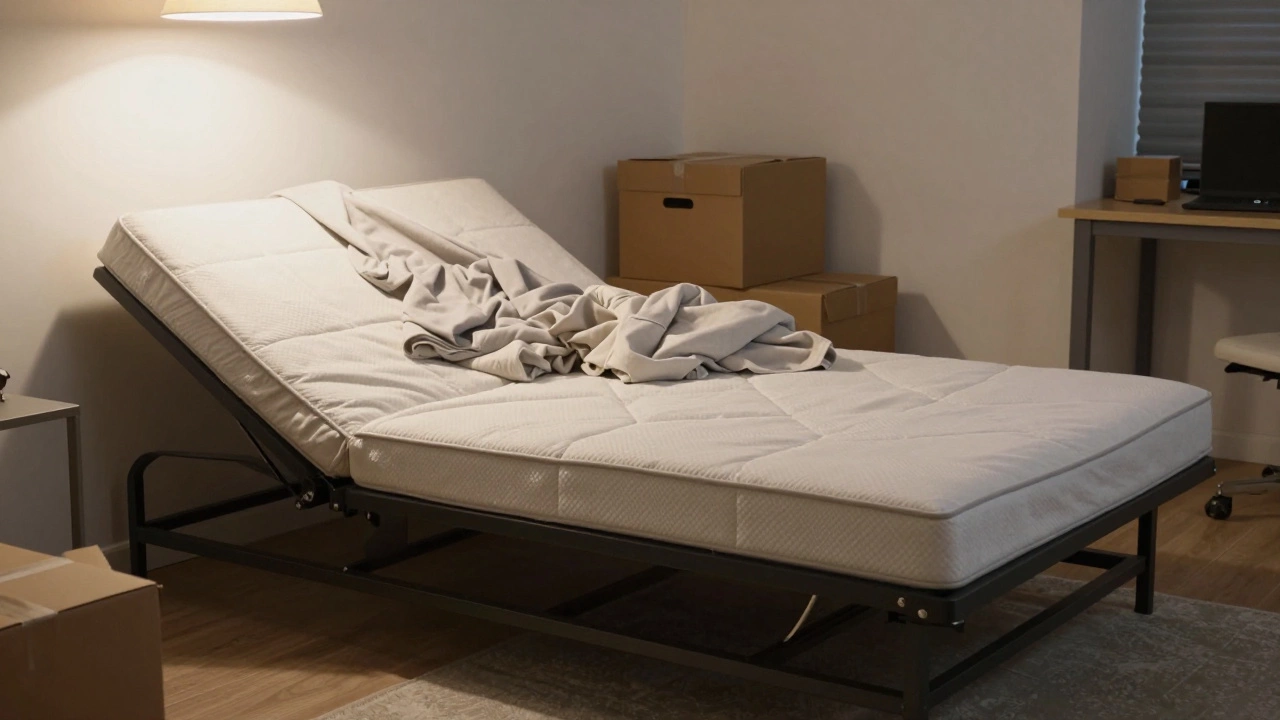
On the other hand, a sofa bed is a piece of furniture where the seat cushions are removed or folded down to reveal a thinner mattress that’s already built into the frame. Think of it like flipping the whole seating area down - no pulling, no sliding, just lowering the backrest and unfolding the base.
That might sound minor, but it changes everything. A sleeper sofa uses a dedicated mattress that’s usually 6 to 8 inches thick - similar to a twin or full-size mattress you’d find in a guest room. A sofa bed? It’s often only 4 to 5 inches thick, and sometimes even less. That’s the difference between sleeping like you’re on a real bed versus sleeping like you’re on a couch with a blanket on top.
Comfort and Support Aren’t the Same
If you’ve ever woken up with a sore back after using a sofa bed, you’re not alone. Most sofa beds use a thin, foam-based mattress that’s designed for occasional use - think weekend guests or emergency naps. It’s not built for long-term comfort. The padding is minimal, and the support structure underneath is often just a basic metal grid or wooden slats.
A quality sleeper sofa, though, is built with comfort in mind. High-end models use innerspring mattresses or memory foam layers that are specifically engineered to stay firm and supportive when pulled out. Some even have zoned support - firmer under the hips, softer under the shoulders - just like a real bed. Brands like IKEA, Ashley, and La-Z-Boy now offer sleeper sofas with 8-inch thick mattresses that rival standard twin beds.
And here’s the kicker: because the mattress in a sleeper sofa is separate from the seating cushion, you can choose a higher-quality one. Some people even buy aftermarket mattresses to upgrade their sleeper sofa. You can’t do that with a sofa bed - the mattress is permanently attached and usually not replaceable.
Design and Aesthetics Matter Too
When you’re buying furniture for your living room, you don’t want something that looks like a hospital cot. A well-made sleeper sofa blends seamlessly into your space. The frame is usually more substantial, with upholstered arms and legs that match the rest of the sofa. When it’s not in use, it looks like a regular sofa - no visible hinges, no awkward bulges.
Sofa beds, on the other hand, often have visible mechanisms. You’ll see metal bars, exposed springs, or thick seams where the backrest folds down. That’s not always a dealbreaker - modern designs have improved - but if you care about clean lines and minimalism, a sleeper sofa is the better choice.
Also, sleeper sofas tend to come in more fabric and color options. You’ll find them in velvet, linen, microfiber, and even leather. Sofa beds? You’re mostly stuck with basic cotton blends or synthetic materials that hold up to daily folding and unfolding.
Space and Functionality
If you’re tight on space - like in a studio apartment or a small guest room - both options save room. But here’s the catch: a sofa bed doesn’t always give you more usable floor space.
With a sleeper sofa, you pull the mattress out from the front. That means you need about 3 to 4 feet of clear space in front of the sofa to fully extend it. A sofa bed, though, unfolds downward. That means you don’t need extra room in front - but you do need enough ceiling height. If you have low ceilings or a hanging lamp right above the sofa, you might hit your head when you lower the bed.
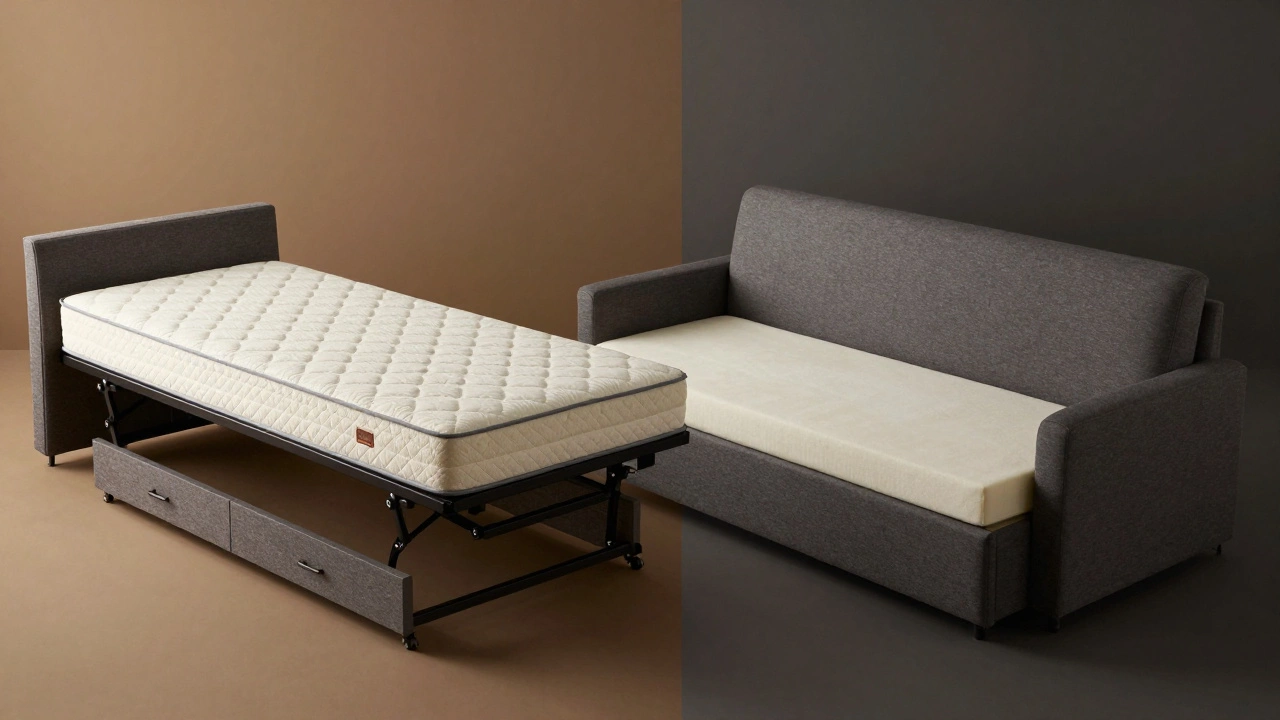
Also, sleeper sofas usually have storage underneath the seat. Many models include drawers or compartments where you can stash linens, blankets, or even seasonal clothes. Sofa beds? Almost never. The entire base is taken up by the mattress mechanism, leaving zero extra storage.
Price and Longevity
You might think a sofa bed is cheaper - and sometimes it is. But the cheaper ones are also the ones that break after a year or two. The mechanisms are simple, made of thin metal, and don’t handle frequent use well. If you’re using it every weekend, you’ll hear creaking, feel wobbling, and eventually, the mattress won’t stay flat.
A good sleeper sofa costs more upfront - usually between $800 and $1,500 - but it lasts longer. The frame is sturdier, the mechanism is reinforced, and the mattress is designed to last five years or more with regular use. Some manufacturers even offer 10-year warranties on the frame and mechanism. That’s not something you’ll find on a $400 sofa bed.
And if you plan to use it regularly - not just for guests - the sleeper sofa pays for itself. You’re not replacing it every two years. You’re getting a long-term solution.
Which One Should You Choose?
Here’s the quick guide:
- Choose a sleeper sofa if: You want real bed comfort, plan to use it weekly, care about looks, need storage, or want something that lasts.
- Choose a sofa bed if: You’re on a tight budget, only need it for occasional overnight guests, have very limited space, or don’t mind a less comfortable sleep.
Most people who buy a sofa bed end up regretting it within six months. They think they’re saving money - but they’re just saving a few hundred dollars now to spend more later on a new mattress, a new frame, or a new piece of furniture altogether.
If you’re serious about having a guest room in your living space, go for the sleeper sofa. It’s not just a sofa with a bed inside - it’s a piece of furniture built to do two jobs well.
Are sleeper sofas and sofa beds the same thing?
No, they’re not the same. A sleeper sofa has a pull-out mattress that unfolds from the bottom of the frame, usually with a thick, supportive mattress similar to a regular bed. A sofa bed folds down the entire seat and back to reveal a thinner, built-in mattress. The mechanism, comfort level, and durability are very different.
Which one is more comfortable for sleeping?
A sleeper sofa is almost always more comfortable. It uses a thicker mattress - often 6 to 8 inches - with proper support layers like springs or memory foam. Sofa beds usually have thin foam mattresses (4 to 5 inches) that flatten quickly and offer little spinal support. If you’re using it for more than occasional guests, the sleeper sofa is the clear winner.
Can you replace the mattress on a sofa bed?
Almost never. The mattress in a sofa bed is permanently attached to the frame and designed to be non-removable. You can’t swap it out for a better one. Sleeper sofas, however, often have removable or replaceable mattresses. Many owners upgrade them after a few years for better comfort.
Do sleeper sofas take up more space than sofa beds?
It depends. A sleeper sofa needs about 3 to 4 feet of clear space in front to pull out the mattress. A sofa bed unfolds downward, so it doesn’t need space in front - but you need enough headroom. If you have low ceilings or hanging lights, a sofa bed might not work. Both require similar floor space when stored, but the sleeper sofa gives you more usable space around it.
Is a sleeper sofa worth the higher price?
Yes, if you plan to use it regularly. A good sleeper sofa costs more upfront - often $800 to $1,500 - but it lasts 5 to 10 years with daily use. Cheaper sofa beds break down in 1 to 2 years. You’ll end up spending more over time replacing them. The sleeper sofa also offers better comfort, storage, and looks, making it a smarter long-term investment.